Author: Julius Ryan Umali

  • The Moon, dir. Yuya Ishii (2023)

    The Moon, dir. Yuya Ishii (2023)

    “No one wants to see the truth.” But in attempting to open one’s eyes to the truth and tell it to the world, what will one actually come to know?

    Seeing the truth and knowing it are two different things. This is a powerful dichotomy that runs through Yuya Ishii’s The Moon, giving this film guiding threads to pull together its disparate themes.

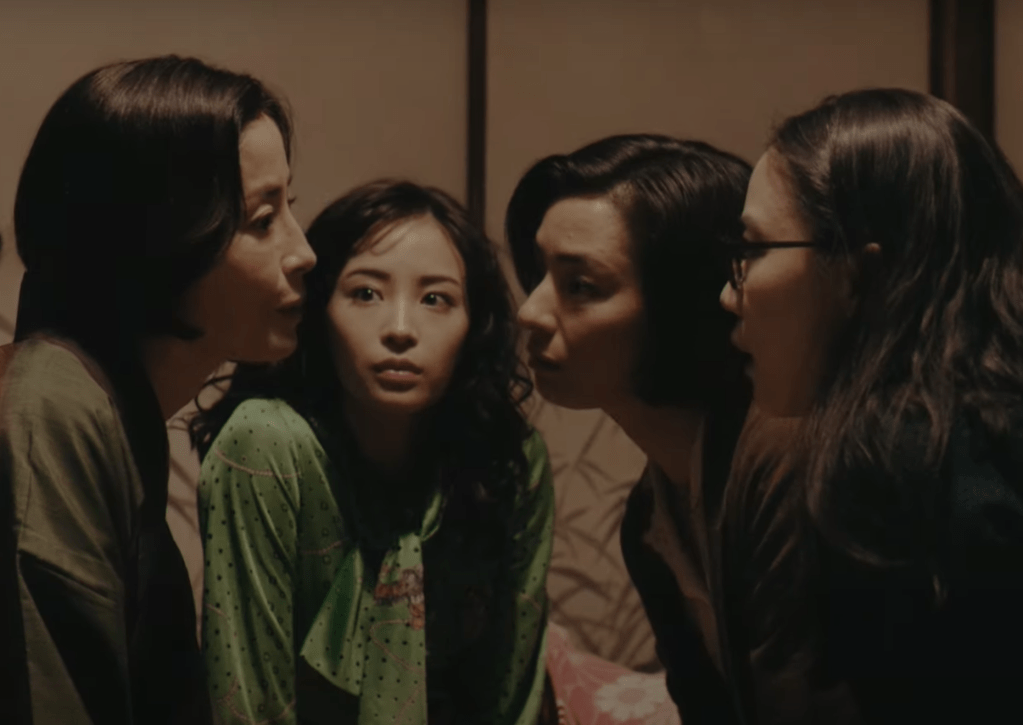
    Yoko, played with signature tenderness and nuance by Rie Miyezawa, is an award-winning writer who begins a caregiving job at Crescent Garden, a facility for the disabled. This facility, nestled deep in a forest, plays a major emotional role in the movie as it emanates a tension that never quite eases. It is depicted with classic horror tropes— the ominous score hinting at an impending or already happening disaster, the dimly-lit hallways, the overhead shots suggesting someone/something is watching, and the uncanny demeanor of the people who work here.  

    It is through Crescent Garden and what it stands for that the film explored various questions; it is the object of the truth that needed to be seen, known, and made known.

    For example, Yoko wanted to work in this facility to help her deal with past personal trauma, but will she, as a writer, open her eyes to the horrific truth about the facility and write about it truthfully? Or will she succumb to conceit and write only what would sell? This is a challenge constantly raised by her co-workers–her namesake Yoko (Fumi Nikaido), who aspires to be a writer of the same caliber as her, and Sato (Hayato Isomura in a brilliant performance), a seemingly sympathetic caregiver with an increasingly mysterious undercurrent.

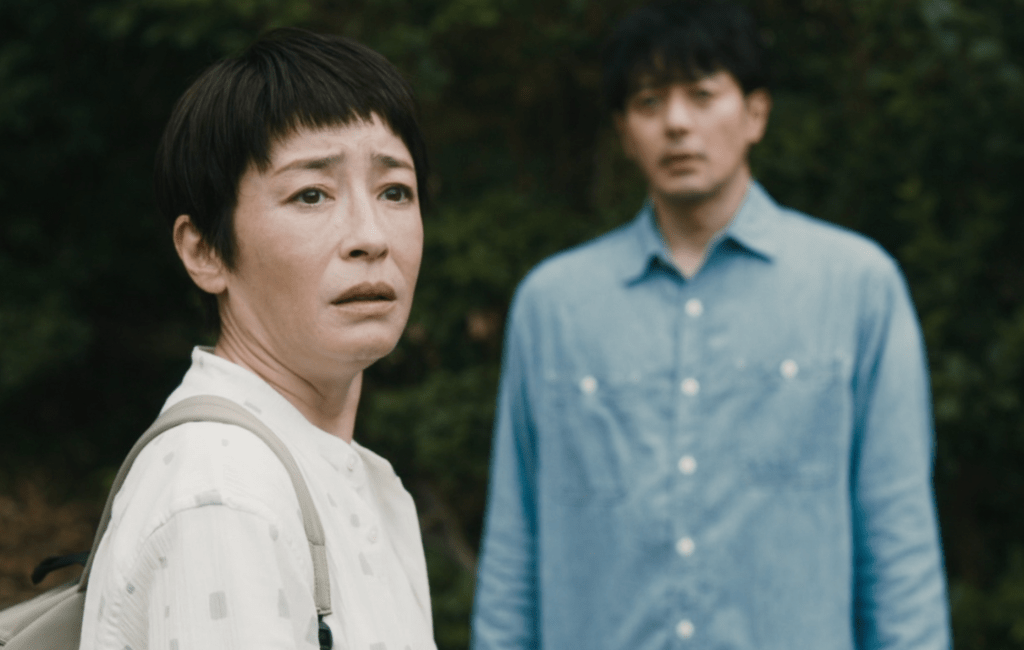
    Both Yoko 2 and Sato’s own personal issues are also dealt with through the lens of the facility. For Yoko 2, it’s the question of personal worth. For Sato, it’s the meaning of being human itself. Concurrently, the film also tried to address the grief of Yoko 1’s husband, Shohei (Joe Odagiri), although not directly in relation to the facility itself.

    While well-intentioned, this attempt to offer answers to every philosophical question that the narrative met along the way has made for an unnecessarily long but somehow incomplete film, as some of the big questions that the film opened were not satisfyingly answered. It is also a bit uncanny that the film tries to be about the disabled, disability, and their place and dignity in society, but much of the exposition of this theme comes from the abled.

    The film naturally resolved from the perspective of Yoko 1, who saw the truth and knew what it meant for her personally and in relation to exposing it to the public. But in the end, you will be hard pressed to know what kind of film this is. A melodrama? A psychological thriller? A philosophical slasher? There are a lot of films that are genre-agnostic, but the sort of thematic mishmash in The Moon didn’t quite build into a solid whole. 

    3/5
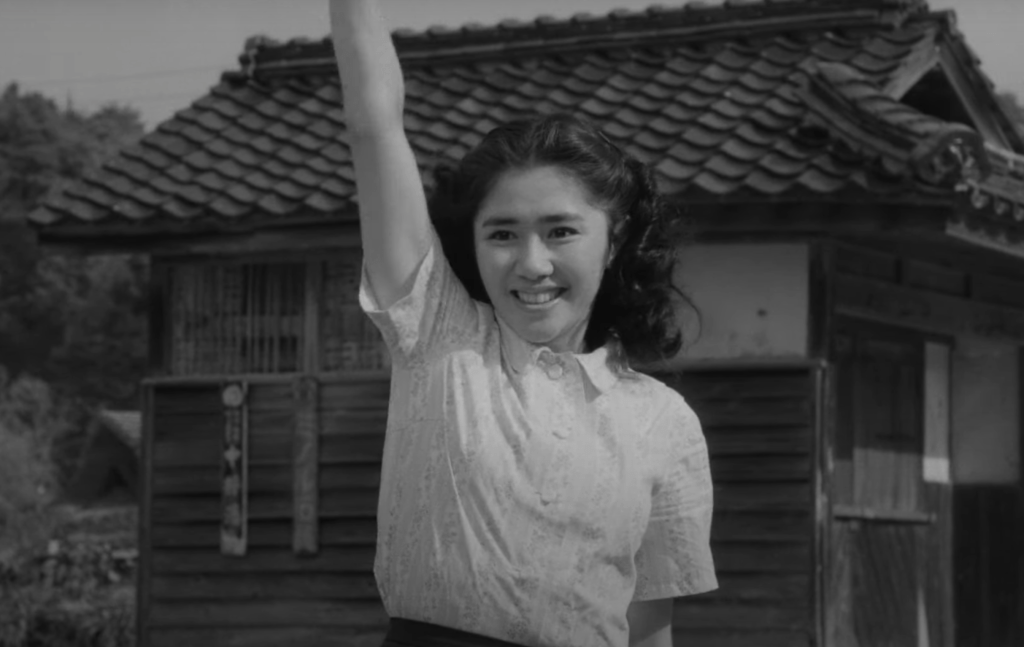
  • Black Rain, dir. Shohei Imamura (1989)

    Black Rain, dir. Shohei Imamura (1989)

    An unjust peace is better than a just war.

    Those words, uttered in exasperation by one of the characters in one of the film’s closing sequences, sums up the emotional core of this visual and narrative masterpiece by Shohei Imamura. It is another showcase of his directorial prowess, reminiscent of The Ballad of Narayama, his masterpiece from 6 years before.

    Indeed, I can’t help but compare the two in terms of the breadth and scale of the commentary he wanted to make about human life, human relationships, and Japanese society. 

    While I would surely put this film on a must-watch list for those interested in how the Pacific War affected the Japanese people, I would argue that that is not the main topic or theme of this movie. Whereas Narayama used the Japanese legend of ubasute to explore aging, how the elderly is treated, and indeed, the whole circle of human life in pre-modern Japan, Black Rain used the tragic atomic bombing of Hiroshima to provide a profound commentary on the many levels of stigma, humiliation, and humility (some times to a fault) in the immediate post-Pacific War era Japan. 

    Indeed, while the day of the Hiroshima bombing was sufficiently and painstakingly portrayed and explored, I would argue that it served better as a narrative device that contextualized and enriched the texture of the present story, set five years after, than as a “subplot” on its own. I thought that this was a wise choice because through it, along with the use of black and white, this film has become a timeless work that would speak not only to the victims of war, but also to the victims of the anxieties, pains, and yes, death, in peace time.

  • Asura and Our Little Sister:  Kore-eda’s natural humanism

    Asura and Our Little Sister: Kore-eda’s natural humanism

    Earlier this year, I binged-watched Asura, Hirokazu Kore-eda’s latest work which is a limited series on Netflix (7 episodes). To me this is a much more impactful work than his other Netflix series, The Makanai, both in terms of the story and the depth by which the story is told and made to affect viewers. I can say that as a director, Kore-eda’s humanistic style and talent really shines in a (TV) series because he is able to flesh out characters and relationships much more fully than in a film.

    Coming at the heels of a rewatch of Our Little Sister, I can’t help but compare the two to each other (because of how the stories have many similarities aside from the fact that they revolve around four sisters) and to Kore-eda’s other works that I have seen so far.

    To those who have watched even a few of his works, it is obvious that Kore-eda is able to portray humanism very naturally in his films, especially in directing characters and the dynamics between them. It strikes me how much drama and clarity of emotion can be had in subtlety–whether because of the reservedness of Japanese culture itself, or Kore-eda’s direction, or both. This is opposed to how humanism is sometimes forced in more plot-driven stories, especially in Filipino films (from where I come from), which always appeal to poverty or political/cultural/structural curses, etc.

    In both Asura and Our Little Sister, I love how Kore-eda directs the scenes of the four sisters together. Each pair of sisters, particularly the Tsunako-Makiko and Takiko-Sakiko pairings in Asura, have their own dynamics when they are together that are deftly made to come alive on the screen by Kore-eda and the sister ensembles.

    But the magic is when each of the four sisters in both works, even when they’re together in scenes, are still able to shine as their own characters. I have to give props to Suzu Hirose, the only actor appearing in both works, who has shown incredible range particularly in Asura. While it is a bit of a given that she will be a focus as the titular character in Our Little Sister, she held her ground well among the veterans in Asura, showing how much she has developed in her craft in the decade between these two works.

    There’s this one scene in Asura, in the latter half of the series, when the whole family had to come to the ancestral home to sort an incident caused by the father which reminded me of a Hieronymous Bosch painting. When you look closely each object or character in this painting, something distinct is going on with or about it it. But when you look at the painting as a whole, everything comes together beautifully. Kore-eda’s blocking and choice of shots in scenes have the same effect in scenes that involve multiple characters.

    Which lead me to a final point, about how there is not one emotional core in many, if not most, of Kore-eda’s works.

    In both Asura and Our Little Sister, you can say that there are main plots and there are subplots, but nothing grand or forced–above all, it’s the kaleidoscopic complexities of being human that rises to the surface. It’s humanity of the characters driving the stories, not a big plot or other external circumstances driving the characters. There are themes, yes, for example, queerness in youth in Monster, poverty in Shoplifters, truth and law in The Third Murder, wrestling with grief in Maborosi, or finding your calling in The Makanai. These expose messages or morals, but through and through, it’s really the existentialist beauty that stands out.

    No wonder Kore-eda’s movies feel so grounded that some of his works almost feel like documentaries in their groundedness (he did work extensively as a documentarist). The slice-of-life production aesthetic and the almost meditative cinematography that he uses contributes to this existentialism—you almost feel like you live with the characters, if not the characters themselves, by how grounded to reality and the world the characters are. The effect of this is we see ourselves reflected in them in one way or another.

  • Disappointing consummation: Haruhiko Arai’s ‘It Feels So Good’ (A review)

    Disappointing consummation: Haruhiko Arai’s ‘It Feels So Good’ (A review)

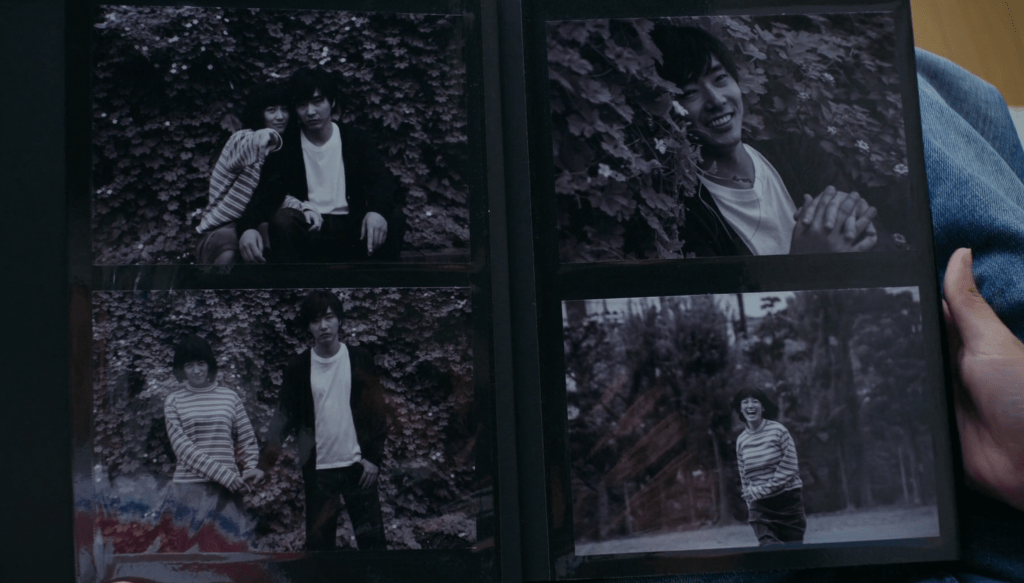
    I don’t often feel so strongly about narrative direction in films going the wrong way, because stories are expressions of creative freedom and I think the respectful way to go about it is a matter of preference (I did like it) and not of correctness. But that’s definitely what I felt after watching It Feels So Good, Haruhiko Arai’s 2019 banger of a film (pun definitely intended) about two former lovers who agreed to temporarily rekindle their passion before one of them set out to get married.

    There’s a lot to like about this film, not the least the depiction of sex, which was deftly acted by Tasuku Emoto and Kumi Takiuchi. I don’t usually go about seeking to watch erotic films, but I can say that the physical realism and believability of the intimacy scenes are some of the best I’ve seen in film. It’s not prestige sex of airbrushed skin and cheesy soft lighting—there’s a lot of humanity portraying the “messiness” of getting to and doing it, which adds to the carnal appeal of the scenes. Even so, nothing was gratuitous.

    And while the sex was very visual, the keyword that governs the viewing experience of intimacy is feeling. There’s the feeling of power that the woman has over the man. There’s the emphasis on rawer physical sensation, with the camera trained on whole bodies doing the act and faces contorted to unabashedly display pleasure.

    And despite the more controversial and taboo aspect of the sex (hint: “blood is thicker than water”), there’s pervading feeling of comfort of being with someone from your past that comes through to the viewer. Indeed, there’s a lot of nostalgia, both happy and wistful, in this movie: from memories of childhood, to memories of young adulthood in the city, to the devastating memory of the 2011 Tohoku earthquake.

    Which is to say: this film is a moving reflection of that great disaster from a very personal and intimate point of view. For the protagonists, their intimate reunion is a powerful affirmation of life, being alive, and perpetuating life after devastation. It initially felt jarring to me, but after watching this film, I now strongly feel that the 2011 Tohoku earthquake and the disaster it wrought is something that is deeply ingrained in the contemporary Japanese psyche in ways that much of the outside world hasn’t fully grasped yet. But this film showed how bodily convulsions and tectonic tremors can be combined in one potent narrative.

    Which leads me now to that unceremonious end to what could’ve been a 5-star film. It might be the obsession with disaster, but it truly seemed overkill that the film doubled down on an already effective message about its personal effects with an amateurish narrative turn.

    I can only liken it to the festival dance featured in the film, depicting the wandering spirits of the dead that cannot enter heaven—full spiritual consummation. The film was almost there towards a sensible resolution, but unlike the two protagonists many times in this film, it just didn’t come.

  • Villain, dir. Sang-il Lee (2010)

    Villain, dir. Sang-il Lee (2010)

    I want to begin by saying that it will not be difficult to point out who the namesake villain of the movie is if we base it on the efficient cause of what happened to the victim. If that’s the whole story, the film would’ve ended at about the halfway mark. Thankfully, Sang-il Lee’s 2010 Best Film awardee (Mainichi Awards and Kinema Junpo Awards) is not just about a villainy or even villainies, but so much more.

    On the surface, Villain is a very competent and entertaining thriller that will keep the audience glued to the screen despite a slow start. It even makes a more-or-less substantial exploration of what really makes a villain. But it’s different from the usual crime-fugitive fare with how it rises above the conventions of its genre to explore a universal and almost unique human ability: the capacity to cherish another human being.

    While the visual style is not necessarily “meditative” (e.g., lingering shots, long takes, sparse camera movements) this film is indeed a meditation on what the act of cherishing does to the one who cherishes. I am careful to highlight this because narratively, it’s easier to show the things that the one who cherishes does to the cherished (not that that aspect wasn’t also explored by the film).

    For Villain, cherishing reveals our true selves and, in the process, changes us.

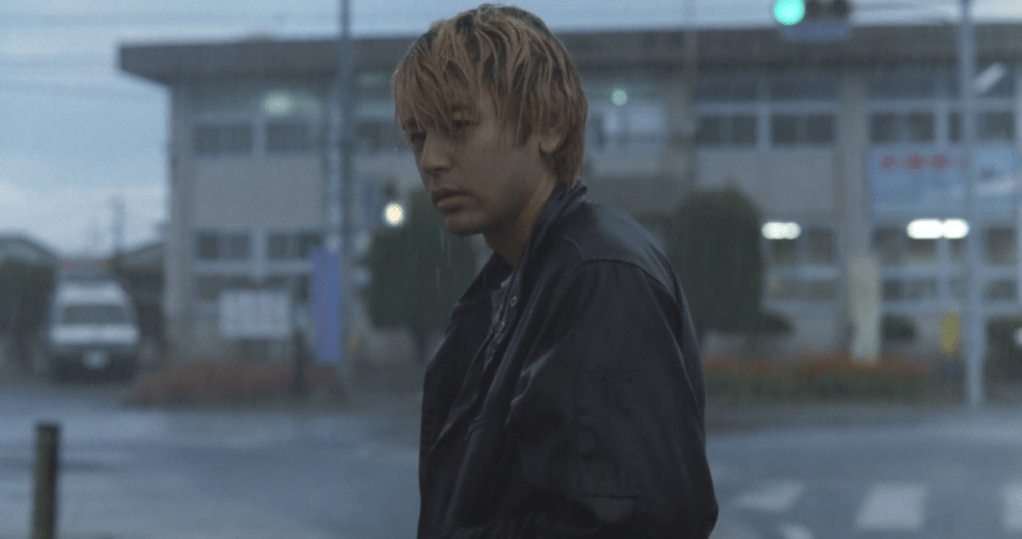
    This exposition stands on the heart-rending performances of Satoshi Tsumabaki and Eri Fukatsu, Tsumabaki, in particular, as the uninspired young man Yuichi, delivers an engrossing character study in a role that is at once familiar and strange. Yuichi’s central inner conflict, the unquiet specter of his own depravity as his affection for Fukatsu’s Mitsuya grows, produced some of the most intense scenes in the film, including the most emotionally charged sex scene I’ve seen so far in Japanese cinema.

    Veterans Akira Emoto and Kirin Kiki also delivered in their supporting performances as the father of the victim and Yuichi’s grandmother, respectively. Their stories of cherishing are underscored by loss—unjust loss of a beloved daughter, and the loss of a grandson to waywardness.

    I wouldn’t miss mentioning how surprised I was again that Joe Hisaishi did the score for this film. As with Hana-bi, I was clueless about his involvement here but unlike in that movie, I wouldn’t have guessed that it was Hisaishi who wrote the music for Villain.

    Listening to the score on its own, which also includes the closing credits track Your Story, I wouldn’t have guessed that it was the score for a crime movie (one reviewer even described it as “a soothing treat”). Equal parts contemplative, foreboding, sweet, and wistful, the score underscores what I think is the main point of the movie as I’ve shared above: that cherishing and loving someone reveals your humanity, including your depravity, and changes you along the way.