Category: 1990s

  • Flowers, fire, blood, Joe Hisaishi: Takeshi Kitano’s Hana-bi (A review)

    Flowers, fire, blood, Joe Hisaishi: Takeshi Kitano’s Hana-bi (A review)

    This review contains mild spoilers.

    Man commits a crime for the sake of his beloved is a tale as old as time. But Takeshi Kitano took this familiar narrative and flourished it with painful, understated, and at times violent beauty to set off a spectacle worthy of the title Hana-bi (Japanese for ‘fireworks’), his Golden Lion-winning 1997 masterpiece.

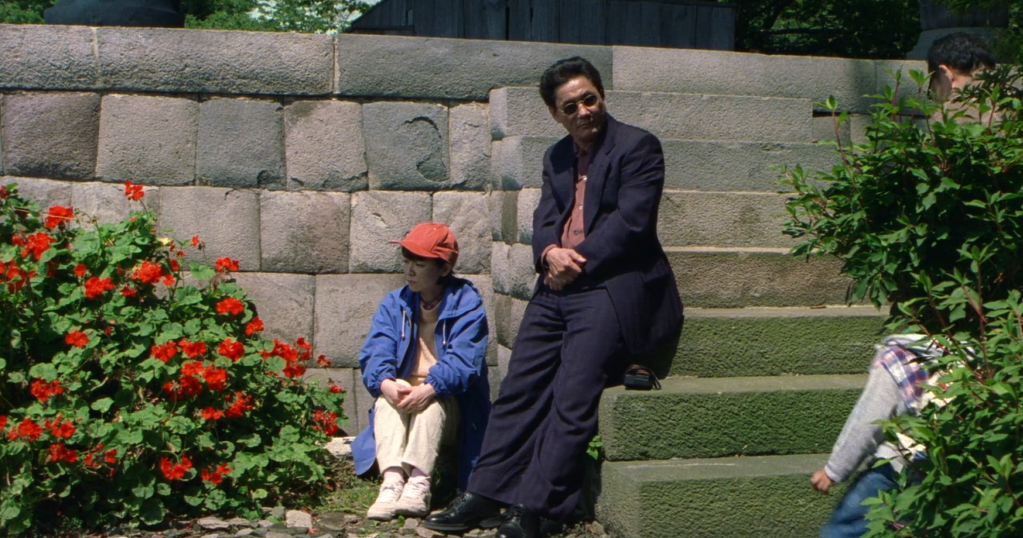
    The title itself reveals two of the film’s prominent motifs: flowers (花, hana) and fire (火, hi/bi), more specifically, gunfire. Hana-bi, usually tagged as a “crime drama” in reviews and synopses online, almost fetishizes these motifs if not for the curious and quietly visionary way that Kitano directed this work.

    A great example of what I’m talking about is a scene in the film’s second half where the camera pans over a painting of tiny yellow flowers that are also the kanji for “hikari” (光, ‘light’). It then zooms out to reveal the flowers falling into a serene snowscape. The calmness is jolted when the word “suicide” is revealed to be painted in big, bold, scarlet kanji, marring the pure landscape. The film then moves to a bloody real-life scene, before returning to the painting, now splattered with scarlet paint as a character pulls the trigger of an unloaded gun. This seamless blend of serenity and violence, present throughout the film, culminates in a finale that is one for the books.

    My thoughts on this film wouldn’t be complete without mentioning Joe Hisaishi’s score. I might be biased because I am such a big fan of his wonderful work with Studio Ghibli. But it was so satisfying to hear a familiar style right at the opening sequences and be pleasantly surprised to see Joe Hisaishi’s name as the scorer. Hana-bi, it turns out, was already his fourth collaboration with Kitano.

    The effect of Hisaishi’s score is heightened by how camera movements were so sparse that even “action” sequences were stylistically plain. With this, the score became instrumental in dictating “movement” and not just mood. It was equal parts pensive and brooding, giving the feeling that something is brewing that will explode and shock.

    And shock it did. The ending is as ambiguous as it gets, leaving the audience postulating what happened. And in that final shocker lies the X factor as to why this film is a cult favorite, in the vein of Fight Club. Hana-bi seemed to have treated death and violence flippantly, but it is not a film to teach about morals. However, it is not hollowed of substance, either.

    Indeed, in Japanese culture, the word used for the phenomenon called “double suicide”, shinjuu, is formed through the characters for “heart” and “center/inside” (心中), reflecting the inextricable link between the participants of such sad endeavor. It’s an open question whether this was the fate of some of the characters, but such oneness reminds us that life and death, and beauty and violence, are not just intertwined—they are inseparable.
  • Maborosi, dir. Hirokazu Kore-eda (1995)

    Maborosi, dir. Hirokazu Kore-eda (1995)

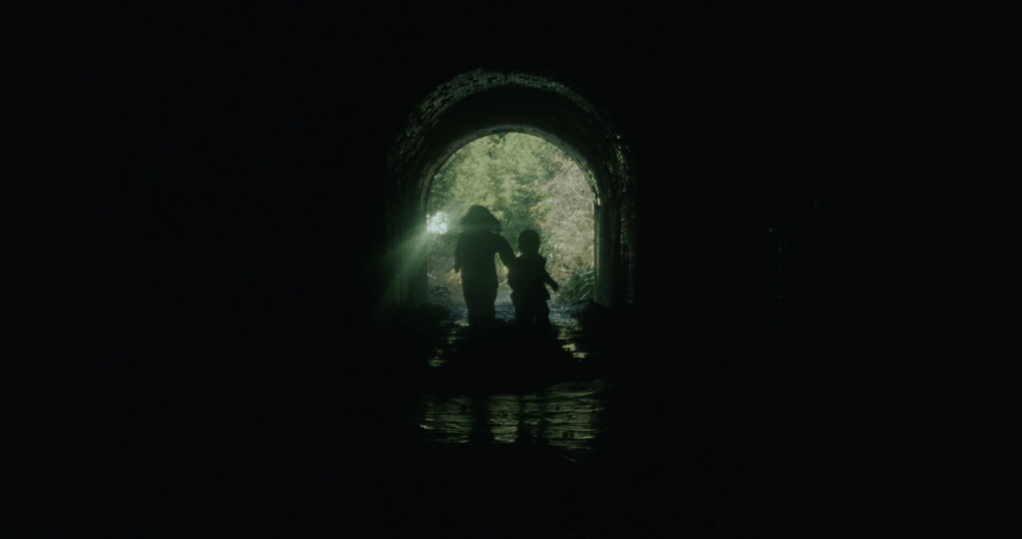
    Light is the language of cinema, and this work is an embodiment of that fundamental truth about films. In Hirokazu Kore-era’s first full-length narrative feature, light is not just what goes into the camera—it is a character of its own masterfully directed to play a silent but important role in the story of a quietly unfolding grief. The film, after all, is called Maboroshi no hikari, or an illusion of light, and while that refers to an important plot point, it is nevertheless an appropriate reflection of the way Kore-eda worked low-key magic with how he wielded light in this film.

    This film is patient, and it is smart about where to spend what kind of shot and for how long. As such, it requires the same patience from its audience. Sequences and scenes are not lingering here, they are downright long in a way that the passage of time fills you. The story is actually very, very simple and is captured in a penultimate scene but I believe that the point of the film is to elucidate humanity in sadness through visual storytelling. 

    That the film is full of long takes doesn’t mean it’s boring. On the contrary, I think this is one of Kore-eda’s most beautifully shot movies. From the raw but cleanly composed urban scenes of Osaka, to the breathtaking wide-angle sweeps of the ocean in a coastal town along the Sea of Japan, this movie has that signature Kore-eda polish while still somehow looking very grounded. Masayuki Suo’s Shall We Dance? and its similar mise-en-scene that is almost feels unstaged came to mind while watching. My favorite is the funeral procession scenes, both the overhead shot and the ultra-wide shot backgrounded by the sea and a dark sky. They are unassuming but they are two of the most memorable I’ve seen so far in Japanese cinema. 

    As I’ve been tracking year’s best Japanese films based on awards from the 40s to the present, I thought that Maborosi would have a place among those honored for 1995. But that year was dominated by A Last Note of veteran director and screenwriter Kaneto Shindo, winning all best film honors from the five longest-running awards that year and deservedly so. (Maborosi was very hot in the international festival circuit though). I think it’s always futile to compare which is the better film in context of awards because of myriads of reasons (incl. differences in awards constituencies, etc.). However, if one wants to know the best films in Japan in 1995, Maborosi would definitely be among them. Heck it was in Roger Ebert’s year-end best-of-the-year list.

  • Swimming gracefully: Imamura’s The Eel (A review)

    Swimming gracefully: Imamura’s The Eel (A review)

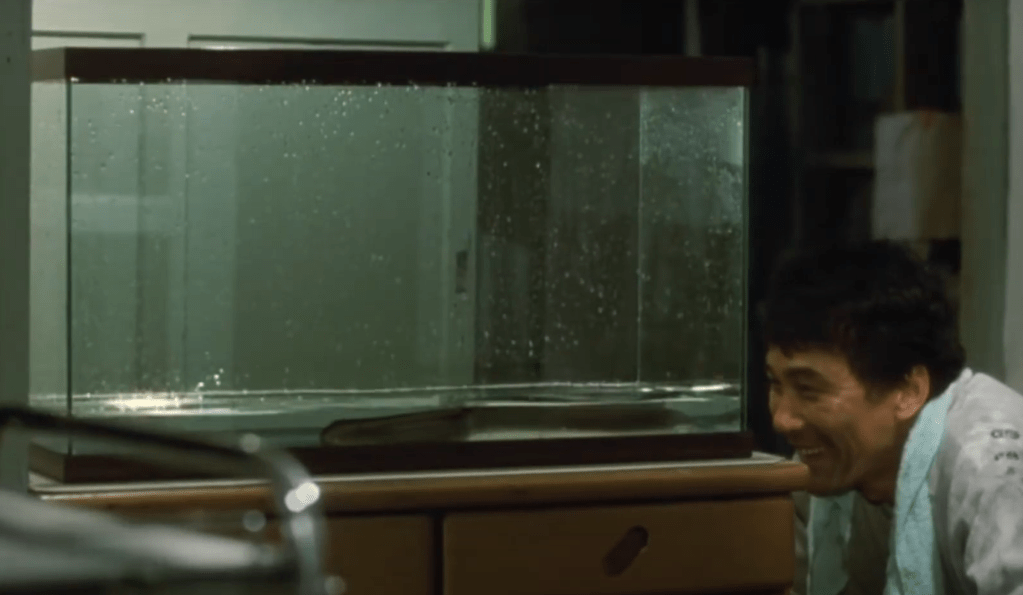
    In films like this, where a central object of curiosity is highlighted by the title (in this case, the eel), it’s easy to become fixated on it and overlook other important aspects that deserve attention.

    As I watched the film, I found myself consumed by the question, “What did the eel symbolize?” Was it simply a pet, a representation of the protagonist’s traumas, both external and self-inflicted? A symbol of his growth, with the eel embodying both his “before” and “after”? Was it his conscience or alter ego?

    A deeper analysis could support all these interpretations, and indeed the eel itself warrants close visual and narrative analysis, as it’s crucial to the story. But The Eel deserves appreciation beyond its symbolism, as this Palme d’Or-winning work of Shohei Imamura shines in many other aspects.

    This includes the powerful depiction of both honne (true inner feelings/true self) and tatemae (outward actions) by the lead actor, a young Koji Yakusho, who just recently (2023) won the Best Actor award at the Cannes for another film. Playing a former convict on parole, Yakusho was effective as the measured man who knew he has paid for his crime but is still racked up by the trauma of that past.

    Imamura’s signature visual style also stands out, showcasing “rawness” within graceful compositions and well-blocked mise-en-scène. Much like in The Ballad of Narayama (animalistic passions alongside dignity in death), Vengeance is Mine (serial murder and incest next to gentlemanliness), or Black Rain (the grim effects of atomic bomb radiation alongside quiet rural scenes), The Eel juxtaposes orderly domestic life with bloody violence. Imamura, like the eel, can swim gracefully between these contrasts, making them into works of cohesive wholes that are still appreciated until today.

    This style also allowed him to compellingly create what I think (so far, among the four that I’ve watched) is the film with most diverse set of characters. While depth could reasonably be expected only of a few of the characters given the restrictions of the medium, The Eel is able to provide a realistic response to the question of how a society reacts to ex-convicts in its showcase of a colorful cast of characters, all very human.

  • Of Japayukis and Zainichis: Yoichi Sai’s ‘All Under the Moon’ (1993)

    Of Japayukis and Zainichis: Yoichi Sai’s ‘All Under the Moon’ (1993)

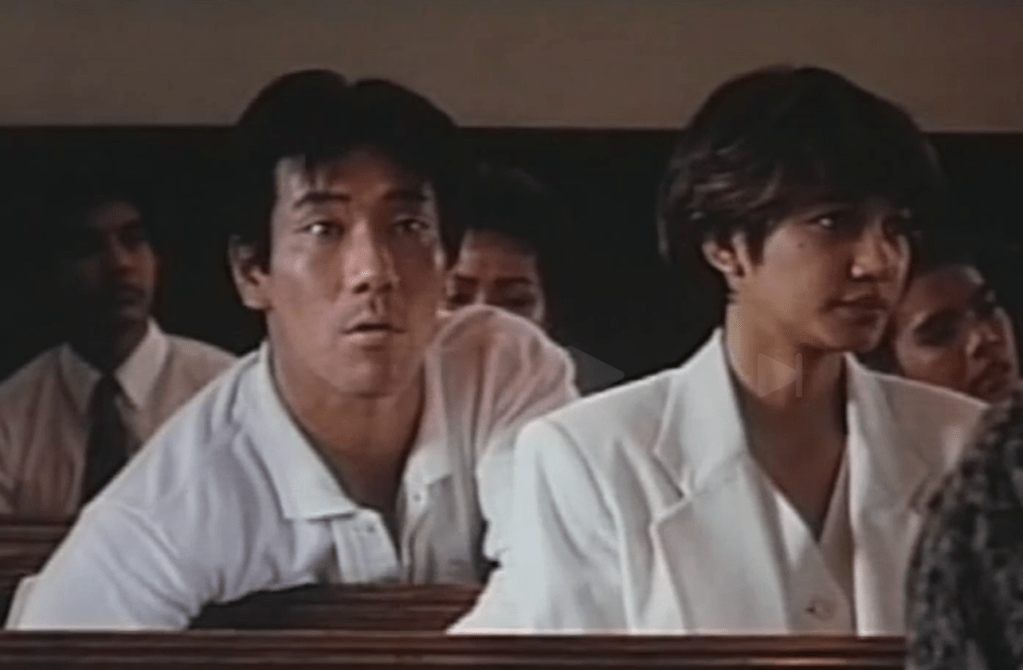
    Perhaps what sets this apart from other movies that portray minority life in a foreign country is how character-focused it is on the two leads—a North Korean Japanese taxi driver and a Filipina japayuki worker. Of course there is a story but the movie is not driven by the plot so much as how it reveals who Tadao and Connie are in their daily lives as workers in the fringes of Japanese society. 

    While there is a running joke about how one character hates Koreans, I felt like discrimination is much lesser of a theme in the film than what the characters represent in terms of the larger realities of their respective ethnicities’ relationships with Japan and the Japanese people during the early 90s. 

    For Tadao and his mother, it’s the painful history between Japan and Korea (back when it was whole). For Connie and her Filipina friends, it’s the promise of upward mobility by earning much more in Japan than in their home country (hence the Tagalog phrase “Japan, Japan, sagot sa kahirapan”–“Japan, Japan, the answer to poverty). That same theme runs, too, through Tadao’s and his mother’s story but it is colored by the tone of a more complicated past. 

    As a Filipino, I love how Connie is portrayed with enough agency and power, given that she is a woman, working in a highly-sexualized environment, and a foreigner. In her relationship with Tadao, she has the upper hand and she is not portrayed as just after お金, because admittedly, Tadao doesn’t have much. But she conducted her relationship with Tadao on her terms, even if we don’t know whether she really got what she wanted from Tadao in the end.

    PS. This is one of the funniest movies I’ve watched since I began going deep into Japanese cinema.

  • Takeshi: Childhood Days, dir. Masahiro Shinoda (1990)

    Takeshi: Childhood Days, dir. Masahiro Shinoda (1990)

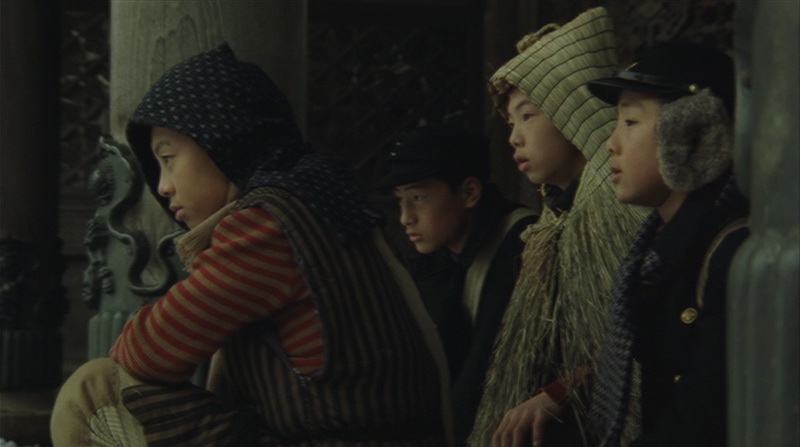
    There is just so much to unpack in Masahiro Shinoda’s Takeshi: Childhood Days (‘Shounen jidai’), an unassuming film from 1990 about Shinji, a Tokyo boy who took refuge in rural Japan at the closing year of the Pacific War. 

    What would’ve been a story about how he faced the usual rigors of pre-teen years—peer pressure, socialization in a juvenile dog-eat-dog mini ecosystem, formation of the self, academics, and bullying—is enriched by the unique context of a nation at the height of war. 

    While Shinji and his adoptive community were spared from the bombs and the bloodshed, the war still reached its long, unrelenting arms through various means. Men, even from that rural village, had to be sent away to fight the war, their loved ones anguished with being left behind. They would be subject to Imperial propaganda (and even a film about the German Fuhrer!), and eventually, the American occupation. There is really so much to mine here that if I were to teach about the Pacific War and its depiction in cinema, I would certainly include this as required viewing.

    Another strength of this film is in its quietness, and by that I don’t mean that there is sparse dialogue. The visuals are measured and the mise-en-scene throughout the film is well-composed and clean. This is perhaps to stand as a contrast to what the characters and the viewers would imagine as the noisy, bloodied, and utterly destroyed cities of Tokyo, Hiroshima, and Nagasaki, among others. Save for a brief scene of people running away from burning houses, the film only talked about Tokyo being bombed but never shown. This is where the film invokes the power of cinema’s unique language—editing. By leaving out certain scenes and showing others, the film invites viewers to imagine for themselves scenes that are not present and proximate but are paramount to the lives and fates of the people in Shinji’s community.

    This wouldn’t be complete without talking about Shinji and Takeshi, the two boys at the center of this film. The film made a deliberate choice of telling the story of Takeshi, the title’s namesake, from the point-of-view of Shinji. 

    Perhaps the reason for this is how Takeshi became central to Shinji’s experience of being a local war refugee, how he mediated, both implicitly and explicitly, the different layers of context that the film tackled, as they played out in the life of Shinji. 

    Or maybe it’s the other way around? Shinji becomes central to Takeshi’s experience and understanding of the World War that Japan is participating in, making him understand that the war is national in both effort and reach, and that his little shounen life will be disrupted by it through the life of another boy. Again, this is left for the viewers to imagine and decide.

    However it is, the film does not depict a simplistic relationship. There lies Shinoda’s filmmaking prowess, elevating what could’ve been a common story between two boys into a rich cinematic gold mine.