Category: 2010s

  • Grace and belonging: ‘Our Little Sister’ by Hirokazu Kore-eda (A review)

    Grace and belonging: ‘Our Little Sister’ by Hirokazu Kore-eda (A review)

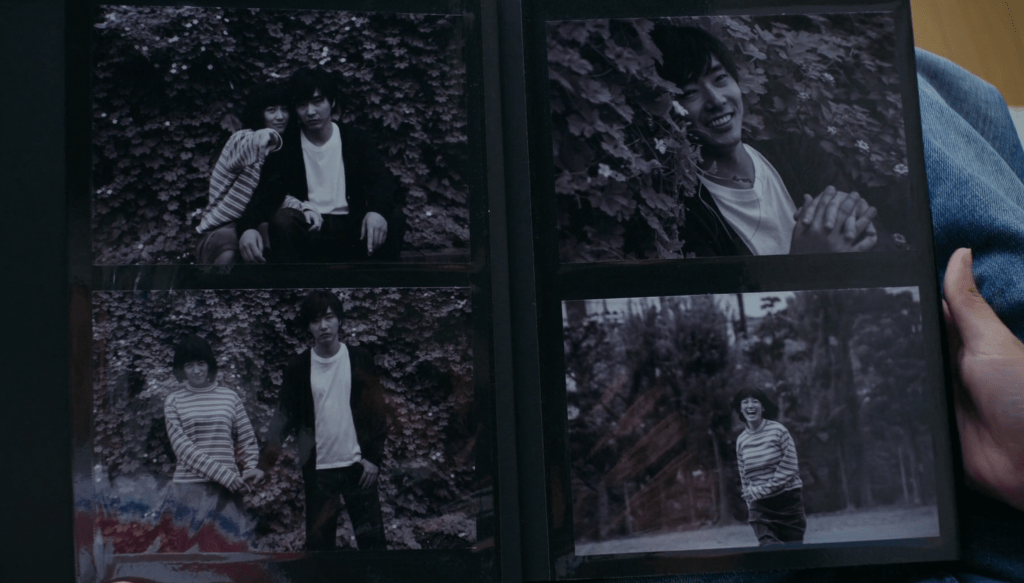
    There is no doubt that Hirokazu Kore-eda has mastered both the form and substance of cinema, developing a distinct visual style that elevates his deeply humanistic storytelling. While films like Maborosi (1995) showcase his technical mastery of the cinematic form, and Nobody Knows (2004) and Monster (2023) reflect the breadth of his narrative and thematic ambition, Our Little Sister (2015) stands out as one of his most intimate, character-driven works, supremely centering on people and relationships more than plot or message.

    As with many Japanese films, the original title—Umimachi Diary—differs from its English counterpart, possibly to appeal more to Western audiences. Regardless of the reason, both titles offer rich lenses through which to understand and appreciate the film.

    With “Umimachi Diary”, (‘seaside town diary’), the film highlights the importance of rootedness not only in personhood but also in relationships. 

    The film probes how the placeness of towns and their spaces such as cafes, houses, and temples have shaped the lives and connections of the people dramatized in the movie across generations. This is exemplified in the way the supporting characters influence the sisters’ lives, especially through gestures and encounters made possible by the unique rhythms and intimacy of a seaside city like Kamakura.

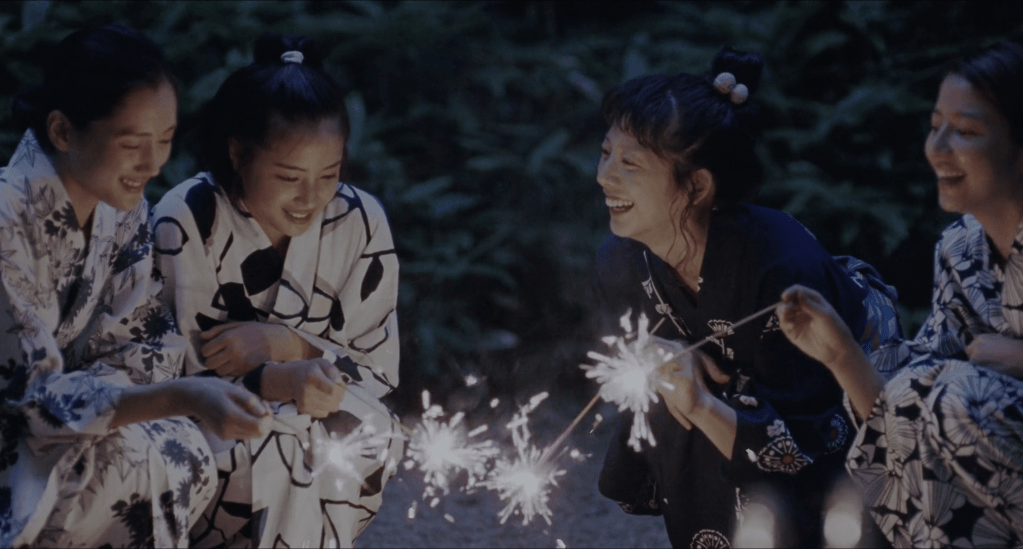
    In contrast, the English title “Our Little Sister” draws attention to Suzu, the titular character who was adopted by her three half-sisters from Kamakura, after the death of their father who she cared for. In the film, Suzu was not just a character—she becomes the lens through which the inner lives of the others are poignantly revealed.

    Like a prism, Suzu reveals the true colors of the nature of the various relationships in the film: among the three sisters Sachi, Yoshino, and Chika; between them and their late, estranged father; and especially between Sachi and their distant mother. And while Suzu was not in any way asked to resolve the issues that arose because of her presence, in many different ways her life, memories, and words affirmed the humanity of those she interacted with no matter what they were facing.

    Our Little Sister has been the most moving Kore-eda film for me, getting the same impact even after many rewatches. It is in fact my most favorite film of all time, a movie I go back to for the comfort it gives me. 

    It’s beautiful in a way that it doesn’t manipulate emotions. Instead, it illuminates them. Our Little Sister shines a light on a rare kind of relationship these days—one ruled first not by love, but by grace. While I always thought Suzu to be the protagonist of this film, I realized that this story is as much as hers as it is the story of the eldest sister Sachi. Suzu is made to feel she belonged and loved not for what she might become, but for who she already is. Behind that welcome is Sachi, who, despite carrying her own burdens, offers Suzu grace. In one quiet scene, as they gaze at the beautiful sea together from a hilltop in Kamakura, this grace was in full display.
  • Such lightness of being: Momoko Ando’s ‘0.5 mm’ (A review)

    Such lightness of being: Momoko Ando’s ‘0.5 mm’ (A review)

    It’s not an easy feat for a film to be lengthy, entertaining, and profound all at the same time. Yet Momoko Ando’s 2014 masterpiece 0.5mm is all three, and then some. 

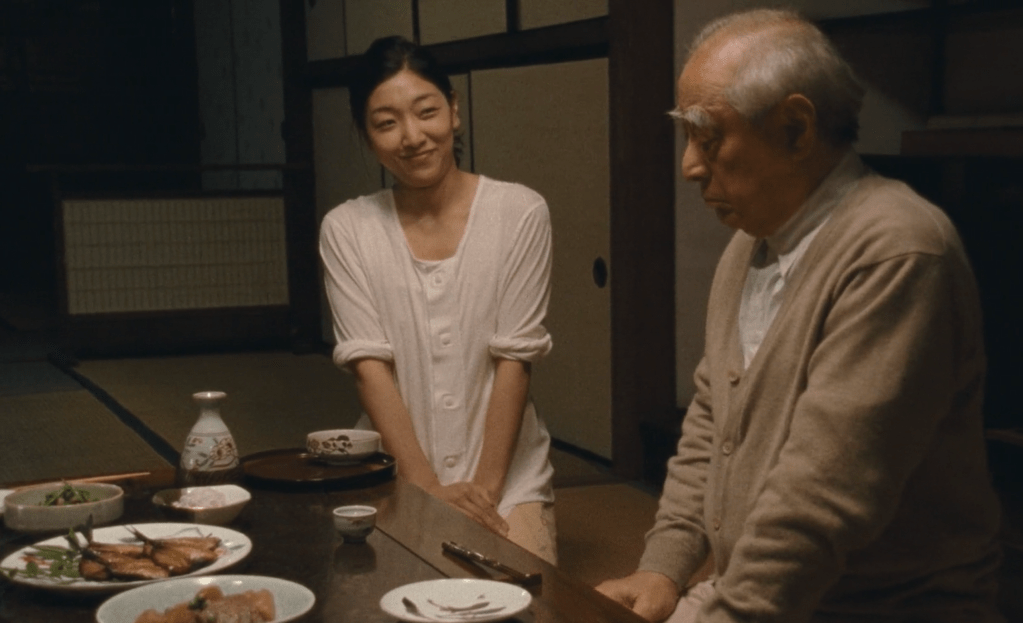
    With a runtime of three hours and 18 minutes, this film is expansive not just in length but more so in its thematic ambition. 0.5mm is a singular achievement not only for Ando, who is both the film’s director and screenwriter, but also for her sister, Sakura, and her ineffable and career-defining take on the caregiver-vagabond Sawa Yamagishi. Sawa embodies a certain “lightness of being” that, contrary to the title of the famous novel, is not unbearable. This lightness extends to the whole of the film itself, so that it is both profound and outrageously funny. 

    Set, it seems, in the late 1980s to the early 90s, the film is divided into four parts: a prelude where Sawa is introduced as a caregiver of a bedridden elderly man, two acts where she would live with and care for two other elderly men, and a final act of resolution that harks back to the prelude. Throughout, Sawa’s character moves through the film with what I’d call “buoyant grace”—unattached, adaptable, and at times, mischievous. But while she is physically a drifter (and a mysterious one at that), she is not aimless.

    Sawa is not just a character—she is also a remarkable narrative device by which the film becomes an epic and complex meditation on human connection, the loneliness of the elderly, and the strange forms that kindness can take. It is through Sawa and her relationships that seemingly disparate themes such as the war nostalgia of elderly Japanese men, the collective versus the individual, the male gaze, and the kindness and seductiveness of a woman as both wife and caregiver come together and come alive.

    Among those themes, the latter two are particularly prominent. They could’ve been touchy subjects, if not for Momoko’s writing and Sakura’s acting. Their collaboration made for a deft portrayal of how a woman makes peace with society’s patronization and misogyny, subverting them to gain power that is not only seductive but more crucially, substantial, generous, and real.

    Sawa’s “feminism,” if you could call it that, is not vindictive nor activist—it’s human through and through. One recurring incident in the film highlights this. Sawa’s drift, it seems, is to catch elderly men in scandalous, reputation-wrecking moments and use these to “coerce” them to let her live with them. However, she would use the power she gains not to extort nor to persecute, but to care, quite literally. In each case except the prelude, Sawa brings and inspires order and healing in the lives of the elderly men she was involved with.

    I may have made Sawa sound extraordinary, but what lingers most is her plain, unadorned humanity. She feels like a mystery only because tenderness and generosity have become rare. 0.5mm is special for letting that quiet humanity shine.

  • Rebirth, dir. Izuru Narushima (2011)

    Rebirth, dir. Izuru Narushima (2011)

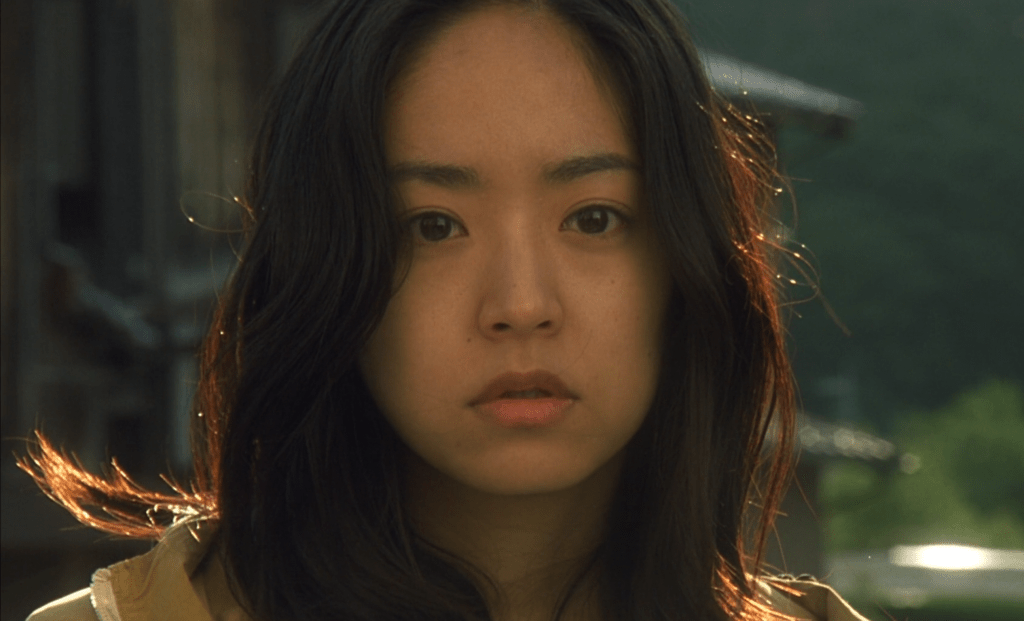
    The English title of Izuru Narushima’s 2011 film, Rebirth, suggests a shedding of the past in pursuit of a new beginning. Its Japanese title, however, hints at a subtle, metaphor-rich expression of what the film is truly about, which I will return to later.

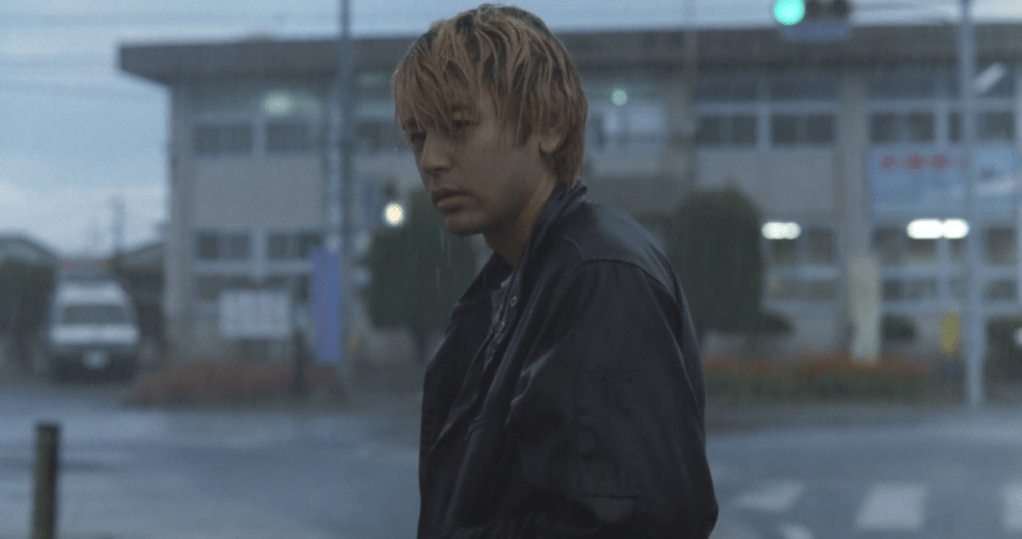
    In this film, we meet Erina Akiyama (played by Mou Inoue), a listless university student who was abducted as an infant by her father’s former mistress. Her four-year abduction made headlines at the time. Now, she seems to be living a quiet, ordinary life—until a journalist eager to revisit that unfortunate episode seeks to resurface her story. Growing curious about that time in the distant past, Erina agrees to the journalist’s invitation to rediscover what happened then.

    From the outset, the theme of motherhood is very prominent in the film, showing its pains and longings. Here, motherhood is denied, borrowed, and—perhaps most powerfully—chosen. Yet motherhood is but a part of a larger, more central theme, one that also captures the emotional–and eventually, the narrative–core of the film—self-discovery. 

    Since Freud, we have tended to think that our adult psychologies are invariably shaped by our childhood experiences and traumas. In Rebirth, we would think that Erina’s actual abduction or even her relationship with her “abductive” mother (played by Hiromi Nagasaku) would’ve made an enormous impact on her life. However, the film resists resting solely on this notion.

    Rebirth emphasizes the outsized importance of the seldom-explored attachment to places and the memories of things that happened in them, whether good or ill. 

    This is where the visual storytelling of the film shines, as it proceeds to reveal Erina’s understanding of and feelings toward specific people, including herself, in its portrayal of places. We see the lonely townhouses in the uptown district where her parents’ house is, the enigmatic “shelter” where she and her abductor hid and stayed, and finally an island community of warmth and fulfilment that would later speak profoundly to Erina’s sense of being and identity. 

    Interspersed with flashbacks of sunlit scenes of a childhood lived in full on that island—joyous, vivid, but now, distant—Erina finds a reckoning in the present. Not against her abductor, nor her parents who resented how she grew up “absent”, but against a self that in every sense except the physical, in the throes of “death” and emptiness.

    The film’s Japanese title, ‘Youkame no semi’, can be translated to “the eighth-day cicada”. It draws from the belief that cicadas live only seven days, after which they die together. While scientifically incorrect, it has been used as a metaphor for the shortness of life, shearing it of meaning. But the film quietly asks: what if one cicada decides not to die, and lives on for an eighth day—or longer? In the film, Erina not only decides to live but also to pay forward a life that has found new meaning and beauty.

  • Disappointing consummation: Haruhiko Arai’s ‘It Feels So Good’ (A review)

    Disappointing consummation: Haruhiko Arai’s ‘It Feels So Good’ (A review)

    I don’t often feel so strongly about narrative direction in films going the wrong way, because stories are expressions of creative freedom and I think the respectful way to go about it is a matter of preference (I did like it) and not of correctness. But that’s definitely what I felt after watching It Feels So Good, Haruhiko Arai’s 2019 banger of a film (pun definitely intended) about two former lovers who agreed to temporarily rekindle their passion before one of them set out to get married.

    There’s a lot to like about this film, not the least the depiction of sex, which was deftly acted by Tasuku Emoto and Kumi Takiuchi. I don’t usually go about seeking to watch erotic films, but I can say that the physical realism and believability of the intimacy scenes are some of the best I’ve seen in film. It’s not prestige sex of airbrushed skin and cheesy soft lighting—there’s a lot of humanity portraying the “messiness” of getting to and doing it, which adds to the carnal appeal of the scenes. Even so, nothing was gratuitous.

    And while the sex was very visual, the keyword that governs the viewing experience of intimacy is feeling. There’s the feeling of power that the woman has over the man. There’s the emphasis on rawer physical sensation, with the camera trained on whole bodies doing the act and faces contorted to unabashedly display pleasure.

    And despite the more controversial and taboo aspect of the sex (hint: “blood is thicker than water”), there’s pervading feeling of comfort of being with someone from your past that comes through to the viewer. Indeed, there’s a lot of nostalgia, both happy and wistful, in this movie: from memories of childhood, to memories of young adulthood in the city, to the devastating memory of the 2011 Tohoku earthquake.

    Which is to say: this film is a moving reflection of that great disaster from a very personal and intimate point of view. For the protagonists, their intimate reunion is a powerful affirmation of life, being alive, and perpetuating life after devastation. It initially felt jarring to me, but after watching this film, I now strongly feel that the 2011 Tohoku earthquake and the disaster it wrought is something that is deeply ingrained in the contemporary Japanese psyche in ways that much of the outside world hasn’t fully grasped yet. But this film showed how bodily convulsions and tectonic tremors can be combined in one potent narrative.

    Which leads me now to that unceremonious end to what could’ve been a 5-star film. It might be the obsession with disaster, but it truly seemed overkill that the film doubled down on an already effective message about its personal effects with an amateurish narrative turn.

    I can only liken it to the festival dance featured in the film, depicting the wandering spirits of the dead that cannot enter heaven—full spiritual consummation. The film was almost there towards a sensible resolution, but unlike the two protagonists many times in this film, it just didn’t come.

  • Villain, dir. Sang-il Lee (2010)

    Villain, dir. Sang-il Lee (2010)

    I want to begin by saying that it will not be difficult to point out who the namesake villain of the movie is if we base it on the efficient cause of what happened to the victim. If that’s the whole story, the film would’ve ended at about the halfway mark. Thankfully, Sang-il Lee’s 2010 Best Film awardee (Mainichi Awards and Kinema Junpo Awards) is not just about a villainy or even villainies, but so much more.

    On the surface, Villain is a very competent and entertaining thriller that will keep the audience glued to the screen despite a slow start. It even makes a more-or-less substantial exploration of what really makes a villain. But it’s different from the usual crime-fugitive fare with how it rises above the conventions of its genre to explore a universal and almost unique human ability: the capacity to cherish another human being.

    While the visual style is not necessarily “meditative” (e.g., lingering shots, long takes, sparse camera movements) this film is indeed a meditation on what the act of cherishing does to the one who cherishes. I am careful to highlight this because narratively, it’s easier to show the things that the one who cherishes does to the cherished (not that that aspect wasn’t also explored by the film).

    For Villain, cherishing reveals our true selves and, in the process, changes us.

    This exposition stands on the heart-rending performances of Satoshi Tsumabaki and Eri Fukatsu, Tsumabaki, in particular, as the uninspired young man Yuichi, delivers an engrossing character study in a role that is at once familiar and strange. Yuichi’s central inner conflict, the unquiet specter of his own depravity as his affection for Fukatsu’s Mitsuya grows, produced some of the most intense scenes in the film, including the most emotionally charged sex scene I’ve seen so far in Japanese cinema.

    Veterans Akira Emoto and Kirin Kiki also delivered in their supporting performances as the father of the victim and Yuichi’s grandmother, respectively. Their stories of cherishing are underscored by loss—unjust loss of a beloved daughter, and the loss of a grandson to waywardness.

    I wouldn’t miss mentioning how surprised I was again that Joe Hisaishi did the score for this film. As with Hana-bi, I was clueless about his involvement here but unlike in that movie, I wouldn’t have guessed that it was Hisaishi who wrote the music for Villain.

    Listening to the score on its own, which also includes the closing credits track Your Story, I wouldn’t have guessed that it was the score for a crime movie (one reviewer even described it as “a soothing treat”). Equal parts contemplative, foreboding, sweet, and wistful, the score underscores what I think is the main point of the movie as I’ve shared above: that cherishing and loving someone reveals your humanity, including your depravity, and changes you along the way.