Tag: Absolute cinema

  • Grace and belonging: ‘Our Little Sister’ by Hirokazu Kore-eda (A review)

    Grace and belonging: ‘Our Little Sister’ by Hirokazu Kore-eda (A review)

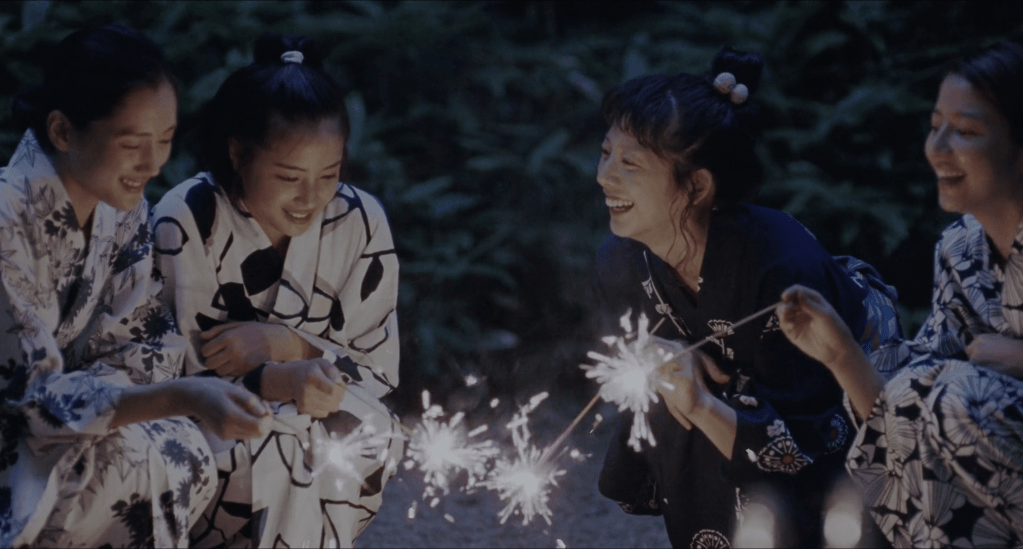
    There is no doubt that Hirokazu Kore-eda has mastered both the form and substance of cinema, developing a distinct visual style that elevates his deeply humanistic storytelling. While films like Maborosi (1995) showcase his technical mastery of the cinematic form, and Nobody Knows (2004) and Monster (2023) reflect the breadth of his narrative and thematic ambition, Our Little Sister (2015) stands out as one of his most intimate, character-driven works, supremely centering on people and relationships more than plot or message.

    As with many Japanese films, the original title—Umimachi Diary—differs from its English counterpart, possibly to appeal more to Western audiences. Regardless of the reason, both titles offer rich lenses through which to understand and appreciate the film.

    With “Umimachi Diary”, (‘seaside town diary’), the film highlights the importance of rootedness not only in personhood but also in relationships. 

    The film probes how the placeness of towns and their spaces such as cafes, houses, and temples have shaped the lives and connections of the people dramatized in the movie across generations. This is exemplified in the way the supporting characters influence the sisters’ lives, especially through gestures and encounters made possible by the unique rhythms and intimacy of a seaside city like Kamakura.

    In contrast, the English title “Our Little Sister” draws attention to Suzu, the titular character who was adopted by her three half-sisters from Kamakura, after the death of their father who she cared for. In the film, Suzu was not just a character—she becomes the lens through which the inner lives of the others are poignantly revealed.

    Like a prism, Suzu reveals the true colors of the nature of the various relationships in the film: among the three sisters Sachi, Yoshino, and Chika; between them and their late, estranged father; and especially between Sachi and their distant mother. And while Suzu was not in any way asked to resolve the issues that arose because of her presence, in many different ways her life, memories, and words affirmed the humanity of those she interacted with no matter what they were facing.

    Our Little Sister has been the most moving Kore-eda film for me, getting the same impact even after many rewatches. It is in fact my most favorite film of all time, a movie I go back to for the comfort it gives me. 

    It’s beautiful in a way that it doesn’t manipulate emotions. Instead, it illuminates them. Our Little Sister shines a light on a rare kind of relationship these days—one ruled first not by love, but by grace. While I always thought Suzu to be the protagonist of this film, I realized that this story is as much as hers as it is the story of the eldest sister Sachi. Suzu is made to feel she belonged and loved not for what she might become, but for who she already is. Behind that welcome is Sachi, who, despite carrying her own burdens, offers Suzu grace. In one quiet scene, as they gaze at the beautiful sea together from a hilltop in Kamakura, this grace was in full display.
  • Such lightness of being: Momoko Ando’s ‘0.5 mm’ (A review)

    Such lightness of being: Momoko Ando’s ‘0.5 mm’ (A review)

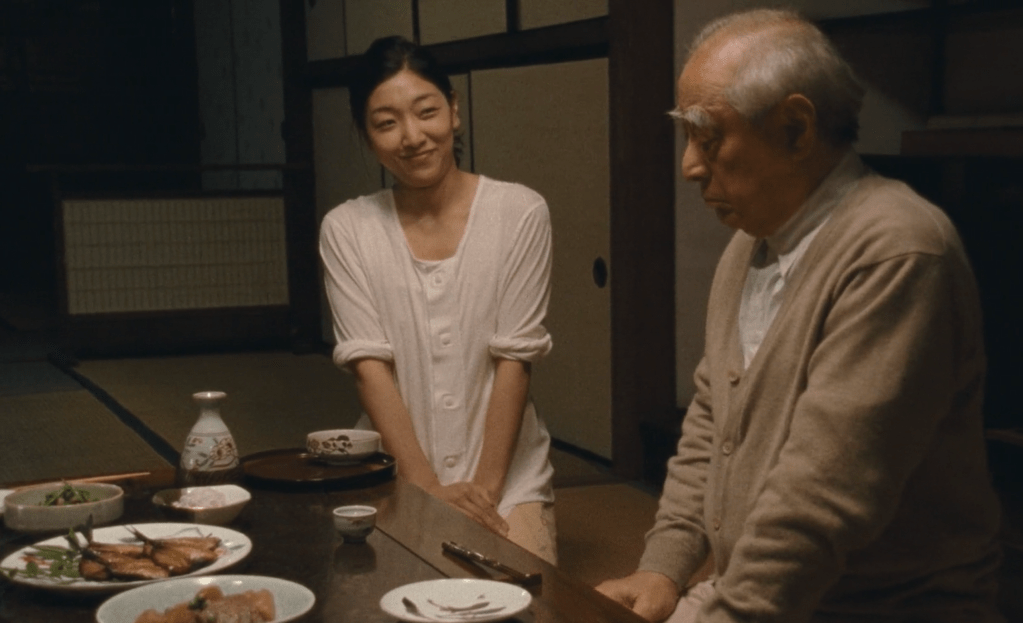
    It’s not an easy feat for a film to be lengthy, entertaining, and profound all at the same time. Yet Momoko Ando’s 2014 masterpiece 0.5mm is all three, and then some. 

    With a runtime of three hours and 18 minutes, this film is expansive not just in length but more so in its thematic ambition. 0.5mm is a singular achievement not only for Ando, who is both the film’s director and screenwriter, but also for her sister, Sakura, and her ineffable and career-defining take on the caregiver-vagabond Sawa Yamagishi. Sawa embodies a certain “lightness of being” that, contrary to the title of the famous novel, is not unbearable. This lightness extends to the whole of the film itself, so that it is both profound and outrageously funny. 

    Set, it seems, in the late 1980s to the early 90s, the film is divided into four parts: a prelude where Sawa is introduced as a caregiver of a bedridden elderly man, two acts where she would live with and care for two other elderly men, and a final act of resolution that harks back to the prelude. Throughout, Sawa’s character moves through the film with what I’d call “buoyant grace”—unattached, adaptable, and at times, mischievous. But while she is physically a drifter (and a mysterious one at that), she is not aimless.

    Sawa is not just a character—she is also a remarkable narrative device by which the film becomes an epic and complex meditation on human connection, the loneliness of the elderly, and the strange forms that kindness can take. It is through Sawa and her relationships that seemingly disparate themes such as the war nostalgia of elderly Japanese men, the collective versus the individual, the male gaze, and the kindness and seductiveness of a woman as both wife and caregiver come together and come alive.

    Among those themes, the latter two are particularly prominent. They could’ve been touchy subjects, if not for Momoko’s writing and Sakura’s acting. Their collaboration made for a deft portrayal of how a woman makes peace with society’s patronization and misogyny, subverting them to gain power that is not only seductive but more crucially, substantial, generous, and real.

    Sawa’s “feminism,” if you could call it that, is not vindictive nor activist—it’s human through and through. One recurring incident in the film highlights this. Sawa’s drift, it seems, is to catch elderly men in scandalous, reputation-wrecking moments and use these to “coerce” them to let her live with them. However, she would use the power she gains not to extort nor to persecute, but to care, quite literally. In each case except the prelude, Sawa brings and inspires order and healing in the lives of the elderly men she was involved with.

    I may have made Sawa sound extraordinary, but what lingers most is her plain, unadorned humanity. She feels like a mystery only because tenderness and generosity have become rare. 0.5mm is special for letting that quiet humanity shine.

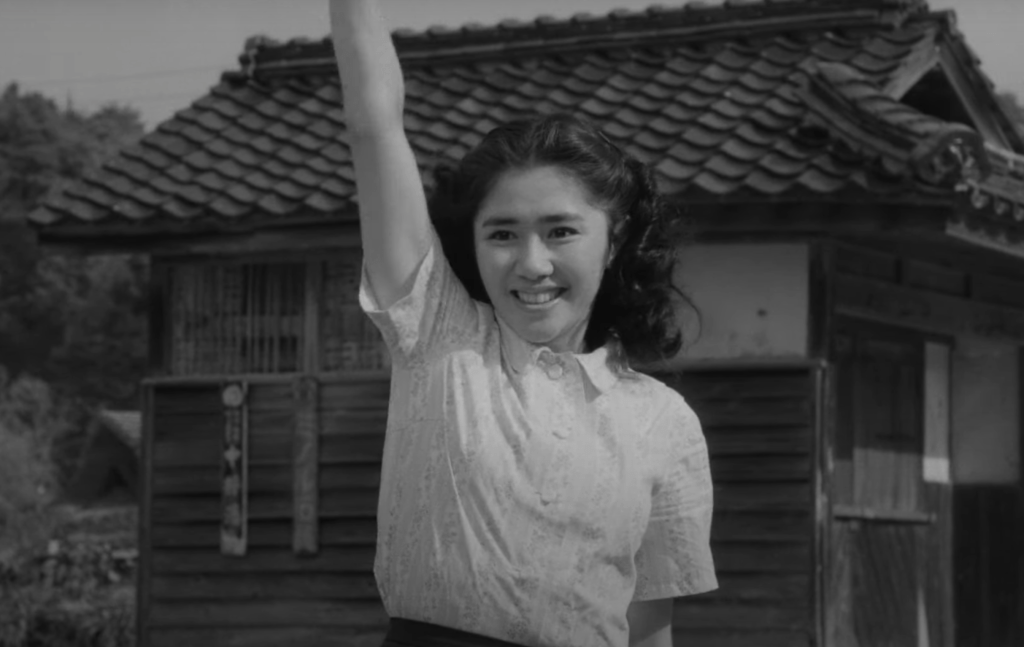
  • The Insect Woman, dir. Shohei Imamura (1963)

    The Insect Woman, dir. Shohei Imamura (1963)

    “Ma, what other way is there?”

    There is just so much to unpack from that remarkable line from another of Shohei Imamura’s masterpieces, the taboo-revelling The Insect Woman (1964), that I believe it represents both the narrative-thematic and emotional cores of the film. Imamura delivered through this film with his deftness not only with the black-and-white format but also with cinema’s unique language–editing. By combining masterful editing through the effective use of stills and a callback to the Japanese cinematic tradition of benshi, Imamura was able to showcase a masterpiece that not only unfolds in the viewers’ screens, but more importantly, in the fertile imaginations of their minds.

    On the surface, The Insect Woman is a tale of survival and rising through the ranks, only to be met by the harsh realities of life after war and an unequal society. Sachiko Hidari is remarkable as the protagonist Tome, who played with such ease and depth the life of a farm girl-turned-prostitution madam in the fast-changing Tokyo of the 50s and the 60s. Tome’s life, as well as the lives of those around her—her daughter, her friends, even her lover and her family back in rural Tohoku—represent the life of insects, with its endless cycle of birth, growth, transformation, and death.

    But is it just their lives though? We can answer this by looking more closely at the transliteration of the film’s Japanese title, “Entomological Chronicles of Japan.” To Imamura, Tome’s life is but a representation of the Japanese people and indeed, of Japan itself. Or is Japan really the “insect woman”?

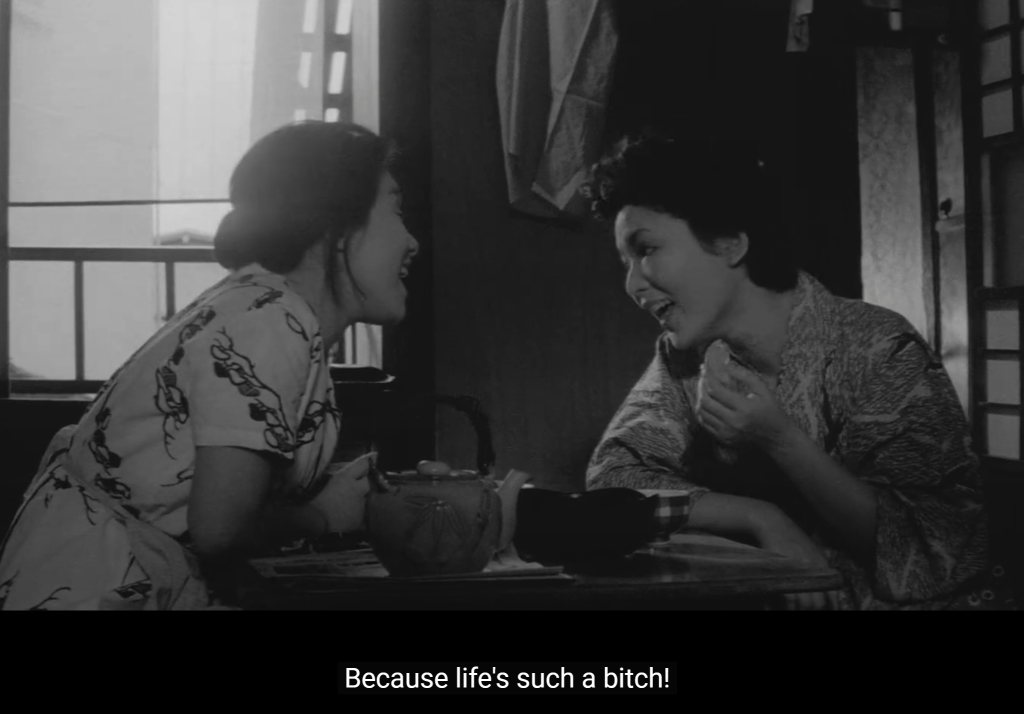
    From the tailend of the Taisho period to the nascent years of the post-war Japanese economic miracle, the movie contends that nothing has really changed; everything but a part of a cycle. The sincerity of the religious is always undermined by the greedy. Women’s achievements are always treated as lesser and more easily dismissible. And sex, for good or for ill, is always a potent tool and path that women can wield to achieve a better life. Life is a bitch, Tome decried in the film, and bitching and being bitched on, whether literally or figuratively, is a constant throughout the film. The external circumstances might be in constant flux, but the substance of the Japanese psyche remains the same, a powerful thesis to make in a country that is proud of its newfound pacifism manufactured less than two decades removed from its imperialistic adventures. 

    That life is just a cycle of predictable phases, like that of an insect, can be downright nihilistic in its reductionism, especially in the face of human striving and objective progress. But therein also lies the power to be able to turn certainty on its head—by knowing how it goes, one can crack the code towards change.

    As it will be revealed in the end, The Insect Woman shows that in a sense, what seems to be the only way can also be the way out.

  • Black Rain, dir. Shohei Imamura (1989)

    Black Rain, dir. Shohei Imamura (1989)

    An unjust peace is better than a just war.

    Those words, uttered in exasperation by one of the characters in one of the film’s closing sequences, sums up the emotional core of this visual and narrative masterpiece by Shohei Imamura. It is another showcase of his directorial prowess, reminiscent of The Ballad of Narayama, his masterpiece from 6 years before.

    Indeed, I can’t help but compare the two in terms of the breadth and scale of the commentary he wanted to make about human life, human relationships, and Japanese society. 

    While I would surely put this film on a must-watch list for those interested in how the Pacific War affected the Japanese people, I would argue that that is not the main topic or theme of this movie. Whereas Narayama used the Japanese legend of ubasute to explore aging, how the elderly is treated, and indeed, the whole circle of human life in pre-modern Japan, Black Rain used the tragic atomic bombing of Hiroshima to provide a profound commentary on the many levels of stigma, humiliation, and humility (some times to a fault) in the immediate post-Pacific War era Japan. 

    Indeed, while the day of the Hiroshima bombing was sufficiently and painstakingly portrayed and explored, I would argue that it served better as a narrative device that contextualized and enriched the texture of the present story, set five years after, than as a “subplot” on its own. I thought that this was a wise choice because through it, along with the use of black and white, this film has become a timeless work that would speak not only to the victims of war, but also to the victims of the anxieties, pains, and yes, death, in peace time.

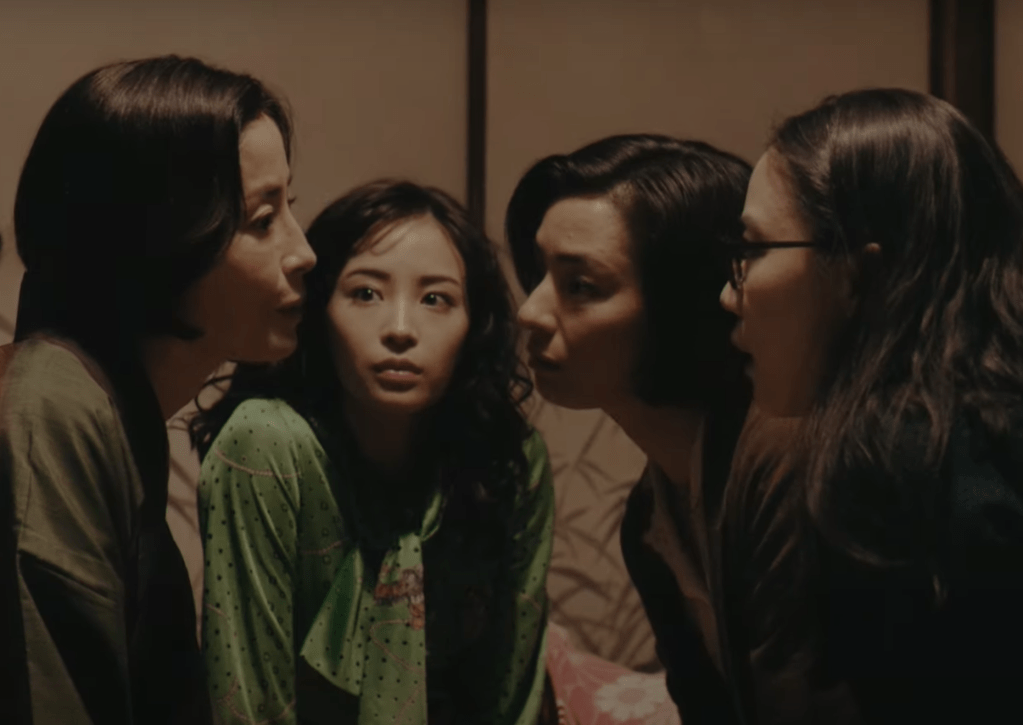
  • Asura and Our Little Sister:  Kore-eda’s natural humanism

    Asura and Our Little Sister: Kore-eda’s natural humanism

    Earlier this year, I binged-watched Asura, Hirokazu Kore-eda’s latest work which is a limited series on Netflix (7 episodes). To me this is a much more impactful work than his other Netflix series, The Makanai, both in terms of the story and the depth by which the story is told and made to affect viewers. I can say that as a director, Kore-eda’s humanistic style and talent really shines in a (TV) series because he is able to flesh out characters and relationships much more fully than in a film.

    Coming at the heels of a rewatch of Our Little Sister, I can’t help but compare the two to each other (because of how the stories have many similarities aside from the fact that they revolve around four sisters) and to Kore-eda’s other works that I have seen so far.

    To those who have watched even a few of his works, it is obvious that Kore-eda is able to portray humanism very naturally in his films, especially in directing characters and the dynamics between them. It strikes me how much drama and clarity of emotion can be had in subtlety–whether because of the reservedness of Japanese culture itself, or Kore-eda’s direction, or both. This is opposed to how humanism is sometimes forced in more plot-driven stories, especially in Filipino films (from where I come from), which always appeal to poverty or political/cultural/structural curses, etc.

    In both Asura and Our Little Sister, I love how Kore-eda directs the scenes of the four sisters together. Each pair of sisters, particularly the Tsunako-Makiko and Takiko-Sakiko pairings in Asura, have their own dynamics when they are together that are deftly made to come alive on the screen by Kore-eda and the sister ensembles.

    But the magic is when each of the four sisters in both works, even when they’re together in scenes, are still able to shine as their own characters. I have to give props to Suzu Hirose, the only actor appearing in both works, who has shown incredible range particularly in Asura. While it is a bit of a given that she will be a focus as the titular character in Our Little Sister, she held her ground well among the veterans in Asura, showing how much she has developed in her craft in the decade between these two works.

    There’s this one scene in Asura, in the latter half of the series, when the whole family had to come to the ancestral home to sort an incident caused by the father which reminded me of a Hieronymous Bosch painting. When you look closely each object or character in this painting, something distinct is going on with or about it it. But when you look at the painting as a whole, everything comes together beautifully. Kore-eda’s blocking and choice of shots in scenes have the same effect in scenes that involve multiple characters.

    Which lead me to a final point, about how there is not one emotional core in many, if not most, of Kore-eda’s works.

    In both Asura and Our Little Sister, you can say that there are main plots and there are subplots, but nothing grand or forced–above all, it’s the kaleidoscopic complexities of being human that rises to the surface. It’s humanity of the characters driving the stories, not a big plot or other external circumstances driving the characters. There are themes, yes, for example, queerness in youth in Monster, poverty in Shoplifters, truth and law in The Third Murder, wrestling with grief in Maborosi, or finding your calling in The Makanai. These expose messages or morals, but through and through, it’s really the existentialist beauty that stands out.

    No wonder Kore-eda’s movies feel so grounded that some of his works almost feel like documentaries in their groundedness (he did work extensively as a documentarist). The slice-of-life production aesthetic and the almost meditative cinematography that he uses contributes to this existentialism—you almost feel like you live with the characters, if not the characters themselves, by how grounded to reality and the world the characters are. The effect of this is we see ourselves reflected in them in one way or another.