Tag: Akira Emoto

  • Villain, dir. Sang-il Lee (2010)

    Villain, dir. Sang-il Lee (2010)

    I want to begin by saying that it will not be difficult to point out who the namesake villain of the movie is if we base it on the efficient cause of what happened to the victim. If that’s the whole story, the film would’ve ended at about the halfway mark. Thankfully, Sang-il Lee’s 2010 Best Film awardee (Mainichi Awards and Kinema Junpo Awards) is not just about a villainy or even villainies, but so much more.

    On the surface, Villain is a very competent and entertaining thriller that will keep the audience glued to the screen despite a slow start. It even makes a more-or-less substantial exploration of what really makes a villain. But it’s different from the usual crime-fugitive fare with how it rises above the conventions of its genre to explore a universal and almost unique human ability: the capacity to cherish another human being.

    While the visual style is not necessarily “meditative” (e.g., lingering shots, long takes, sparse camera movements) this film is indeed a meditation on what the act of cherishing does to the one who cherishes. I am careful to highlight this because narratively, it’s easier to show the things that the one who cherishes does to the cherished (not that that aspect wasn’t also explored by the film).

    For Villain, cherishing reveals our true selves and, in the process, changes us.

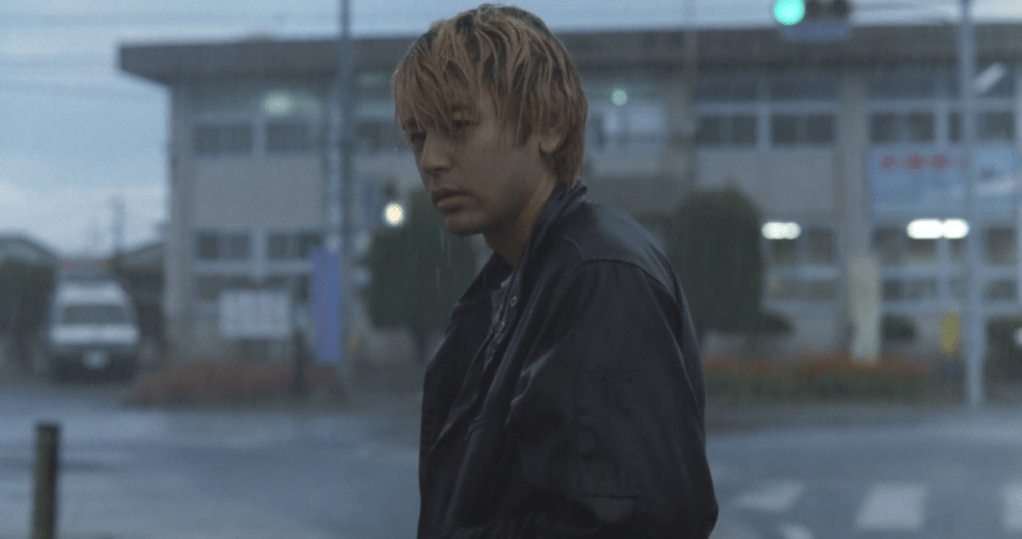
    This exposition stands on the heart-rending performances of Satoshi Tsumabaki and Eri Fukatsu, Tsumabaki, in particular, as the uninspired young man Yuichi, delivers an engrossing character study in a role that is at once familiar and strange. Yuichi’s central inner conflict, the unquiet specter of his own depravity as his affection for Fukatsu’s Mitsuya grows, produced some of the most intense scenes in the film, including the most emotionally charged sex scene I’ve seen so far in Japanese cinema.

    Veterans Akira Emoto and Kirin Kiki also delivered in their supporting performances as the father of the victim and Yuichi’s grandmother, respectively. Their stories of cherishing are underscored by loss—unjust loss of a beloved daughter, and the loss of a grandson to waywardness.

    I wouldn’t miss mentioning how surprised I was again that Joe Hisaishi did the score for this film. As with Hana-bi, I was clueless about his involvement here but unlike in that movie, I wouldn’t have guessed that it was Hisaishi who wrote the music for Villain.

    Listening to the score on its own, which also includes the closing credits track Your Story, I wouldn’t have guessed that it was the score for a crime movie (one reviewer even described it as “a soothing treat”). Equal parts contemplative, foreboding, sweet, and wistful, the score underscores what I think is the main point of the movie as I’ve shared above: that cherishing and loving someone reveals your humanity, including your depravity, and changes you along the way.
  • Maborosi, dir. Hirokazu Kore-eda (1995)

    Maborosi, dir. Hirokazu Kore-eda (1995)

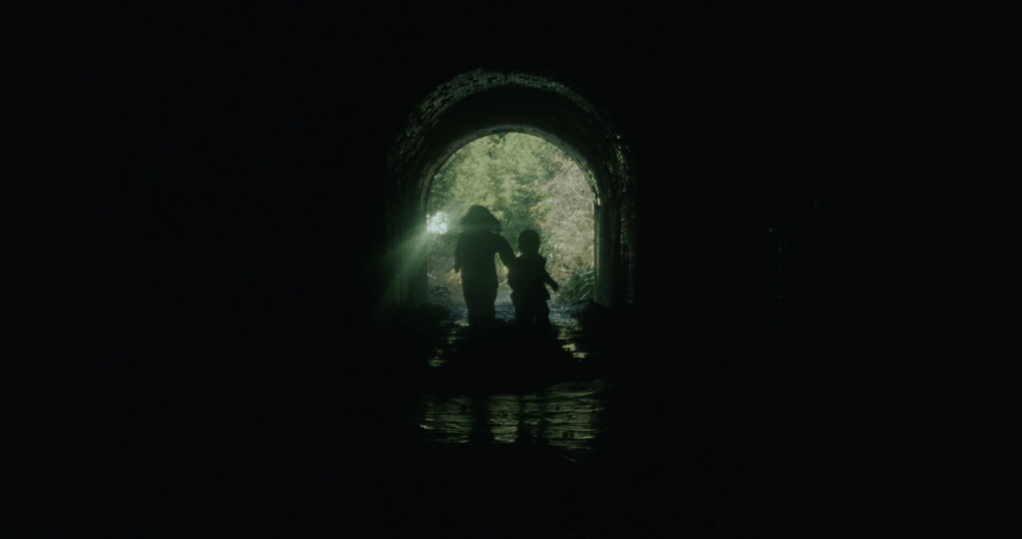
    Light is the language of cinema, and this work is an embodiment of that fundamental truth about films. In Hirokazu Kore-era’s first full-length narrative feature, light is not just what goes into the camera—it is a character of its own masterfully directed to play a silent but important role in the story of a quietly unfolding grief. The film, after all, is called Maboroshi no hikari, or an illusion of light, and while that refers to an important plot point, it is nevertheless an appropriate reflection of the way Kore-eda worked low-key magic with how he wielded light in this film.

    This film is patient, and it is smart about where to spend what kind of shot and for how long. As such, it requires the same patience from its audience. Sequences and scenes are not lingering here, they are downright long in a way that the passage of time fills you. The story is actually very, very simple and is captured in a penultimate scene but I believe that the point of the film is to elucidate humanity in sadness through visual storytelling. 

    That the film is full of long takes doesn’t mean it’s boring. On the contrary, I think this is one of Kore-eda’s most beautifully shot movies. From the raw but cleanly composed urban scenes of Osaka, to the breathtaking wide-angle sweeps of the ocean in a coastal town along the Sea of Japan, this movie has that signature Kore-eda polish while still somehow looking very grounded. Masayuki Suo’s Shall We Dance? and its similar mise-en-scene that is almost feels unstaged came to mind while watching. My favorite is the funeral procession scenes, both the overhead shot and the ultra-wide shot backgrounded by the sea and a dark sky. They are unassuming but they are two of the most memorable I’ve seen so far in Japanese cinema. 

    As I’ve been tracking year’s best Japanese films based on awards from the 40s to the present, I thought that Maborosi would have a place among those honored for 1995. But that year was dominated by A Last Note of veteran director and screenwriter Kaneto Shindo, winning all best film honors from the five longest-running awards that year and deservedly so. (Maborosi was very hot in the international festival circuit though). I think it’s always futile to compare which is the better film in context of awards because of myriads of reasons (incl. differences in awards constituencies, etc.). However, if one wants to know the best films in Japan in 1995, Maborosi would definitely be among them. Heck it was in Roger Ebert’s year-end best-of-the-year list.

  • Swimming gracefully: Imamura’s The Eel (A review)

    Swimming gracefully: Imamura’s The Eel (A review)

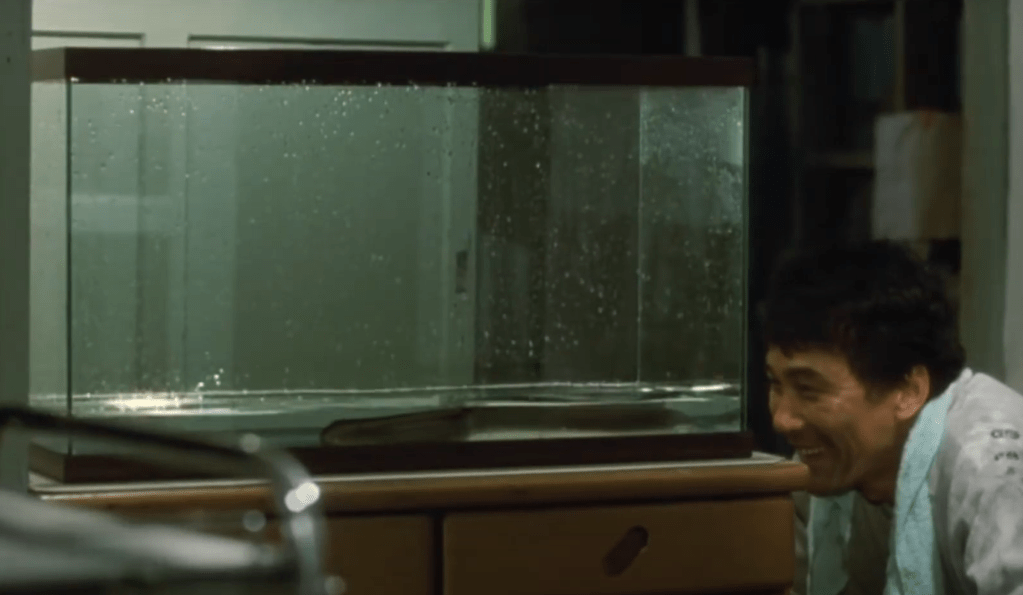
    In films like this, where a central object of curiosity is highlighted by the title (in this case, the eel), it’s easy to become fixated on it and overlook other important aspects that deserve attention.

    As I watched the film, I found myself consumed by the question, “What did the eel symbolize?” Was it simply a pet, a representation of the protagonist’s traumas, both external and self-inflicted? A symbol of his growth, with the eel embodying both his “before” and “after”? Was it his conscience or alter ego?

    A deeper analysis could support all these interpretations, and indeed the eel itself warrants close visual and narrative analysis, as it’s crucial to the story. But The Eel deserves appreciation beyond its symbolism, as this Palme d’Or-winning work of Shohei Imamura shines in many other aspects.

    This includes the powerful depiction of both honne (true inner feelings/true self) and tatemae (outward actions) by the lead actor, a young Koji Yakusho, who just recently (2023) won the Best Actor award at the Cannes for another film. Playing a former convict on parole, Yakusho was effective as the measured man who knew he has paid for his crime but is still racked up by the trauma of that past.

    Imamura’s signature visual style also stands out, showcasing “rawness” within graceful compositions and well-blocked mise-en-scène. Much like in The Ballad of Narayama (animalistic passions alongside dignity in death), Vengeance is Mine (serial murder and incest next to gentlemanliness), or Black Rain (the grim effects of atomic bomb radiation alongside quiet rural scenes), The Eel juxtaposes orderly domestic life with bloody violence. Imamura, like the eel, can swim gracefully between these contrasts, making them into works of cohesive wholes that are still appreciated until today.

    This style also allowed him to compellingly create what I think (so far, among the four that I’ve watched) is the film with most diverse set of characters. While depth could reasonably be expected only of a few of the characters given the restrictions of the medium, The Eel is able to provide a realistic response to the question of how a society reacts to ex-convicts in its showcase of a colorful cast of characters, all very human.