Tag: Blue Ribbon Awards

  • Contrasts, consequences: Kore-eda’s Nobody Knows (A review)

    Contrasts, consequences: Kore-eda’s Nobody Knows (A review)

    This review contains minor spoilers.

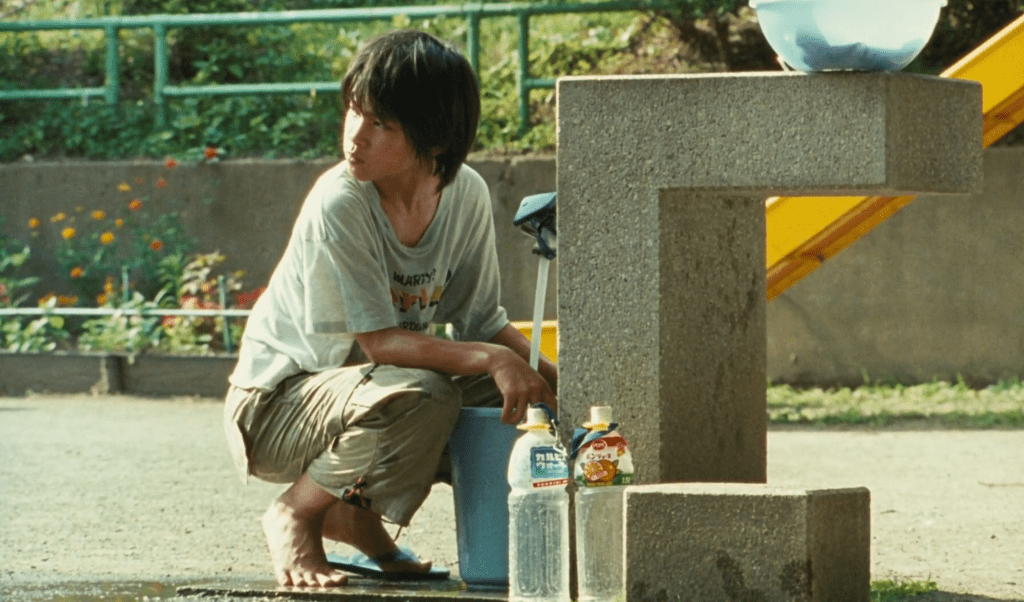
    I’ve never seen a film with an ending as excruciatingly painful as it is quietly tender, as Hirokazu Kore-eda’s 2004 childhood abandonment drama Nobody Knows. Yet even the word “drama” might be overdoing it, for this scandalous film burdens its viewers with the weight of reality in such a dignified and constrained manner.

    “Nobody knows” speaks about the fact that save for a handful of people, nobody really knew nor cared, about a very young brood after their mother went missing-in-action.

    This is in stark contrast to how the audience is burdened with the full knowledge of the brutality of parental indifference to what is supposedly the most crucial phase of human life. The result is a film that implicates the viewer with a sense of responsibility for a reality that they might never encounter in real life, made all the more devastating in its quiet, matter-of-fact portrayal.

    Kore-eda’s signature storytelling techniques work particularly well here to evoke such contrast. Harking back to his days as a documentary filmmaker, he presents the charming but messy domestic life with children using a grounded and unadorned style, almost like reportage.

    And then there’s Kore-eda’s use of mono no aware, a uniquely Japanese sensitivity to the impermanence of things, to evoke in the film a strong sense of vulnerability, frustration, and eventually, resignation. This is mainly showcased through the recurring juxtaposition of extremely tight shots of the children and inanimate objects such as toys and household implements, as if the objects mirror the children’s emotions. Together with his trademark lingering shots, Kore-eda used that visual motif to intimately portray innocence, and then later, innocent pain.

    Another study in contrast can also be found in the protagonist Akira, in an award-winning portrayal by Yuya Yagira. Akira is the classic “child who grew up too soon”, learning to have that perceptive look of a mature adult at a very young age. But the most excruciating aspect of his performance is the painful conflict between irreconcilable desires: on one hand, to be a responsible oniichan to his siblings, and on the other, to live a boyhood so ordinary it’s extraordinarily out-of-reach for someone in his situation.

    There is a minor story in the film where the children get to take care of their own individual plants after a particularly happy event in their confined lives. What would’ve been a teaching moment in responsibility, something that parents would want to give their children early, quietly devolves into a symbol of decay and neglect as the physical effects of parental neglect of them becomes inescapable. 

    With this, my final thoughts go to the contrast between Akira and his mother. Not only was she absent, but in her brief appearances, she is patronizing, evasive, and emotionally manipulative. As it is, the film is already tragic, but what’s more devastating is how her irresponsibility was not just in her neglect, but in her refusal to grow up—even as her son was cruelly forced to.
  • The Insect Woman, dir. Shohei Imamura (1963)

    The Insect Woman, dir. Shohei Imamura (1963)

    “Ma, what other way is there?”

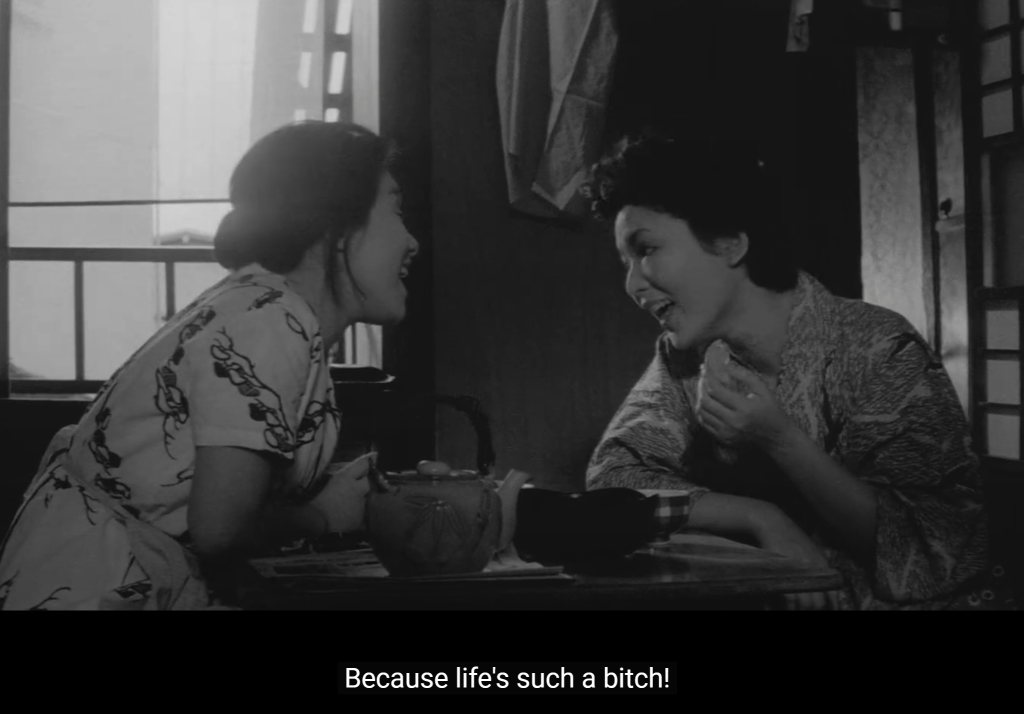
    There is just so much to unpack from that remarkable line from another of Shohei Imamura’s masterpieces, the taboo-revelling The Insect Woman (1964), that I believe it represents both the narrative-thematic and emotional cores of the film. Imamura delivered through this film with his deftness not only with the black-and-white format but also with cinema’s unique language–editing. By combining masterful editing through the effective use of stills and a callback to the Japanese cinematic tradition of benshi, Imamura was able to showcase a masterpiece that not only unfolds in the viewers’ screens, but more importantly, in the fertile imaginations of their minds.

    On the surface, The Insect Woman is a tale of survival and rising through the ranks, only to be met by the harsh realities of life after war and an unequal society. Sachiko Hidari is remarkable as the protagonist Tome, who played with such ease and depth the life of a farm girl-turned-prostitution madam in the fast-changing Tokyo of the 50s and the 60s. Tome’s life, as well as the lives of those around her—her daughter, her friends, even her lover and her family back in rural Tohoku—represent the life of insects, with its endless cycle of birth, growth, transformation, and death.

    But is it just their lives though? We can answer this by looking more closely at the transliteration of the film’s Japanese title, “Entomological Chronicles of Japan.” To Imamura, Tome’s life is but a representation of the Japanese people and indeed, of Japan itself. Or is Japan really the “insect woman”?

    From the tailend of the Taisho period to the nascent years of the post-war Japanese economic miracle, the movie contends that nothing has really changed; everything but a part of a cycle. The sincerity of the religious is always undermined by the greedy. Women’s achievements are always treated as lesser and more easily dismissible. And sex, for good or for ill, is always a potent tool and path that women can wield to achieve a better life. Life is a bitch, Tome decried in the film, and bitching and being bitched on, whether literally or figuratively, is a constant throughout the film. The external circumstances might be in constant flux, but the substance of the Japanese psyche remains the same, a powerful thesis to make in a country that is proud of its newfound pacifism manufactured less than two decades removed from its imperialistic adventures. 

    That life is just a cycle of predictable phases, like that of an insect, can be downright nihilistic in its reductionism, especially in the face of human striving and objective progress. But therein also lies the power to be able to turn certainty on its head—by knowing how it goes, one can crack the code towards change.

    As it will be revealed in the end, The Insect Woman shows that in a sense, what seems to be the only way can also be the way out.

  • Flowers, fire, blood, Joe Hisaishi: Takeshi Kitano’s Hana-bi (A review)

    Flowers, fire, blood, Joe Hisaishi: Takeshi Kitano’s Hana-bi (A review)

    This review contains mild spoilers.

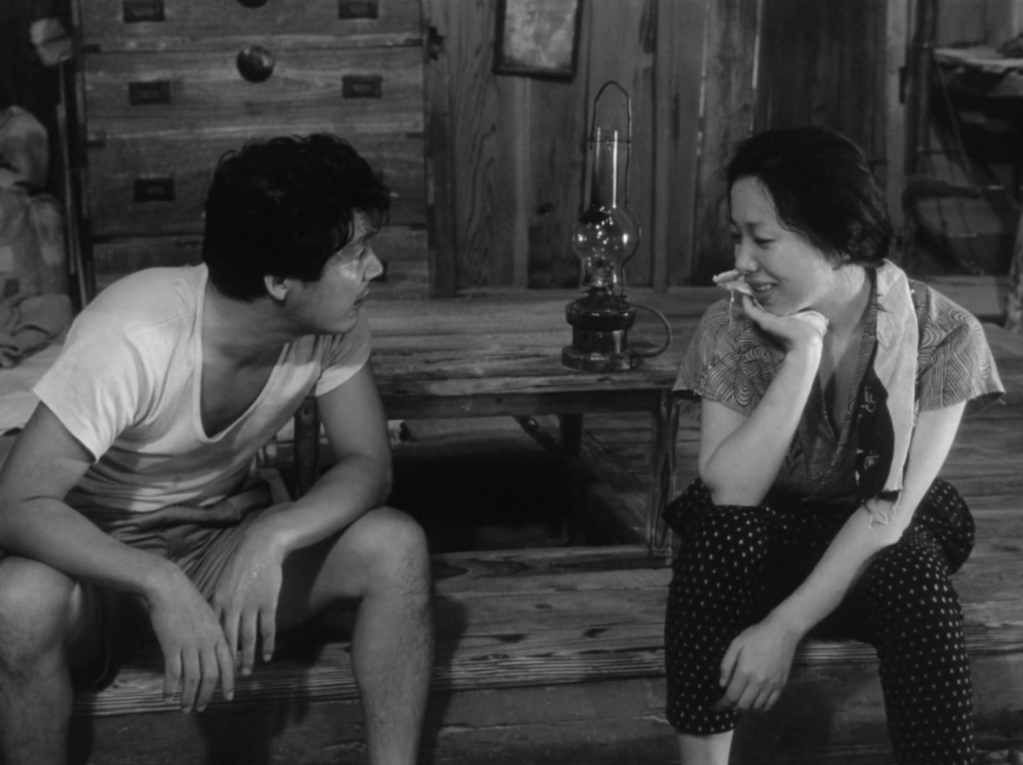
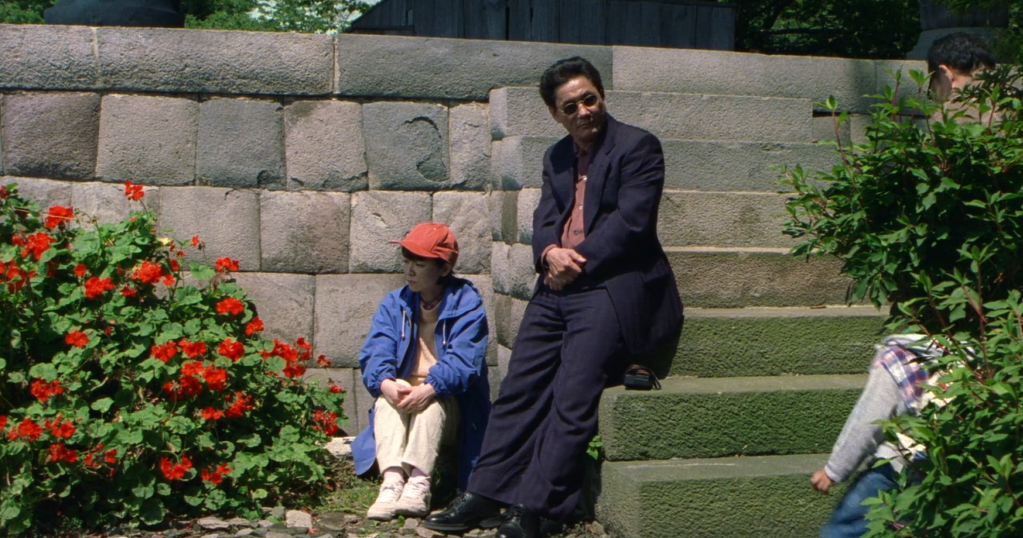
    Man commits a crime for the sake of his beloved is a tale as old as time. But Takeshi Kitano took this familiar narrative and flourished it with painful, understated, and at times violent beauty to set off a spectacle worthy of the title Hana-bi (Japanese for ‘fireworks’), his Golden Lion-winning 1997 masterpiece.

    The title itself reveals two of the film’s prominent motifs: flowers (花, hana) and fire (火, hi/bi), more specifically, gunfire. Hana-bi, usually tagged as a “crime drama” in reviews and synopses online, almost fetishizes these motifs if not for the curious and quietly visionary way that Kitano directed this work.

    A great example of what I’m talking about is a scene in the film’s second half where the camera pans over a painting of tiny yellow flowers that are also the kanji for “hikari” (光, ‘light’). It then zooms out to reveal the flowers falling into a serene snowscape. The calmness is jolted when the word “suicide” is revealed to be painted in big, bold, scarlet kanji, marring the pure landscape. The film then moves to a bloody real-life scene, before returning to the painting, now splattered with scarlet paint as a character pulls the trigger of an unloaded gun. This seamless blend of serenity and violence, present throughout the film, culminates in a finale that is one for the books.

    My thoughts on this film wouldn’t be complete without mentioning Joe Hisaishi’s score. I might be biased because I am such a big fan of his wonderful work with Studio Ghibli. But it was so satisfying to hear a familiar style right at the opening sequences and be pleasantly surprised to see Joe Hisaishi’s name as the scorer. Hana-bi, it turns out, was already his fourth collaboration with Kitano.

    The effect of Hisaishi’s score is heightened by how camera movements were so sparse that even “action” sequences were stylistically plain. With this, the score became instrumental in dictating “movement” and not just mood. It was equal parts pensive and brooding, giving the feeling that something is brewing that will explode and shock.

    And shock it did. The ending is as ambiguous as it gets, leaving the audience postulating what happened. And in that final shocker lies the X factor as to why this film is a cult favorite, in the vein of Fight Club. Hana-bi seemed to have treated death and violence flippantly, but it is not a film to teach about morals. However, it is not hollowed of substance, either.

    Indeed, in Japanese culture, the word used for the phenomenon called “double suicide”, shinjuu, is formed through the characters for “heart” and “center/inside” (心中), reflecting the inextricable link between the participants of such sad endeavor. It’s an open question whether this was the fate of some of the characters, but such oneness reminds us that life and death, and beauty and violence, are not just intertwined—they are inseparable.

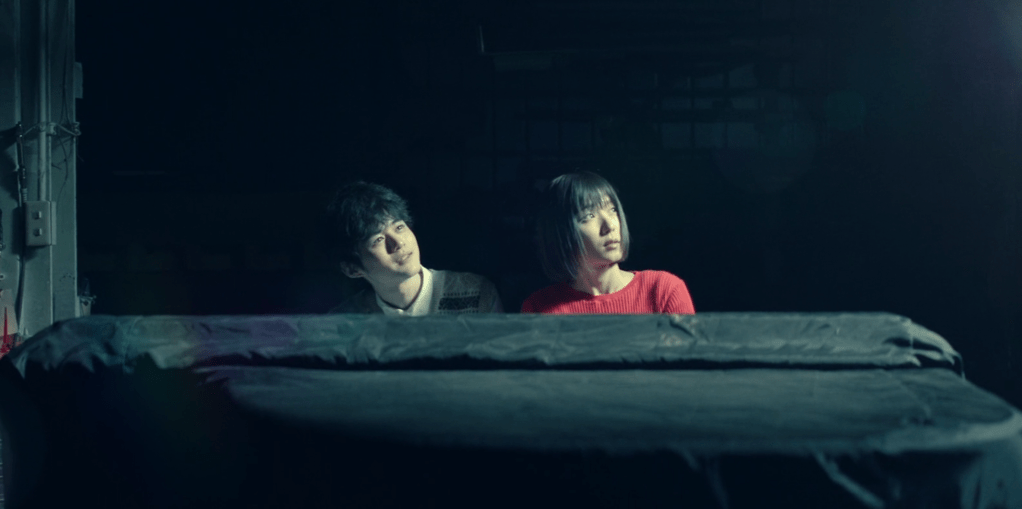
  • Harmony or distraction? Music in Listen to the Universe (A review)

    Harmony or distraction? Music in Listen to the Universe (A review)

    Here’s a little trivia about the Oscars: Did you know that there is an existing category called Best Original Musical in the Academy Awards? However, since it was established in 2000, no year has seen enough original musical films (read: not an adaptation) for a competition to be considered (there must be at least 10).

    But the thing in the rules for this category that made me remember that trivia in relation to Listen to the Universe is the qualification of narrative relevance. To be considered, the music in the film “must further the storyline of the motion picture.” This is different from the film’s score, or say, a soundtrack that goes with the movie but exists outside of the narrative, both of which usually only serves to heighten the emotional aspect of the work.

    I am bringing this up because in the case of Listen to the Universe, the music and the musicianship of the four competing young concert pianists are too much at the center of the story that it begs the question: Do these musical pieces, especially the classical ones, “further the storyline of the motion picture?”

    There’s no question about whether music belongs in the film; the score is expertly crafted. But how does Clair de Lune or Rachmaninoff’s Piano Concerto no. 3 move the story forward? Why were these pieces chosen and not the others? While undeniably beautiful and significant, they ended up stealing the show without contributing much to the plot or character development. Their complexity, while impressive, can be intimidating to ordinary viewers, narrowing the film’s potential audience.

    This point about “ordinary people’s music” versus the highfalutin fare that the elite usually enjoys has been tackled but quite insufficiently to make a solid emotional impact. Aside from that, the film also attempts to explore a range of other themes: artistic inspiration, the nature of genius, and the purpose of art in the artist’s life.

    But with four distinct performers, it struggles to dive deeply into any one theme. The subplot involving one character’s journey with grief, which seems to be the movie’s emotional core, feels underdeveloped and doesn’t quite land, although the character’s rousing final performance offers a brief emotional payoff.

    That said, Listen to the Universe has its strengths. While none of the actors are actual concert pianists, their performances—directed by Kei Ishikawa—are convincing. Along with nimble editing, the film made virtuosos out of them.

    And where the film falters in using music as diegetic sound, it compensates with a striking score. The score and the visuals work together, contrasting or complimenting each other to heighten the “textures” or the “feel” of various scenes so that in some ways, the harmony between humanity and the universe that the title evokes somehow rings true.

  • Woman in the Dunes, dir. Hiroshi Teshigahara (1964)

    Woman in the Dunes, dir. Hiroshi Teshigahara (1964)

    “Isn’t it exhausting, walking around so aimlessly?”

    Those searing and profound words, uttered by the titular character and what I think is the core of the film’s pathos, would find incredible vindication in the unfolding of this ambitious work of cinema. I usually write these “reviews” as if I’m thinking out loud, but the experience of watching Woman in the Dunes is so astounding I’m still trying to organize my thoughts on the breadth and depth that this film explored regarding the fundamentals of human nature.

    The narrative premise of the film is not unique but as with other great films, the proof is in the showing (and not just the telling). The camera work in this film is one of the most effective I’ve seen in Japanese cinema, making you feel what’s happening more than just making you know. The hyper close-up shots of skins, eyes, hair, and pores, juxtaposed with shots of slow-moving sand dunes buffeted by the wind are not just claustrophobic—they’re carnal. There’s such a sensual quality to the images of the dunes dripping like bodily fluid, but the hydraulic quality also gives off the sense that the dunes are about to fall on you and trap you, in the way they threaten the characters. The claustrophobia gets to your skin then through to chill your bones, as if you’re watching horror fare without the ghosts and the jump scares.

    But just as the oasis have to be dug up so are the more precious gems of film can be found deeper in the story. Aside from being a visual treasure, this film is a commentary on our understanding of the basest drivers of human existence, those that set us apart from animals. It is a debate between tradition and modernity, between self and community, between being firmly rooted and starting anew. Throughout the film, one will be disappointed by how contented people can be in situations that seem to hostage them, until one realizes that they themselves might also be in situations where they are “trapped” yet have no will to get out because that’s what they have been used to. Habit then becomes the enemy of progress and freedom. Or is it? Are progress and freedom even that desirable? Those are some of the big questions that this movie leaves.

    I didn’t mind how the movie is quietly triumphalist in the end. First, because it was not patronizing. Second, and more importantly, the film earned it both narratively and emotionally. By emotionally, I meant that the film retained its pathos while being satisfying in the end. There is resignation, yes, but there is also hope, purpose, and creativity, those qualities that set us apart from other creatures and ensured the survival of our species from the beginning.