Tag: Blue Ribbon Awards

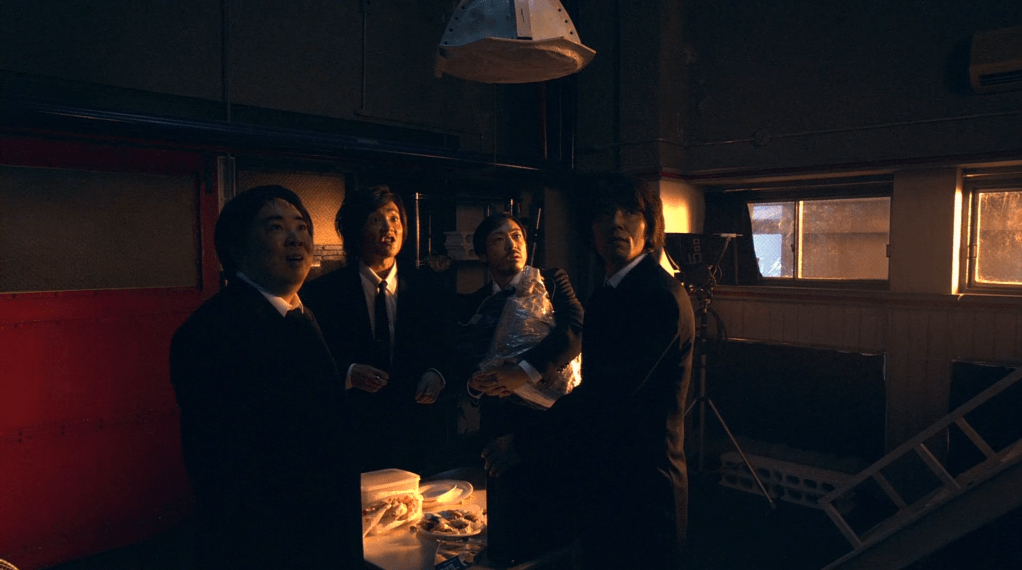
  • Kisaragi, dir. Yuichi Sato (2007)

    Kisaragi, dir. Yuichi Sato (2007)

    It’s not all the time that you come across a movie that’s thoroughly and genuinely entertaining and at the same time an empathetic, grounded, and most importantly, relevant commentary on contemporary society. 

    Kisaragi is both. The entertainment aspect is hard to miss and it’s built within the premise of the movie. Five die-hard online fans of Miki Kisaragi, a low-level idol who allegedly committed suicide, decided to meet in-person for the first time to commemorate her 1st death anniversary. The commemoration quickly evolves into an “investigation” into whether she really took her own life. Twist after twist about the incident and the true identities of these “fans” made for a wild ride in a rollercoaster of emotions, one that is not shallowly contrived and is consistent to the emotional core of the whole movie throughout. That it was 2007, during the era of nascent social media, when online social fandoms were also only gaining ground across the world, make for a curious context that will have viewers amused at the idiosyncrasies of online interactions between fans during that time, and at the same time, realize that some of the same fandom idiosyncrasies still exist today. 

    And there also lies the potent social commentary that Kisaragi is. It’s thoroughly empathetic to the fan in that while it finds comedy in the very things that make fans fans, it doesn’t make fun of them. We will always find weirdness in other people, or perhaps, in ourselves, of the way we are as fans of whatever or whoever we are fans of, but Kisaragi finds the humanity in those things. It’s curious how the film has withheld the face of Kisaragi until the very end, because our initial instinct as viewers most probably would be to know whether this idol is beautiful and worth fawning over. But this is the commitment of the film towards focusing on the five fans, although it has its own commentary on the idol life as well as the parasocial relationship existing between them and their fans.

    I love how by the end it was completely satisfying both as entertainment and as an introduction to fandom culture. But aside from these, the film also leaves you with questions to reflect on after. Things like, how much influence do fans exert over the intensely personal aspects of idols’ lives, or what kind of expectations are fans entitled to from their idols. Japan, even before the world got into K-Pop and such, had a very strong idol scene that has attracted legions of fans and gave birth to phenomena such as “herbivore men”. An appreciation of this film would therefore be more complete with those aspects in mind.
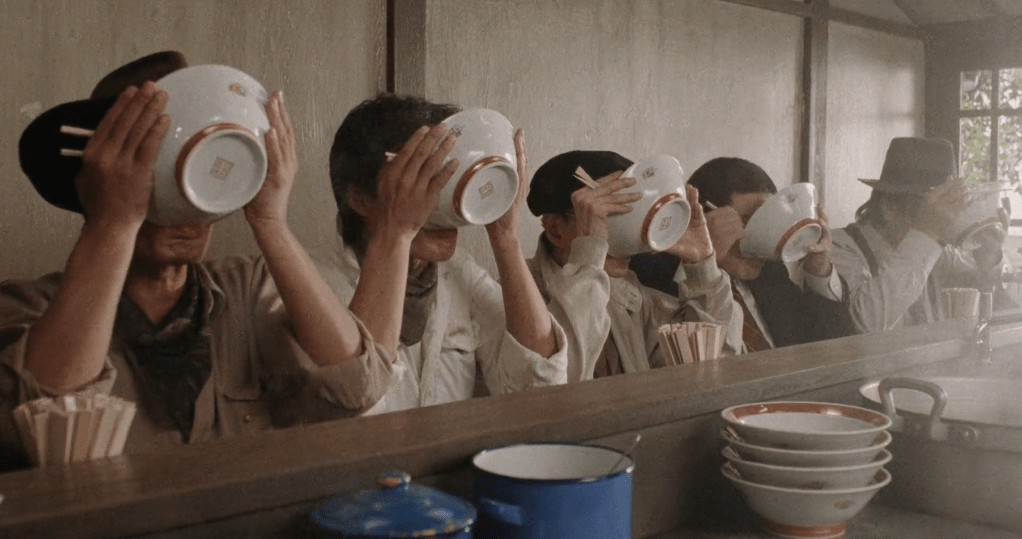
  • Tampopo, dir. Juzo Itami (1985)

    Tampopo, dir. Juzo Itami (1985)

    You know that Scorsese meme that says, “Absolute cinema?” This film is one of those that deserves to be called that. If for Scorsese cinema is

    about revelation — aesthetic, emotional and spiritual revelation…about confronting the unexpected on the screen and in the life it dramatized and interpreted, and enlarging the sense of what was possible in the art form

    then this film can be counted among the most “cinematic”. Far and wide surely there are more entertaining films, more popular films, and even greater films (however you measure greatness) than Tampopo. But watching it from the start you know it is a tour de force of the medium.

    This film is unmistakably about food (ramen in particular) but it goes as broad and deep as it can to portray an “aesthetic, emotional, and spiritual revelation” about food in a way only cinema can bring. Watching Tampopo, you’ll get to taste and savor through your eyes—the spectacles of food and passion is raw and delicious, even delirious at times. There is a certain spiritual quality in the way food and sex are juxtaposed and not in the sense that these are gods or idols that humans “worship” but that both food and sex (and in one scene, food in sex) bring about such a sensory element to self-actualization.

    It may sound abstract but these are all potently brought to life by the comedy and the teamwork of Juzo Itami’s frequent collaborators, his wife Nobuko Miyamoto and Tsutomu Yamazaki. This is my 3rd Itami-Miyamoto-Yamazaki film (the other two being The Funeral and A Taxing Woman), and I can say that I’ve grown fond of the three, especially the chemistry between Miyamoto and Yamazaki. I’m really glad that I watched A Taxing Woman before this although this one is an earlier work. All I can say that there is magic when the two are together in a scene (the final scenes between the two in both films come to mind), and I’m setting out to watch more of their works together (I think there are three more).

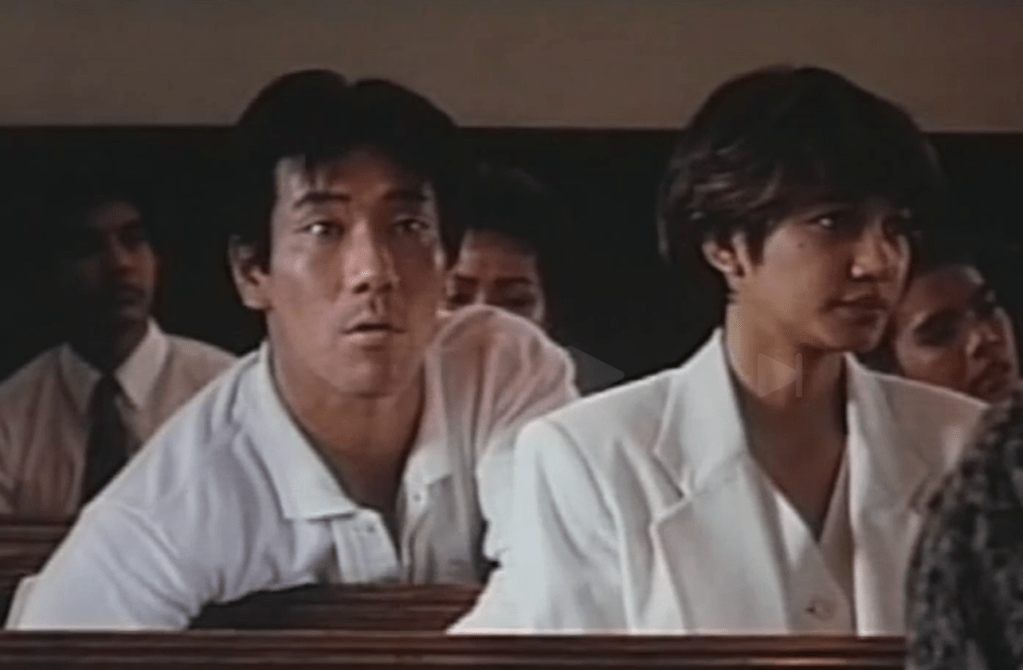
  • Of Japayukis and Zainichis: Yoichi Sai’s ‘All Under the Moon’ (1993)

    Of Japayukis and Zainichis: Yoichi Sai’s ‘All Under the Moon’ (1993)

    Perhaps what sets this apart from other movies that portray minority life in a foreign country is how character-focused it is on the two leads—a North Korean Japanese taxi driver and a Filipina japayuki worker. Of course there is a story but the movie is not driven by the plot so much as how it reveals who Tadao and Connie are in their daily lives as workers in the fringes of Japanese society. 

    While there is a running joke about how one character hates Koreans, I felt like discrimination is much lesser of a theme in the film than what the characters represent in terms of the larger realities of their respective ethnicities’ relationships with Japan and the Japanese people during the early 90s. 

    For Tadao and his mother, it’s the painful history between Japan and Korea (back when it was whole). For Connie and her Filipina friends, it’s the promise of upward mobility by earning much more in Japan than in their home country (hence the Tagalog phrase “Japan, Japan, sagot sa kahirapan”–“Japan, Japan, the answer to poverty). That same theme runs, too, through Tadao’s and his mother’s story but it is colored by the tone of a more complicated past. 

    As a Filipino, I love how Connie is portrayed with enough agency and power, given that she is a woman, working in a highly-sexualized environment, and a foreigner. In her relationship with Tadao, she has the upper hand and she is not portrayed as just after お金, because admittedly, Tadao doesn’t have much. But she conducted her relationship with Tadao on her terms, even if we don’t know whether she really got what she wanted from Tadao in the end.

    PS. This is one of the funniest movies I’ve watched since I began going deep into Japanese cinema.

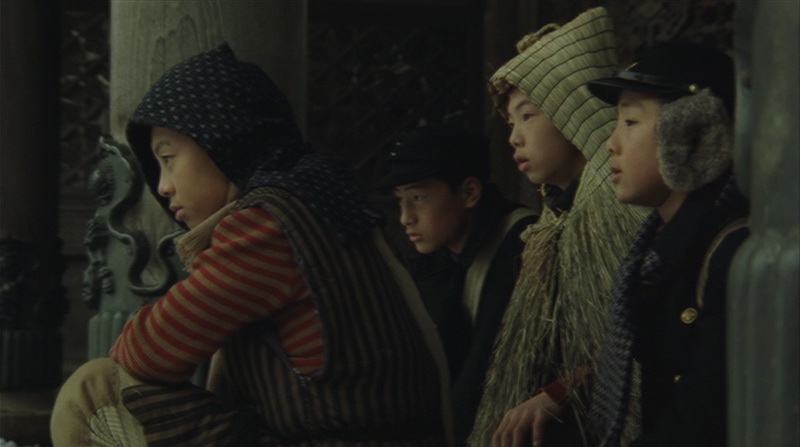
  • Takeshi: Childhood Days, dir. Masahiro Shinoda (1990)

    Takeshi: Childhood Days, dir. Masahiro Shinoda (1990)

    There is just so much to unpack in Masahiro Shinoda’s Takeshi: Childhood Days (‘Shounen jidai’), an unassuming film from 1990 about Shinji, a Tokyo boy who took refuge in rural Japan at the closing year of the Pacific War. 

    What would’ve been a story about how he faced the usual rigors of pre-teen years—peer pressure, socialization in a juvenile dog-eat-dog mini ecosystem, formation of the self, academics, and bullying—is enriched by the unique context of a nation at the height of war. 

    While Shinji and his adoptive community were spared from the bombs and the bloodshed, the war still reached its long, unrelenting arms through various means. Men, even from that rural village, had to be sent away to fight the war, their loved ones anguished with being left behind. They would be subject to Imperial propaganda (and even a film about the German Fuhrer!), and eventually, the American occupation. There is really so much to mine here that if I were to teach about the Pacific War and its depiction in cinema, I would certainly include this as required viewing.

    Another strength of this film is in its quietness, and by that I don’t mean that there is sparse dialogue. The visuals are measured and the mise-en-scene throughout the film is well-composed and clean. This is perhaps to stand as a contrast to what the characters and the viewers would imagine as the noisy, bloodied, and utterly destroyed cities of Tokyo, Hiroshima, and Nagasaki, among others. Save for a brief scene of people running away from burning houses, the film only talked about Tokyo being bombed but never shown. This is where the film invokes the power of cinema’s unique language—editing. By leaving out certain scenes and showing others, the film invites viewers to imagine for themselves scenes that are not present and proximate but are paramount to the lives and fates of the people in Shinji’s community.

    This wouldn’t be complete without talking about Shinji and Takeshi, the two boys at the center of this film. The film made a deliberate choice of telling the story of Takeshi, the title’s namesake, from the point-of-view of Shinji. 

    Perhaps the reason for this is how Takeshi became central to Shinji’s experience of being a local war refugee, how he mediated, both implicitly and explicitly, the different layers of context that the film tackled, as they played out in the life of Shinji. 

    Or maybe it’s the other way around? Shinji becomes central to Takeshi’s experience and understanding of the World War that Japan is participating in, making him understand that the war is national in both effort and reach, and that his little shounen life will be disrupted by it through the life of another boy. Again, this is left for the viewers to imagine and decide.

    However it is, the film does not depict a simplistic relationship. There lies Shinoda’s filmmaking prowess, elevating what could’ve been a common story between two boys into a rich cinematic gold mine.