Tag: Crime

  • Villain, dir. Sang-il Lee (2010)

    Villain, dir. Sang-il Lee (2010)

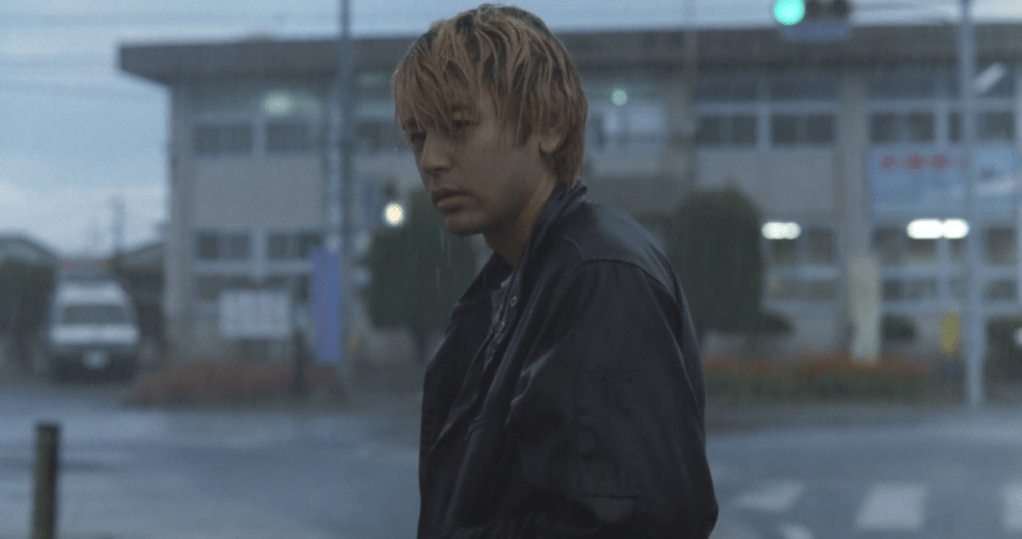
    I want to begin by saying that it will not be difficult to point out who the namesake villain of the movie is if we base it on the efficient cause of what happened to the victim. If that’s the whole story, the film would’ve ended at about the halfway mark. Thankfully, Sang-il Lee’s 2010 Best Film awardee (Mainichi Awards and Kinema Junpo Awards) is not just about a villainy or even villainies, but so much more.

    On the surface, Villain is a very competent and entertaining thriller that will keep the audience glued to the screen despite a slow start. It even makes a more-or-less substantial exploration of what really makes a villain. But it’s different from the usual crime-fugitive fare with how it rises above the conventions of its genre to explore a universal and almost unique human ability: the capacity to cherish another human being.

    While the visual style is not necessarily “meditative” (e.g., lingering shots, long takes, sparse camera movements) this film is indeed a meditation on what the act of cherishing does to the one who cherishes. I am careful to highlight this because narratively, it’s easier to show the things that the one who cherishes does to the cherished (not that that aspect wasn’t also explored by the film).

    For Villain, cherishing reveals our true selves and, in the process, changes us.

    This exposition stands on the heart-rending performances of Satoshi Tsumabaki and Eri Fukatsu, Tsumabaki, in particular, as the uninspired young man Yuichi, delivers an engrossing character study in a role that is at once familiar and strange. Yuichi’s central inner conflict, the unquiet specter of his own depravity as his affection for Fukatsu’s Mitsuya grows, produced some of the most intense scenes in the film, including the most emotionally charged sex scene I’ve seen so far in Japanese cinema.

    Veterans Akira Emoto and Kirin Kiki also delivered in their supporting performances as the father of the victim and Yuichi’s grandmother, respectively. Their stories of cherishing are underscored by loss—unjust loss of a beloved daughter, and the loss of a grandson to waywardness.

    I wouldn’t miss mentioning how surprised I was again that Joe Hisaishi did the score for this film. As with Hana-bi, I was clueless about his involvement here but unlike in that movie, I wouldn’t have guessed that it was Hisaishi who wrote the music for Villain.

    Listening to the score on its own, which also includes the closing credits track Your Story, I wouldn’t have guessed that it was the score for a crime movie (one reviewer even described it as “a soothing treat”). Equal parts contemplative, foreboding, sweet, and wistful, the score underscores what I think is the main point of the movie as I’ve shared above: that cherishing and loving someone reveals your humanity, including your depravity, and changes you along the way.
  • Flowers, fire, blood, Joe Hisaishi: Takeshi Kitano’s Hana-bi (A review)

    Flowers, fire, blood, Joe Hisaishi: Takeshi Kitano’s Hana-bi (A review)

    This review contains mild spoilers.

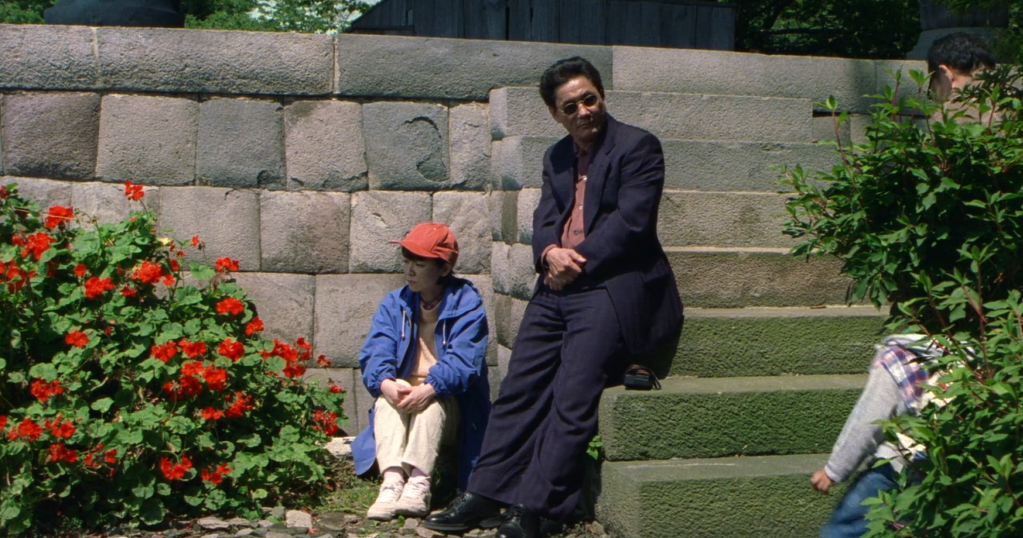
    Man commits a crime for the sake of his beloved is a tale as old as time. But Takeshi Kitano took this familiar narrative and flourished it with painful, understated, and at times violent beauty to set off a spectacle worthy of the title Hana-bi (Japanese for ‘fireworks’), his Golden Lion-winning 1997 masterpiece.

    The title itself reveals two of the film’s prominent motifs: flowers (花, hana) and fire (火, hi/bi), more specifically, gunfire. Hana-bi, usually tagged as a “crime drama” in reviews and synopses online, almost fetishizes these motifs if not for the curious and quietly visionary way that Kitano directed this work.

    A great example of what I’m talking about is a scene in the film’s second half where the camera pans over a painting of tiny yellow flowers that are also the kanji for “hikari” (光, ‘light’). It then zooms out to reveal the flowers falling into a serene snowscape. The calmness is jolted when the word “suicide” is revealed to be painted in big, bold, scarlet kanji, marring the pure landscape. The film then moves to a bloody real-life scene, before returning to the painting, now splattered with scarlet paint as a character pulls the trigger of an unloaded gun. This seamless blend of serenity and violence, present throughout the film, culminates in a finale that is one for the books.

    My thoughts on this film wouldn’t be complete without mentioning Joe Hisaishi’s score. I might be biased because I am such a big fan of his wonderful work with Studio Ghibli. But it was so satisfying to hear a familiar style right at the opening sequences and be pleasantly surprised to see Joe Hisaishi’s name as the scorer. Hana-bi, it turns out, was already his fourth collaboration with Kitano.

    The effect of Hisaishi’s score is heightened by how camera movements were so sparse that even “action” sequences were stylistically plain. With this, the score became instrumental in dictating “movement” and not just mood. It was equal parts pensive and brooding, giving the feeling that something is brewing that will explode and shock.

    And shock it did. The ending is as ambiguous as it gets, leaving the audience postulating what happened. And in that final shocker lies the X factor as to why this film is a cult favorite, in the vein of Fight Club. Hana-bi seemed to have treated death and violence flippantly, but it is not a film to teach about morals. However, it is not hollowed of substance, either.

    Indeed, in Japanese culture, the word used for the phenomenon called “double suicide”, shinjuu, is formed through the characters for “heart” and “center/inside” (心中), reflecting the inextricable link between the participants of such sad endeavor. It’s an open question whether this was the fate of some of the characters, but such oneness reminds us that life and death, and beauty and violence, are not just intertwined—they are inseparable.

  • Kisaragi, dir. Yuichi Sato (2007)

    Kisaragi, dir. Yuichi Sato (2007)

    It’s not all the time that you come across a movie that’s thoroughly and genuinely entertaining and at the same time an empathetic, grounded, and most importantly, relevant commentary on contemporary society. 

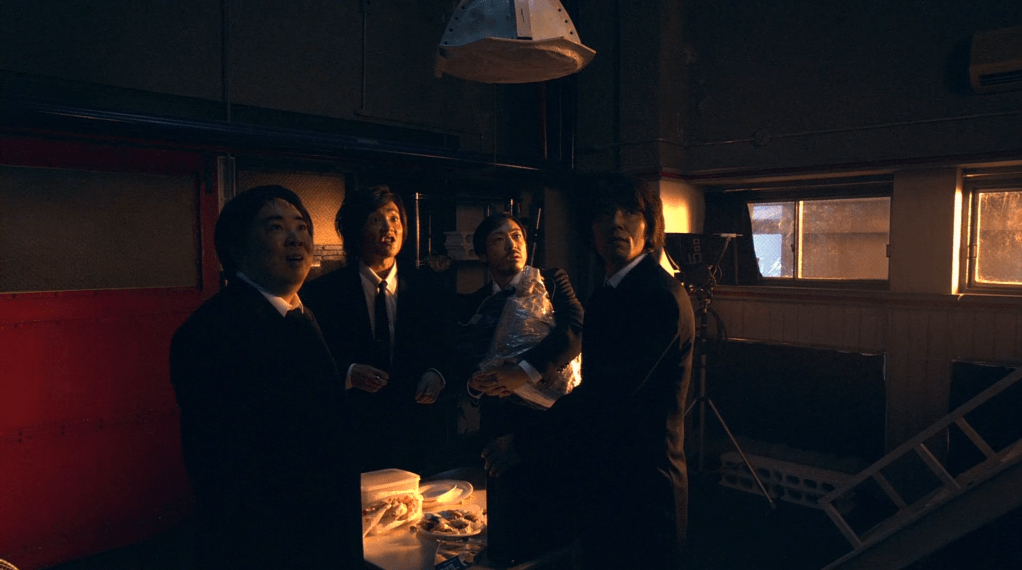
    Kisaragi is both. The entertainment aspect is hard to miss and it’s built within the premise of the movie. Five die-hard online fans of Miki Kisaragi, a low-level idol who allegedly committed suicide, decided to meet in-person for the first time to commemorate her 1st death anniversary. The commemoration quickly evolves into an “investigation” into whether she really took her own life. Twist after twist about the incident and the true identities of these “fans” made for a wild ride in a rollercoaster of emotions, one that is not shallowly contrived and is consistent to the emotional core of the whole movie throughout. That it was 2007, during the era of nascent social media, when online social fandoms were also only gaining ground across the world, make for a curious context that will have viewers amused at the idiosyncrasies of online interactions between fans during that time, and at the same time, realize that some of the same fandom idiosyncrasies still exist today. 

    And there also lies the potent social commentary that Kisaragi is. It’s thoroughly empathetic to the fan in that while it finds comedy in the very things that make fans fans, it doesn’t make fun of them. We will always find weirdness in other people, or perhaps, in ourselves, of the way we are as fans of whatever or whoever we are fans of, but Kisaragi finds the humanity in those things. It’s curious how the film has withheld the face of Kisaragi until the very end, because our initial instinct as viewers most probably would be to know whether this idol is beautiful and worth fawning over. But this is the commitment of the film towards focusing on the five fans, although it has its own commentary on the idol life as well as the parasocial relationship existing between them and their fans.

    I love how by the end it was completely satisfying both as entertainment and as an introduction to fandom culture. But aside from these, the film also leaves you with questions to reflect on after. Things like, how much influence do fans exert over the intensely personal aspects of idols’ lives, or what kind of expectations are fans entitled to from their idols. Japan, even before the world got into K-Pop and such, had a very strong idol scene that has attracted legions of fans and gave birth to phenomena such as “herbivore men”. An appreciation of this film would therefore be more complete with those aspects in mind.