Tag: Hochi Film Awards

  • Contrasts, consequences: Kore-eda’s Nobody Knows (A review)

    Contrasts, consequences: Kore-eda’s Nobody Knows (A review)

    This review contains minor spoilers.

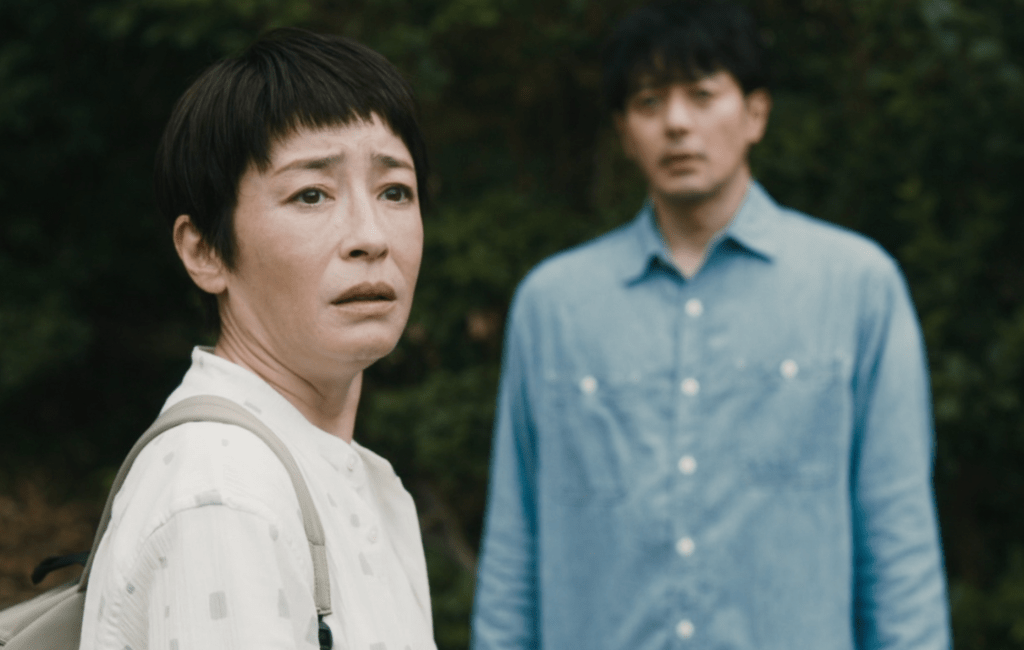
    I’ve never seen a film with an ending as excruciatingly painful as it is quietly tender, as Hirokazu Kore-eda’s 2004 childhood abandonment drama Nobody Knows. Yet even the word “drama” might be overdoing it, for this scandalous film burdens its viewers with the weight of reality in such a dignified and constrained manner.

    “Nobody knows” speaks about the fact that save for a handful of people, nobody really knew nor cared, about a very young brood after their mother went missing-in-action.

    This is in stark contrast to how the audience is burdened with the full knowledge of the brutality of parental indifference to what is supposedly the most crucial phase of human life. The result is a film that implicates the viewer with a sense of responsibility for a reality that they might never encounter in real life, made all the more devastating in its quiet, matter-of-fact portrayal.

    Kore-eda’s signature storytelling techniques work particularly well here to evoke such contrast. Harking back to his days as a documentary filmmaker, he presents the charming but messy domestic life with children using a grounded and unadorned style, almost like reportage.

    And then there’s Kore-eda’s use of mono no aware, a uniquely Japanese sensitivity to the impermanence of things, to evoke in the film a strong sense of vulnerability, frustration, and eventually, resignation. This is mainly showcased through the recurring juxtaposition of extremely tight shots of the children and inanimate objects such as toys and household implements, as if the objects mirror the children’s emotions. Together with his trademark lingering shots, Kore-eda used that visual motif to intimately portray innocence, and then later, innocent pain.

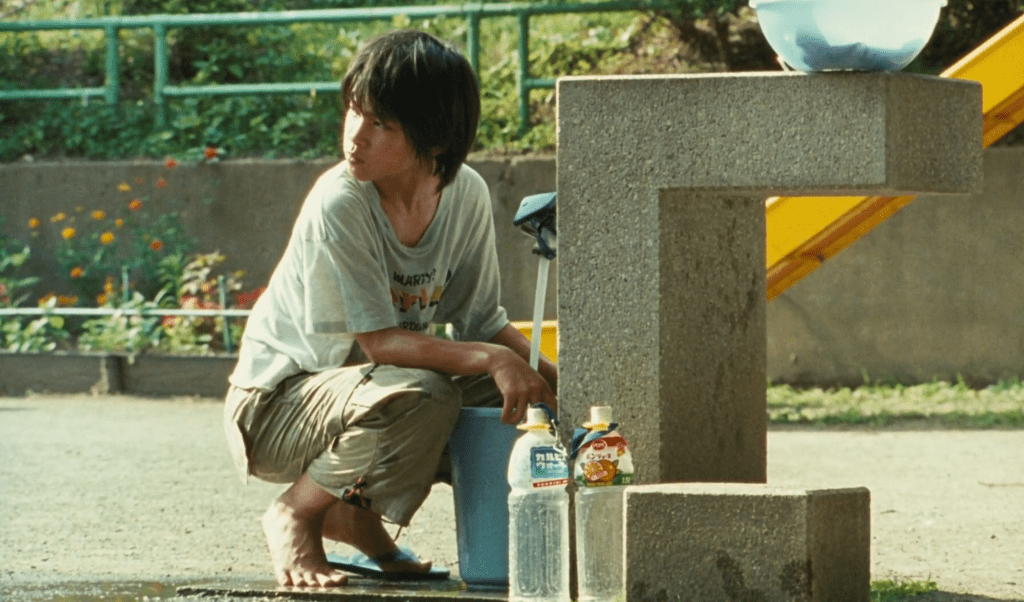
    Another study in contrast can also be found in the protagonist Akira, in an award-winning portrayal by Yuya Yagira. Akira is the classic “child who grew up too soon”, learning to have that perceptive look of a mature adult at a very young age. But the most excruciating aspect of his performance is the painful conflict between irreconcilable desires: on one hand, to be a responsible oniichan to his siblings, and on the other, to live a boyhood so ordinary it’s extraordinarily out-of-reach for someone in his situation.

    There is a minor story in the film where the children get to take care of their own individual plants after a particularly happy event in their confined lives. What would’ve been a teaching moment in responsibility, something that parents would want to give their children early, quietly devolves into a symbol of decay and neglect as the physical effects of parental neglect of them becomes inescapable. 

    With this, my final thoughts go to the contrast between Akira and his mother. Not only was she absent, but in her brief appearances, she is patronizing, evasive, and emotionally manipulative. As it is, the film is already tragic, but what’s more devastating is how her irresponsibility was not just in her neglect, but in her refusal to grow up—even as her son was cruelly forced to.
  • Such lightness of being: Momoko Ando’s ‘0.5 mm’ (A review)

    Such lightness of being: Momoko Ando’s ‘0.5 mm’ (A review)

    It’s not an easy feat for a film to be lengthy, entertaining, and profound all at the same time. Yet Momoko Ando’s 2014 masterpiece 0.5mm is all three, and then some. 

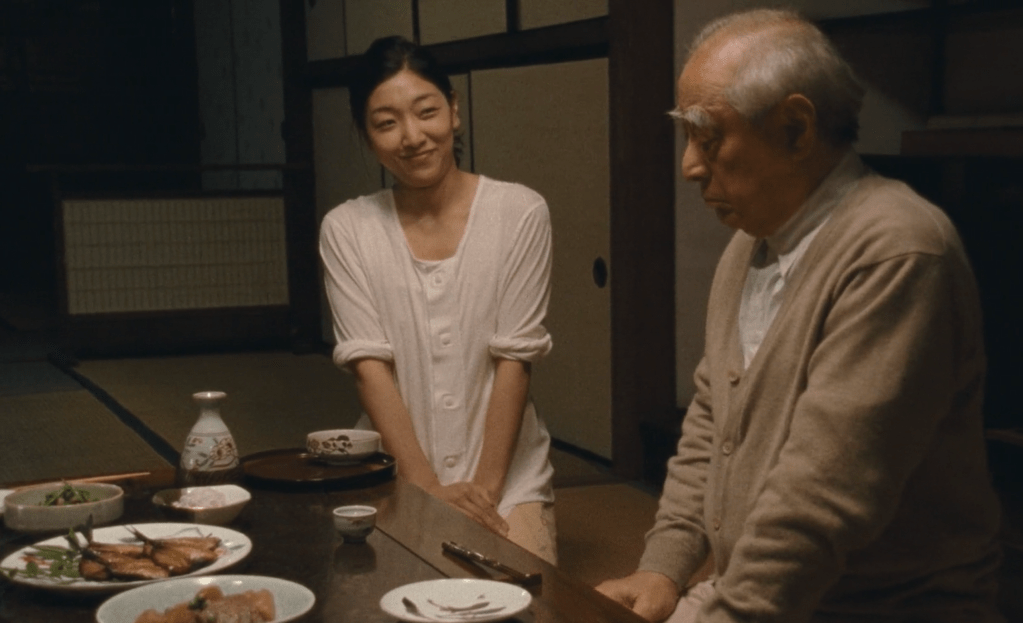
    With a runtime of three hours and 18 minutes, this film is expansive not just in length but more so in its thematic ambition. 0.5mm is a singular achievement not only for Ando, who is both the film’s director and screenwriter, but also for her sister, Sakura, and her ineffable and career-defining take on the caregiver-vagabond Sawa Yamagishi. Sawa embodies a certain “lightness of being” that, contrary to the title of the famous novel, is not unbearable. This lightness extends to the whole of the film itself, so that it is both profound and outrageously funny. 

    Set, it seems, in the late 1980s to the early 90s, the film is divided into four parts: a prelude where Sawa is introduced as a caregiver of a bedridden elderly man, two acts where she would live with and care for two other elderly men, and a final act of resolution that harks back to the prelude. Throughout, Sawa’s character moves through the film with what I’d call “buoyant grace”—unattached, adaptable, and at times, mischievous. But while she is physically a drifter (and a mysterious one at that), she is not aimless.

    Sawa is not just a character—she is also a remarkable narrative device by which the film becomes an epic and complex meditation on human connection, the loneliness of the elderly, and the strange forms that kindness can take. It is through Sawa and her relationships that seemingly disparate themes such as the war nostalgia of elderly Japanese men, the collective versus the individual, the male gaze, and the kindness and seductiveness of a woman as both wife and caregiver come together and come alive.

    Among those themes, the latter two are particularly prominent. They could’ve been touchy subjects, if not for Momoko’s writing and Sakura’s acting. Their collaboration made for a deft portrayal of how a woman makes peace with society’s patronization and misogyny, subverting them to gain power that is not only seductive but more crucially, substantial, generous, and real.

    Sawa’s “feminism,” if you could call it that, is not vindictive nor activist—it’s human through and through. One recurring incident in the film highlights this. Sawa’s drift, it seems, is to catch elderly men in scandalous, reputation-wrecking moments and use these to “coerce” them to let her live with them. However, she would use the power she gains not to extort nor to persecute, but to care, quite literally. In each case except the prelude, Sawa brings and inspires order and healing in the lives of the elderly men she was involved with.

    I may have made Sawa sound extraordinary, but what lingers most is her plain, unadorned humanity. She feels like a mystery only because tenderness and generosity have become rare. 0.5mm is special for letting that quiet humanity shine.

  • Rebirth, dir. Izuru Narushima (2011)

    Rebirth, dir. Izuru Narushima (2011)

    The English title of Izuru Narushima’s 2011 film, Rebirth, suggests a shedding of the past in pursuit of a new beginning. Its Japanese title, however, hints at a subtle, metaphor-rich expression of what the film is truly about, which I will return to later.

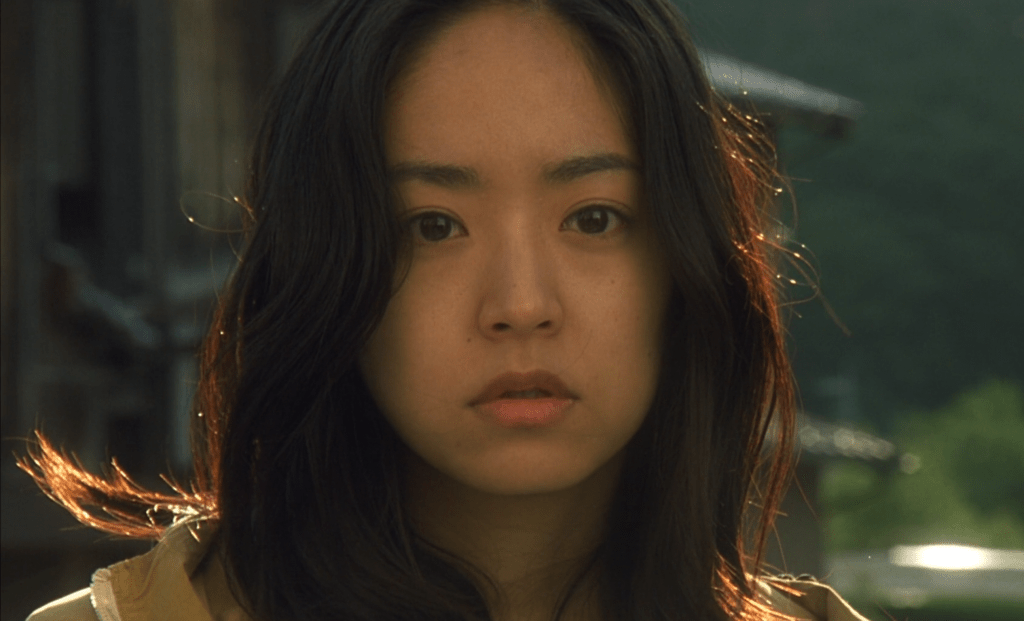
    In this film, we meet Erina Akiyama (played by Mou Inoue), a listless university student who was abducted as an infant by her father’s former mistress. Her four-year abduction made headlines at the time. Now, she seems to be living a quiet, ordinary life—until a journalist eager to revisit that unfortunate episode seeks to resurface her story. Growing curious about that time in the distant past, Erina agrees to the journalist’s invitation to rediscover what happened then.

    From the outset, the theme of motherhood is very prominent in the film, showing its pains and longings. Here, motherhood is denied, borrowed, and—perhaps most powerfully—chosen. Yet motherhood is but a part of a larger, more central theme, one that also captures the emotional–and eventually, the narrative–core of the film—self-discovery. 

    Since Freud, we have tended to think that our adult psychologies are invariably shaped by our childhood experiences and traumas. In Rebirth, we would think that Erina’s actual abduction or even her relationship with her “abductive” mother (played by Hiromi Nagasaku) would’ve made an enormous impact on her life. However, the film resists resting solely on this notion.

    Rebirth emphasizes the outsized importance of the seldom-explored attachment to places and the memories of things that happened in them, whether good or ill. 

    This is where the visual storytelling of the film shines, as it proceeds to reveal Erina’s understanding of and feelings toward specific people, including herself, in its portrayal of places. We see the lonely townhouses in the uptown district where her parents’ house is, the enigmatic “shelter” where she and her abductor hid and stayed, and finally an island community of warmth and fulfilment that would later speak profoundly to Erina’s sense of being and identity. 

    Interspersed with flashbacks of sunlit scenes of a childhood lived in full on that island—joyous, vivid, but now, distant—Erina finds a reckoning in the present. Not against her abductor, nor her parents who resented how she grew up “absent”, but against a self that in every sense except the physical, in the throes of “death” and emptiness.

    The film’s Japanese title, ‘Youkame no semi’, can be translated to “the eighth-day cicada”. It draws from the belief that cicadas live only seven days, after which they die together. While scientifically incorrect, it has been used as a metaphor for the shortness of life, shearing it of meaning. But the film quietly asks: what if one cicada decides not to die, and lives on for an eighth day—or longer? In the film, Erina not only decides to live but also to pay forward a life that has found new meaning and beauty.

  • The Moon, dir. Yuya Ishii (2023)

    The Moon, dir. Yuya Ishii (2023)

    “No one wants to see the truth.” But in attempting to open one’s eyes to the truth and tell it to the world, what will one actually come to know?

    Seeing the truth and knowing it are two different things. This is a powerful dichotomy that runs through Yuya Ishii’s The Moon, giving this film guiding threads to pull together its disparate themes.

    Yoko, played with signature tenderness and nuance by Rie Miyezawa, is an award-winning writer who begins a caregiving job at Crescent Garden, a facility for the disabled. This facility, nestled deep in a forest, plays a major emotional role in the movie as it emanates a tension that never quite eases. It is depicted with classic horror tropes— the ominous score hinting at an impending or already happening disaster, the dimly-lit hallways, the overhead shots suggesting someone/something is watching, and the uncanny demeanor of the people who work here.  

    It is through Crescent Garden and what it stands for that the film explored various questions; it is the object of the truth that needed to be seen, known, and made known.

    For example, Yoko wanted to work in this facility to help her deal with past personal trauma, but will she, as a writer, open her eyes to the horrific truth about the facility and write about it truthfully? Or will she succumb to conceit and write only what would sell? This is a challenge constantly raised by her co-workers–her namesake Yoko (Fumi Nikaido), who aspires to be a writer of the same caliber as her, and Sato (Hayato Isomura in a brilliant performance), a seemingly sympathetic caregiver with an increasingly mysterious undercurrent.

    Both Yoko 2 and Sato’s own personal issues are also dealt with through the lens of the facility. For Yoko 2, it’s the question of personal worth. For Sato, it’s the meaning of being human itself. Concurrently, the film also tried to address the grief of Yoko 1’s husband, Shohei (Joe Odagiri), although not directly in relation to the facility itself.

    While well-intentioned, this attempt to offer answers to every philosophical question that the narrative met along the way has made for an unnecessarily long but somehow incomplete film, as some of the big questions that the film opened were not satisfyingly answered. It is also a bit uncanny that the film tries to be about the disabled, disability, and their place and dignity in society, but much of the exposition of this theme comes from the abled.

    The film naturally resolved from the perspective of Yoko 1, who saw the truth and knew what it meant for her personally and in relation to exposing it to the public. But in the end, you will be hard pressed to know what kind of film this is. A melodrama? A psychological thriller? A philosophical slasher? There are a lot of films that are genre-agnostic, but the sort of thematic mishmash in The Moon didn’t quite build into a solid whole. 

    3/5

  • Flowers, fire, blood, Joe Hisaishi: Takeshi Kitano’s Hana-bi (A review)

    Flowers, fire, blood, Joe Hisaishi: Takeshi Kitano’s Hana-bi (A review)

    This review contains mild spoilers.

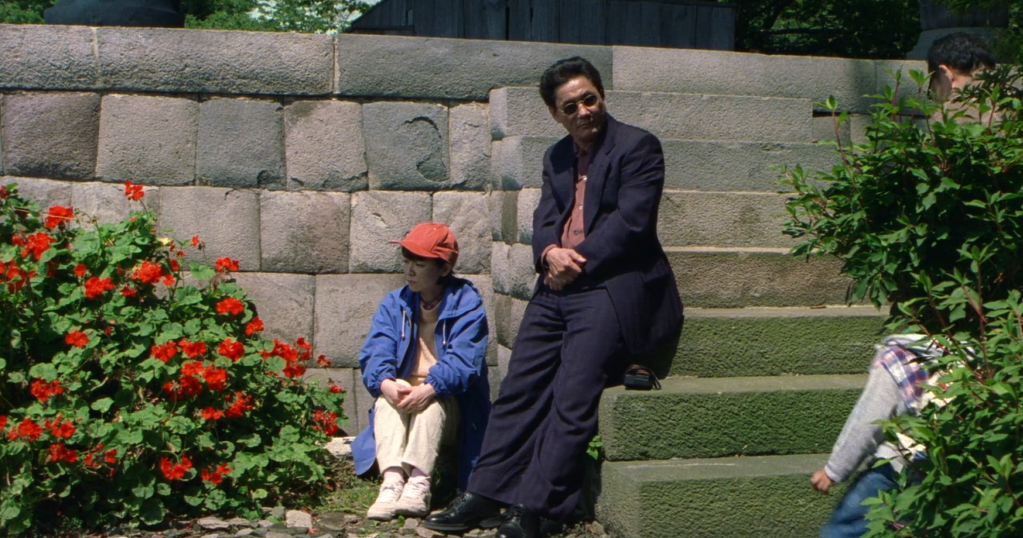
    Man commits a crime for the sake of his beloved is a tale as old as time. But Takeshi Kitano took this familiar narrative and flourished it with painful, understated, and at times violent beauty to set off a spectacle worthy of the title Hana-bi (Japanese for ‘fireworks’), his Golden Lion-winning 1997 masterpiece.

    The title itself reveals two of the film’s prominent motifs: flowers (花, hana) and fire (火, hi/bi), more specifically, gunfire. Hana-bi, usually tagged as a “crime drama” in reviews and synopses online, almost fetishizes these motifs if not for the curious and quietly visionary way that Kitano directed this work.

    A great example of what I’m talking about is a scene in the film’s second half where the camera pans over a painting of tiny yellow flowers that are also the kanji for “hikari” (光, ‘light’). It then zooms out to reveal the flowers falling into a serene snowscape. The calmness is jolted when the word “suicide” is revealed to be painted in big, bold, scarlet kanji, marring the pure landscape. The film then moves to a bloody real-life scene, before returning to the painting, now splattered with scarlet paint as a character pulls the trigger of an unloaded gun. This seamless blend of serenity and violence, present throughout the film, culminates in a finale that is one for the books.

    My thoughts on this film wouldn’t be complete without mentioning Joe Hisaishi’s score. I might be biased because I am such a big fan of his wonderful work with Studio Ghibli. But it was so satisfying to hear a familiar style right at the opening sequences and be pleasantly surprised to see Joe Hisaishi’s name as the scorer. Hana-bi, it turns out, was already his fourth collaboration with Kitano.

    The effect of Hisaishi’s score is heightened by how camera movements were so sparse that even “action” sequences were stylistically plain. With this, the score became instrumental in dictating “movement” and not just mood. It was equal parts pensive and brooding, giving the feeling that something is brewing that will explode and shock.

    And shock it did. The ending is as ambiguous as it gets, leaving the audience postulating what happened. And in that final shocker lies the X factor as to why this film is a cult favorite, in the vein of Fight Club. Hana-bi seemed to have treated death and violence flippantly, but it is not a film to teach about morals. However, it is not hollowed of substance, either.

    Indeed, in Japanese culture, the word used for the phenomenon called “double suicide”, shinjuu, is formed through the characters for “heart” and “center/inside” (心中), reflecting the inextricable link between the participants of such sad endeavor. It’s an open question whether this was the fate of some of the characters, but such oneness reminds us that life and death, and beauty and violence, are not just intertwined—they are inseparable.