Tag: Japanese cinema

  • Kisaragi, dir. Yuichi Sato (2007)

    Kisaragi, dir. Yuichi Sato (2007)

    It’s not all the time that you come across a movie that’s thoroughly and genuinely entertaining and at the same time an empathetic, grounded, and most importantly, relevant commentary on contemporary society. 

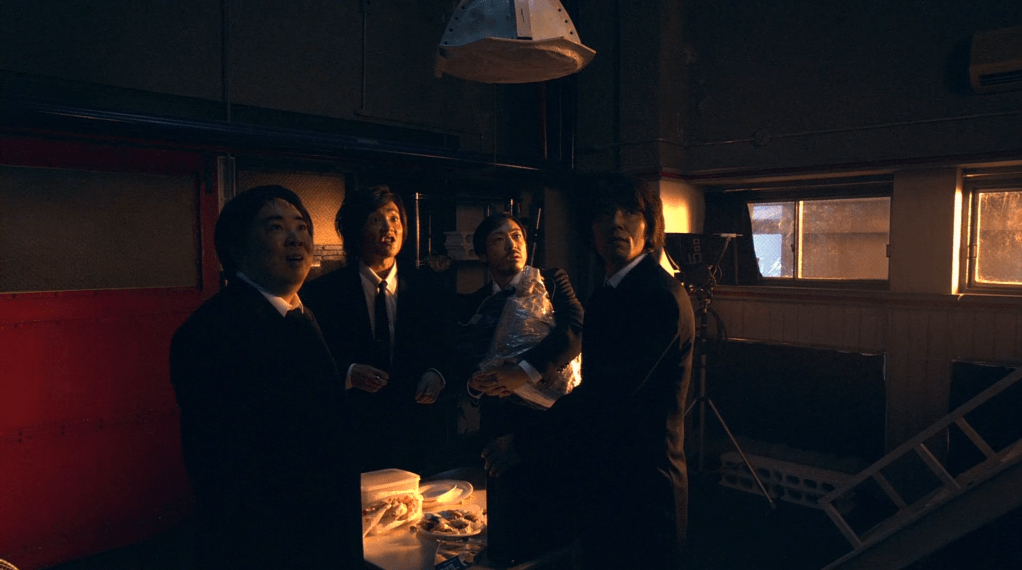
    Kisaragi is both. The entertainment aspect is hard to miss and it’s built within the premise of the movie. Five die-hard online fans of Miki Kisaragi, a low-level idol who allegedly committed suicide, decided to meet in-person for the first time to commemorate her 1st death anniversary. The commemoration quickly evolves into an “investigation” into whether she really took her own life. Twist after twist about the incident and the true identities of these “fans” made for a wild ride in a rollercoaster of emotions, one that is not shallowly contrived and is consistent to the emotional core of the whole movie throughout. That it was 2007, during the era of nascent social media, when online social fandoms were also only gaining ground across the world, make for a curious context that will have viewers amused at the idiosyncrasies of online interactions between fans during that time, and at the same time, realize that some of the same fandom idiosyncrasies still exist today. 

    And there also lies the potent social commentary that Kisaragi is. It’s thoroughly empathetic to the fan in that while it finds comedy in the very things that make fans fans, it doesn’t make fun of them. We will always find weirdness in other people, or perhaps, in ourselves, of the way we are as fans of whatever or whoever we are fans of, but Kisaragi finds the humanity in those things. It’s curious how the film has withheld the face of Kisaragi until the very end, because our initial instinct as viewers most probably would be to know whether this idol is beautiful and worth fawning over. But this is the commitment of the film towards focusing on the five fans, although it has its own commentary on the idol life as well as the parasocial relationship existing between them and their fans.

    I love how by the end it was completely satisfying both as entertainment and as an introduction to fandom culture. But aside from these, the film also leaves you with questions to reflect on after. Things like, how much influence do fans exert over the intensely personal aspects of idols’ lives, or what kind of expectations are fans entitled to from their idols. Japan, even before the world got into K-Pop and such, had a very strong idol scene that has attracted legions of fans and gave birth to phenomena such as “herbivore men”. An appreciation of this film would therefore be more complete with those aspects in mind.
  • Swimming gracefully: Imamura’s The Eel (A review)

    Swimming gracefully: Imamura’s The Eel (A review)

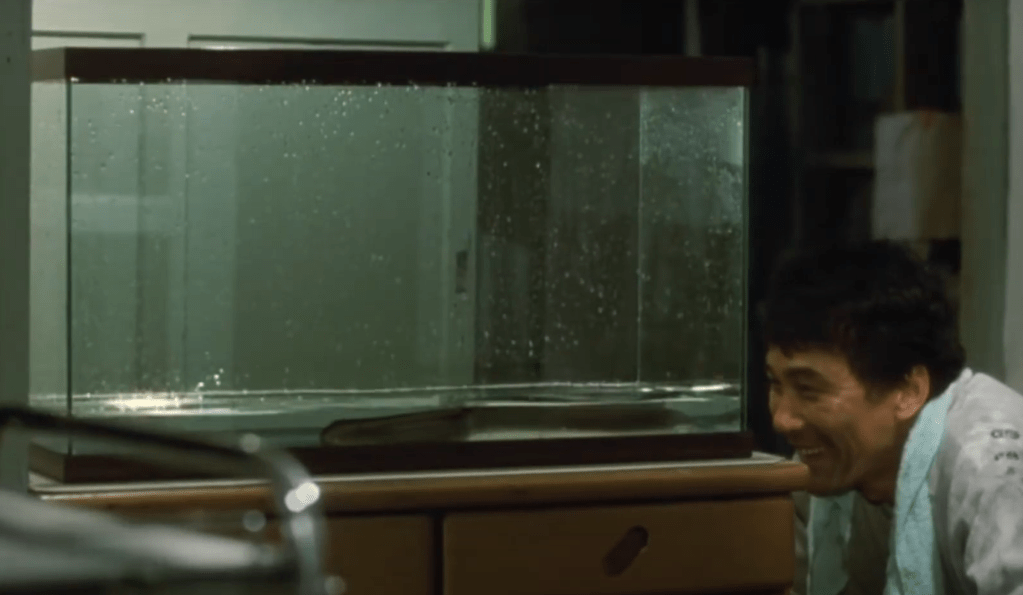
    In films like this, where a central object of curiosity is highlighted by the title (in this case, the eel), it’s easy to become fixated on it and overlook other important aspects that deserve attention.

    As I watched the film, I found myself consumed by the question, “What did the eel symbolize?” Was it simply a pet, a representation of the protagonist’s traumas, both external and self-inflicted? A symbol of his growth, with the eel embodying both his “before” and “after”? Was it his conscience or alter ego?

    A deeper analysis could support all these interpretations, and indeed the eel itself warrants close visual and narrative analysis, as it’s crucial to the story. But The Eel deserves appreciation beyond its symbolism, as this Palme d’Or-winning work of Shohei Imamura shines in many other aspects.

    This includes the powerful depiction of both honne (true inner feelings/true self) and tatemae (outward actions) by the lead actor, a young Koji Yakusho, who just recently (2023) won the Best Actor award at the Cannes for another film. Playing a former convict on parole, Yakusho was effective as the measured man who knew he has paid for his crime but is still racked up by the trauma of that past.

    Imamura’s signature visual style also stands out, showcasing “rawness” within graceful compositions and well-blocked mise-en-scène. Much like in The Ballad of Narayama (animalistic passions alongside dignity in death), Vengeance is Mine (serial murder and incest next to gentlemanliness), or Black Rain (the grim effects of atomic bomb radiation alongside quiet rural scenes), The Eel juxtaposes orderly domestic life with bloody violence. Imamura, like the eel, can swim gracefully between these contrasts, making them into works of cohesive wholes that are still appreciated until today.

    This style also allowed him to compellingly create what I think (so far, among the four that I’ve watched) is the film with most diverse set of characters. While depth could reasonably be expected only of a few of the characters given the restrictions of the medium, The Eel is able to provide a realistic response to the question of how a society reacts to ex-convicts in its showcase of a colorful cast of characters, all very human.

  • Tampopo, dir. Juzo Itami (1985)

    Tampopo, dir. Juzo Itami (1985)

    You know that Scorsese meme that says, “Absolute cinema?” This film is one of those that deserves to be called that. If for Scorsese cinema is

    about revelation — aesthetic, emotional and spiritual revelation…about confronting the unexpected on the screen and in the life it dramatized and interpreted, and enlarging the sense of what was possible in the art form

    then this film can be counted among the most “cinematic”. Far and wide surely there are more entertaining films, more popular films, and even greater films (however you measure greatness) than Tampopo. But watching it from the start you know it is a tour de force of the medium.

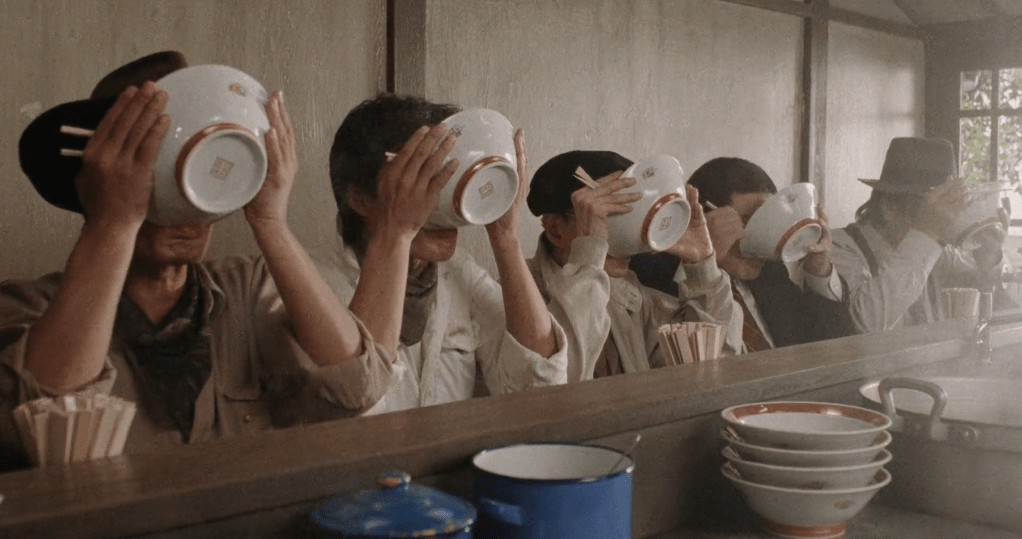
    This film is unmistakably about food (ramen in particular) but it goes as broad and deep as it can to portray an “aesthetic, emotional, and spiritual revelation” about food in a way only cinema can bring. Watching Tampopo, you’ll get to taste and savor through your eyes—the spectacles of food and passion is raw and delicious, even delirious at times. There is a certain spiritual quality in the way food and sex are juxtaposed and not in the sense that these are gods or idols that humans “worship” but that both food and sex (and in one scene, food in sex) bring about such a sensory element to self-actualization.

    It may sound abstract but these are all potently brought to life by the comedy and the teamwork of Juzo Itami’s frequent collaborators, his wife Nobuko Miyamoto and Tsutomu Yamazaki. This is my 3rd Itami-Miyamoto-Yamazaki film (the other two being The Funeral and A Taxing Woman), and I can say that I’ve grown fond of the three, especially the chemistry between Miyamoto and Yamazaki. I’m really glad that I watched A Taxing Woman before this although this one is an earlier work. All I can say that there is magic when the two are together in a scene (the final scenes between the two in both films come to mind), and I’m setting out to watch more of their works together (I think there are three more).

  • Show, don’t tell: Sho Miyake’s Small, Slow But Steady (A review)

    Show, don’t tell: Sho Miyake’s Small, Slow But Steady (A review)

    Show, don’t tell. 

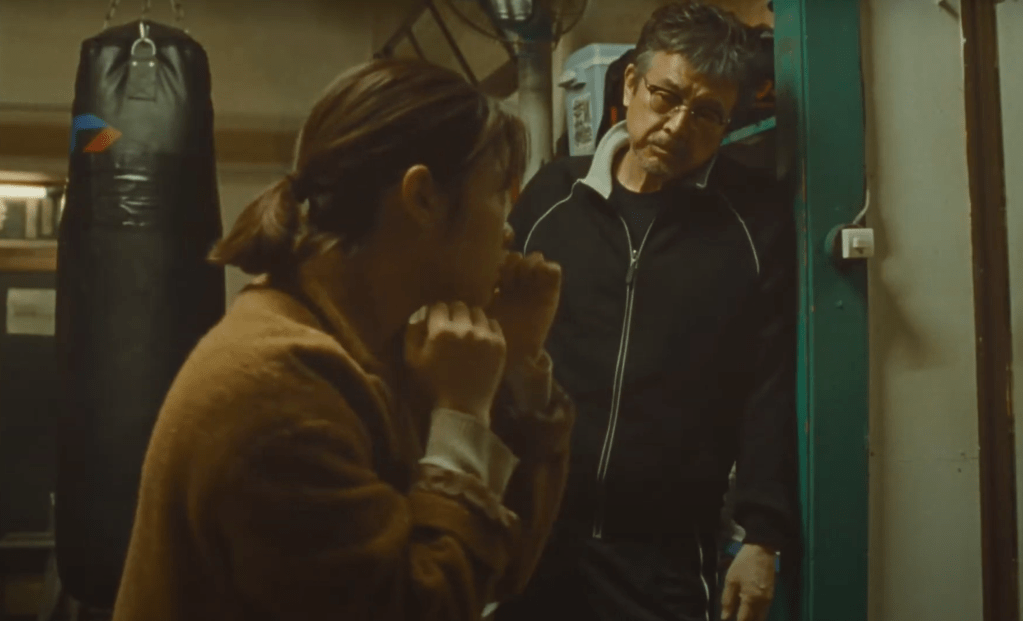
    This film is a triumph of visual storytelling, that, like its protagonist and title, is small, slow, but steady. Without much dialogue (even sign language dialogue at that), the movie excelled in capturing the life of a deaf woman boxer and how the impending closure of her home gym and the deteriorating health of her head coach (the “chairman”) affected her deeply.

    The movie’s visuals are small in the sense that the cinematography is restrained. Camera movements are very limited and takes are long and lingering. The “smallness” goes as far as the very limited, if non-existent use of ultra-wide shots. Even cityscape external shots seem to be no less wider than 20mm and while that is certainly not claustrophobia-inducing in any way, the effect gives the viewers the sense that they live in the protagonist’s personal world and Tokyo and the city at-large is at best background noise (train sounds are a repeating motif in the movie). Even the fact that the setting of the story is during the COVID pandemic is not really that palpable—it’s almost a non-factor in the story that is steadily focused on its protagonist.

    With that said, I thought that the direction held on with steadiness to its vision with no letup in the narrative and visual consistency. By design, nothing significant seems to be happening but like the protagonist herself, the narrative builds to a climax and ending that is emotionally resonant and cohesive. 

    Yes, the build up is slow, and as with other excellent films, the viewer will be rewarded with a gentle but satisfying pay off as the story resolves. This is not just because of the screenplay—Kishii Yukino’s portrayal in the lead is understated yet sufficiently nuanced and clear that you don’t need her to speak (vocally or otherwise) to feel her. And you will feel her.

    PS. That use of grainy film simulation throughout the movie made it feel a bit dated and I guess it adds another layer of “slowness” (throwback to “slower” eras?) to the work in a good way. I also loved that the protagonist being deaf was just a fact of her life and was not melodrama-tized, if that makes sense.

  • Of Japayukis and Zainichis: Yoichi Sai’s ‘All Under the Moon’ (1993)

    Of Japayukis and Zainichis: Yoichi Sai’s ‘All Under the Moon’ (1993)

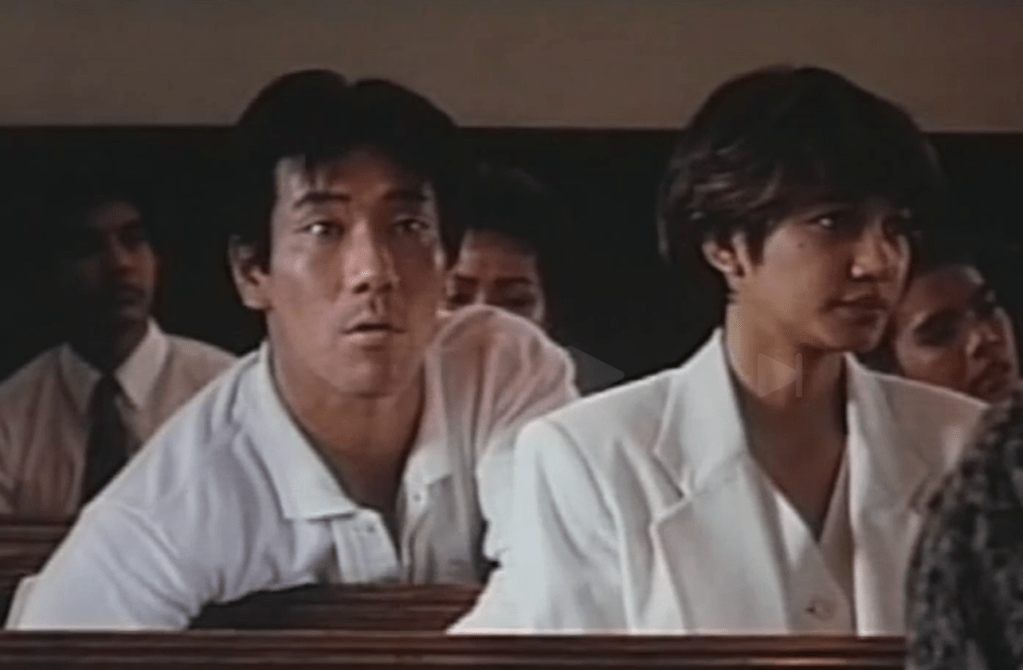
    Perhaps what sets this apart from other movies that portray minority life in a foreign country is how character-focused it is on the two leads—a North Korean Japanese taxi driver and a Filipina japayuki worker. Of course there is a story but the movie is not driven by the plot so much as how it reveals who Tadao and Connie are in their daily lives as workers in the fringes of Japanese society. 

    While there is a running joke about how one character hates Koreans, I felt like discrimination is much lesser of a theme in the film than what the characters represent in terms of the larger realities of their respective ethnicities’ relationships with Japan and the Japanese people during the early 90s. 

    For Tadao and his mother, it’s the painful history between Japan and Korea (back when it was whole). For Connie and her Filipina friends, it’s the promise of upward mobility by earning much more in Japan than in their home country (hence the Tagalog phrase “Japan, Japan, sagot sa kahirapan”–“Japan, Japan, the answer to poverty). That same theme runs, too, through Tadao’s and his mother’s story but it is colored by the tone of a more complicated past. 

    As a Filipino, I love how Connie is portrayed with enough agency and power, given that she is a woman, working in a highly-sexualized environment, and a foreigner. In her relationship with Tadao, she has the upper hand and she is not portrayed as just after お金, because admittedly, Tadao doesn’t have much. But she conducted her relationship with Tadao on her terms, even if we don’t know whether she really got what she wanted from Tadao in the end.

    PS. This is one of the funniest movies I’ve watched since I began going deep into Japanese cinema.