Tag: Kinema Junpo Award

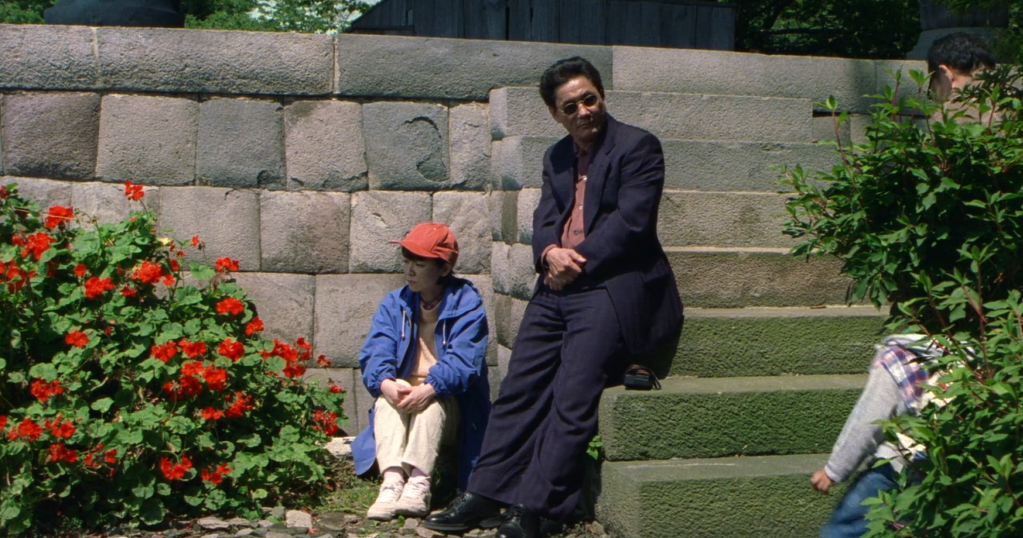
  • Flowers, fire, blood, Joe Hisaishi: Takeshi Kitano’s Hana-bi (A review)

    Flowers, fire, blood, Joe Hisaishi: Takeshi Kitano’s Hana-bi (A review)

    This review contains mild spoilers.

    Man commits a crime for the sake of his beloved is a tale as old as time. But Takeshi Kitano took this familiar narrative and flourished it with painful, understated, and at times violent beauty to set off a spectacle worthy of the title Hana-bi (Japanese for ‘fireworks’), his Golden Lion-winning 1997 masterpiece.

    The title itself reveals two of the film’s prominent motifs: flowers (花, hana) and fire (火, hi/bi), more specifically, gunfire. Hana-bi, usually tagged as a “crime drama” in reviews and synopses online, almost fetishizes these motifs if not for the curious and quietly visionary way that Kitano directed this work.

    A great example of what I’m talking about is a scene in the film’s second half where the camera pans over a painting of tiny yellow flowers that are also the kanji for “hikari” (光, ‘light’). It then zooms out to reveal the flowers falling into a serene snowscape. The calmness is jolted when the word “suicide” is revealed to be painted in big, bold, scarlet kanji, marring the pure landscape. The film then moves to a bloody real-life scene, before returning to the painting, now splattered with scarlet paint as a character pulls the trigger of an unloaded gun. This seamless blend of serenity and violence, present throughout the film, culminates in a finale that is one for the books.

    My thoughts on this film wouldn’t be complete without mentioning Joe Hisaishi’s score. I might be biased because I am such a big fan of his wonderful work with Studio Ghibli. But it was so satisfying to hear a familiar style right at the opening sequences and be pleasantly surprised to see Joe Hisaishi’s name as the scorer. Hana-bi, it turns out, was already his fourth collaboration with Kitano.

    The effect of Hisaishi’s score is heightened by how camera movements were so sparse that even “action” sequences were stylistically plain. With this, the score became instrumental in dictating “movement” and not just mood. It was equal parts pensive and brooding, giving the feeling that something is brewing that will explode and shock.

    And shock it did. The ending is as ambiguous as it gets, leaving the audience postulating what happened. And in that final shocker lies the X factor as to why this film is a cult favorite, in the vein of Fight Club. Hana-bi seemed to have treated death and violence flippantly, but it is not a film to teach about morals. However, it is not hollowed of substance, either.

    Indeed, in Japanese culture, the word used for the phenomenon called “double suicide”, shinjuu, is formed through the characters for “heart” and “center/inside” (心中), reflecting the inextricable link between the participants of such sad endeavor. It’s an open question whether this was the fate of some of the characters, but such oneness reminds us that life and death, and beauty and violence, are not just intertwined—they are inseparable.
  • Woman in the Dunes, dir. Hiroshi Teshigahara (1964)

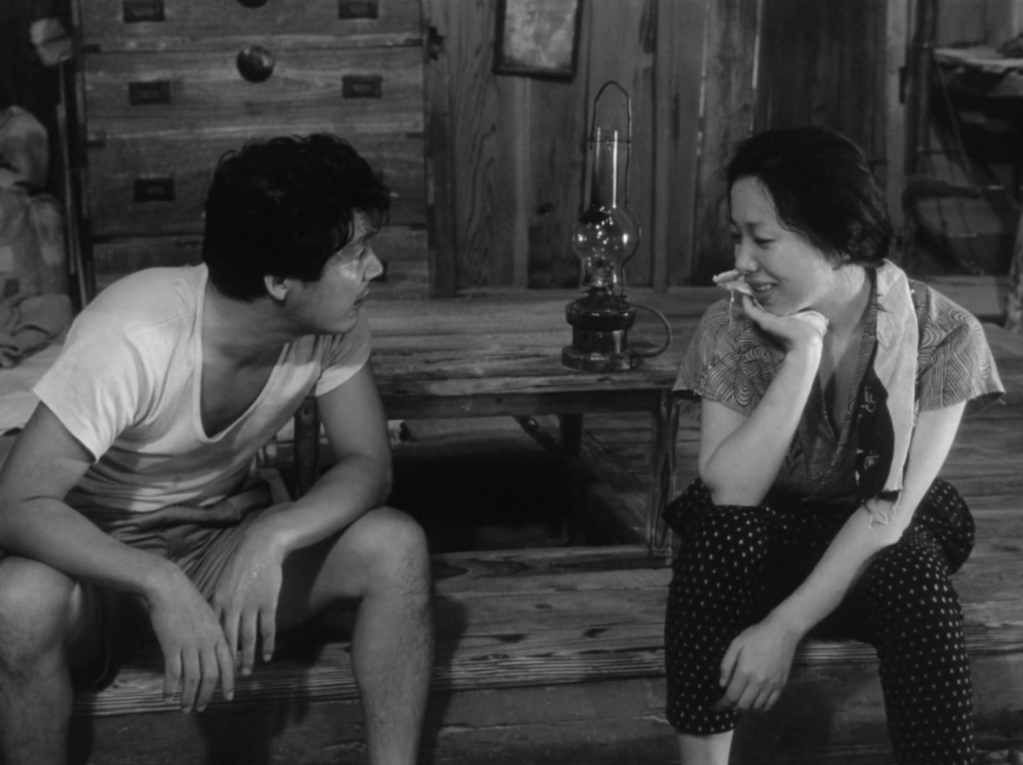
    Woman in the Dunes, dir. Hiroshi Teshigahara (1964)

    “Isn’t it exhausting, walking around so aimlessly?”

    Those searing and profound words, uttered by the titular character and what I think is the core of the film’s pathos, would find incredible vindication in the unfolding of this ambitious work of cinema. I usually write these “reviews” as if I’m thinking out loud, but the experience of watching Woman in the Dunes is so astounding I’m still trying to organize my thoughts on the breadth and depth that this film explored regarding the fundamentals of human nature.

    The narrative premise of the film is not unique but as with other great films, the proof is in the showing (and not just the telling). The camera work in this film is one of the most effective I’ve seen in Japanese cinema, making you feel what’s happening more than just making you know. The hyper close-up shots of skins, eyes, hair, and pores, juxtaposed with shots of slow-moving sand dunes buffeted by the wind are not just claustrophobic—they’re carnal. There’s such a sensual quality to the images of the dunes dripping like bodily fluid, but the hydraulic quality also gives off the sense that the dunes are about to fall on you and trap you, in the way they threaten the characters. The claustrophobia gets to your skin then through to chill your bones, as if you’re watching horror fare without the ghosts and the jump scares.

    But just as the oasis have to be dug up so are the more precious gems of film can be found deeper in the story. Aside from being a visual treasure, this film is a commentary on our understanding of the basest drivers of human existence, those that set us apart from animals. It is a debate between tradition and modernity, between self and community, between being firmly rooted and starting anew. Throughout the film, one will be disappointed by how contented people can be in situations that seem to hostage them, until one realizes that they themselves might also be in situations where they are “trapped” yet have no will to get out because that’s what they have been used to. Habit then becomes the enemy of progress and freedom. Or is it? Are progress and freedom even that desirable? Those are some of the big questions that this movie leaves.

    I didn’t mind how the movie is quietly triumphalist in the end. First, because it was not patronizing. Second, and more importantly, the film earned it both narratively and emotionally. By emotionally, I meant that the film retained its pathos while being satisfying in the end. There is resignation, yes, but there is also hope, purpose, and creativity, those qualities that set us apart from other creatures and ensured the survival of our species from the beginning.

  • Swimming gracefully: Imamura’s The Eel (A review)

    Swimming gracefully: Imamura’s The Eel (A review)

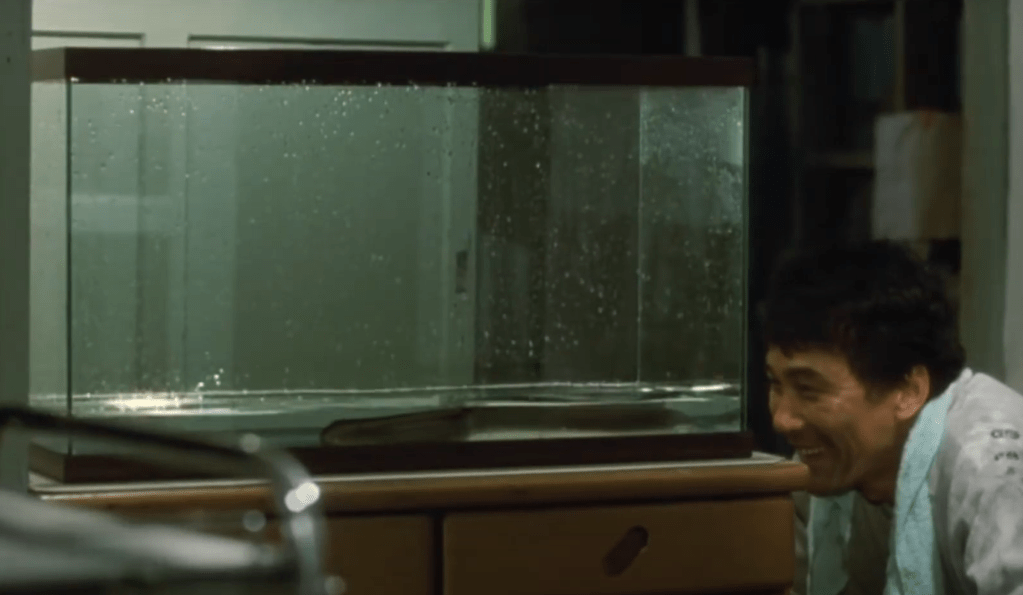
    In films like this, where a central object of curiosity is highlighted by the title (in this case, the eel), it’s easy to become fixated on it and overlook other important aspects that deserve attention.

    As I watched the film, I found myself consumed by the question, “What did the eel symbolize?” Was it simply a pet, a representation of the protagonist’s traumas, both external and self-inflicted? A symbol of his growth, with the eel embodying both his “before” and “after”? Was it his conscience or alter ego?

    A deeper analysis could support all these interpretations, and indeed the eel itself warrants close visual and narrative analysis, as it’s crucial to the story. But The Eel deserves appreciation beyond its symbolism, as this Palme d’Or-winning work of Shohei Imamura shines in many other aspects.

    This includes the powerful depiction of both honne (true inner feelings/true self) and tatemae (outward actions) by the lead actor, a young Koji Yakusho, who just recently (2023) won the Best Actor award at the Cannes for another film. Playing a former convict on parole, Yakusho was effective as the measured man who knew he has paid for his crime but is still racked up by the trauma of that past.

    Imamura’s signature visual style also stands out, showcasing “rawness” within graceful compositions and well-blocked mise-en-scène. Much like in The Ballad of Narayama (animalistic passions alongside dignity in death), Vengeance is Mine (serial murder and incest next to gentlemanliness), or Black Rain (the grim effects of atomic bomb radiation alongside quiet rural scenes), The Eel juxtaposes orderly domestic life with bloody violence. Imamura, like the eel, can swim gracefully between these contrasts, making them into works of cohesive wholes that are still appreciated until today.

    This style also allowed him to compellingly create what I think (so far, among the four that I’ve watched) is the film with most diverse set of characters. While depth could reasonably be expected only of a few of the characters given the restrictions of the medium, The Eel is able to provide a realistic response to the question of how a society reacts to ex-convicts in its showcase of a colorful cast of characters, all very human.

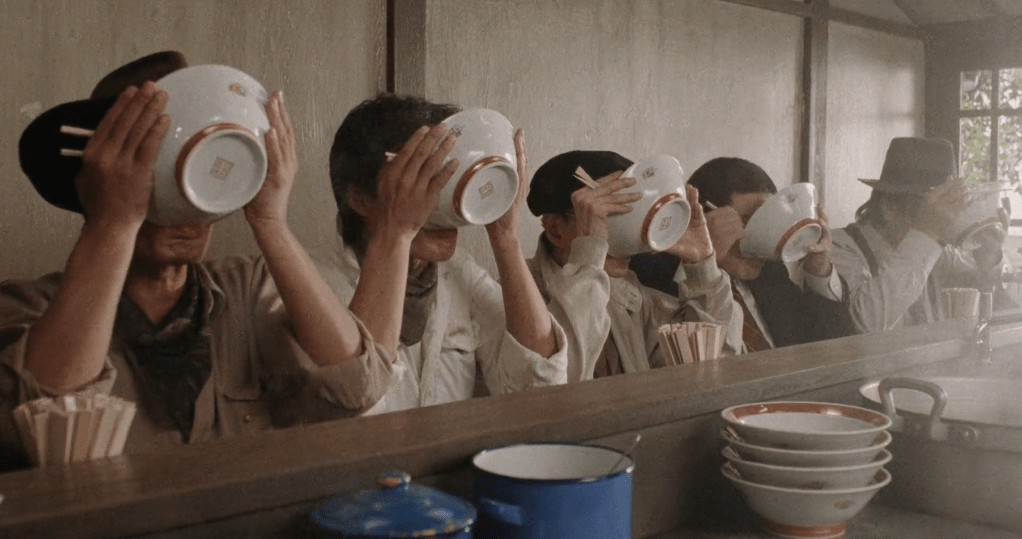
  • Tampopo, dir. Juzo Itami (1985)

    Tampopo, dir. Juzo Itami (1985)

    You know that Scorsese meme that says, “Absolute cinema?” This film is one of those that deserves to be called that. If for Scorsese cinema is

    about revelation — aesthetic, emotional and spiritual revelation…about confronting the unexpected on the screen and in the life it dramatized and interpreted, and enlarging the sense of what was possible in the art form

    then this film can be counted among the most “cinematic”. Far and wide surely there are more entertaining films, more popular films, and even greater films (however you measure greatness) than Tampopo. But watching it from the start you know it is a tour de force of the medium.

    This film is unmistakably about food (ramen in particular) but it goes as broad and deep as it can to portray an “aesthetic, emotional, and spiritual revelation” about food in a way only cinema can bring. Watching Tampopo, you’ll get to taste and savor through your eyes—the spectacles of food and passion is raw and delicious, even delirious at times. There is a certain spiritual quality in the way food and sex are juxtaposed and not in the sense that these are gods or idols that humans “worship” but that both food and sex (and in one scene, food in sex) bring about such a sensory element to self-actualization.

    It may sound abstract but these are all potently brought to life by the comedy and the teamwork of Juzo Itami’s frequent collaborators, his wife Nobuko Miyamoto and Tsutomu Yamazaki. This is my 3rd Itami-Miyamoto-Yamazaki film (the other two being The Funeral and A Taxing Woman), and I can say that I’ve grown fond of the three, especially the chemistry between Miyamoto and Yamazaki. I’m really glad that I watched A Taxing Woman before this although this one is an earlier work. All I can say that there is magic when the two are together in a scene (the final scenes between the two in both films come to mind), and I’m setting out to watch more of their works together (I think there are three more).

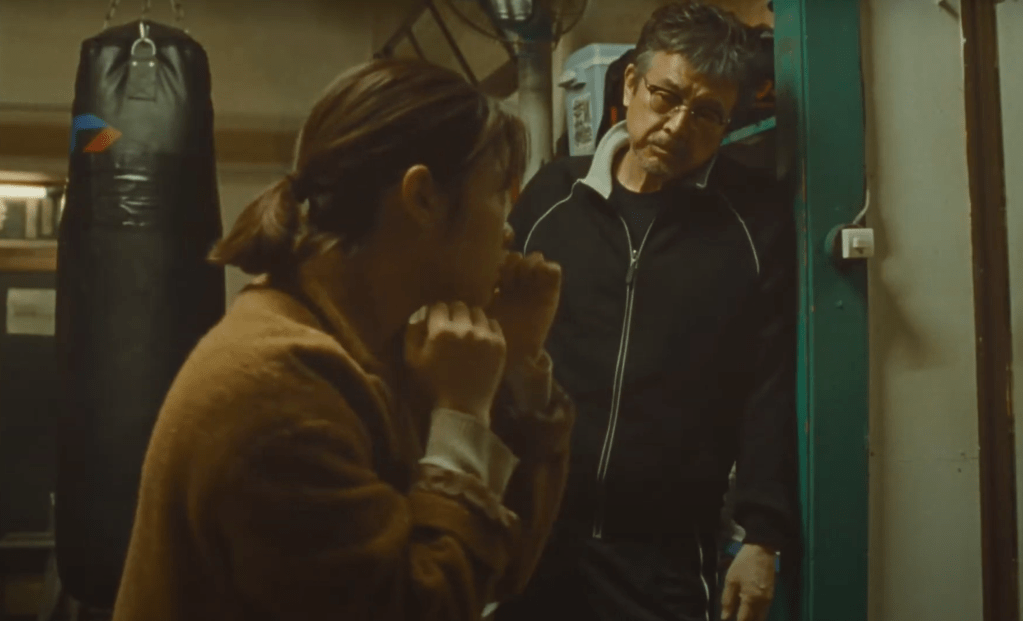
  • Show, don’t tell: Sho Miyake’s Small, Slow But Steady (A review)

    Show, don’t tell: Sho Miyake’s Small, Slow But Steady (A review)

    Show, don’t tell. 

    This film is a triumph of visual storytelling, that, like its protagonist and title, is small, slow, but steady. Without much dialogue (even sign language dialogue at that), the movie excelled in capturing the life of a deaf woman boxer and how the impending closure of her home gym and the deteriorating health of her head coach (the “chairman”) affected her deeply.

    The movie’s visuals are small in the sense that the cinematography is restrained. Camera movements are very limited and takes are long and lingering. The “smallness” goes as far as the very limited, if non-existent use of ultra-wide shots. Even cityscape external shots seem to be no less wider than 20mm and while that is certainly not claustrophobia-inducing in any way, the effect gives the viewers the sense that they live in the protagonist’s personal world and Tokyo and the city at-large is at best background noise (train sounds are a repeating motif in the movie). Even the fact that the setting of the story is during the COVID pandemic is not really that palpable—it’s almost a non-factor in the story that is steadily focused on its protagonist.

    With that said, I thought that the direction held on with steadiness to its vision with no letup in the narrative and visual consistency. By design, nothing significant seems to be happening but like the protagonist herself, the narrative builds to a climax and ending that is emotionally resonant and cohesive. 

    Yes, the build up is slow, and as with other excellent films, the viewer will be rewarded with a gentle but satisfying pay off as the story resolves. This is not just because of the screenplay—Kishii Yukino’s portrayal in the lead is understated yet sufficiently nuanced and clear that you don’t need her to speak (vocally or otherwise) to feel her. And you will feel her.

    PS. That use of grainy film simulation throughout the movie made it feel a bit dated and I guess it adds another layer of “slowness” (throwback to “slower” eras?) to the work in a good way. I also loved that the protagonist being deaf was just a fact of her life and was not melodrama-tized, if that makes sense.