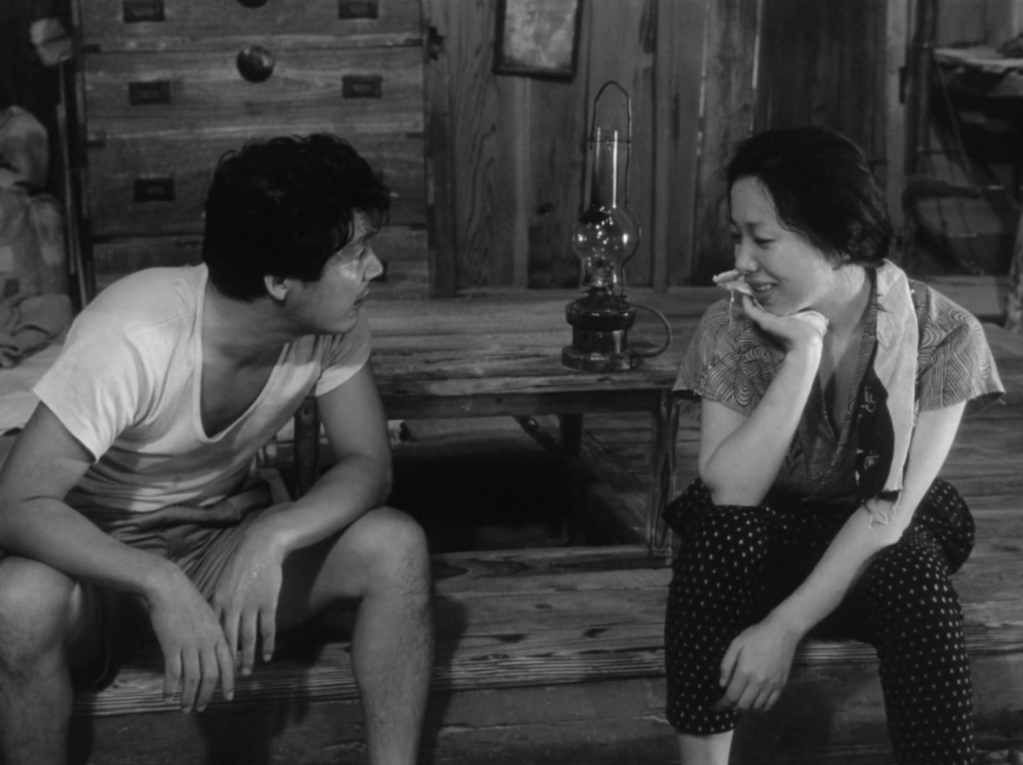
“Isn’t it exhausting, walking around so aimlessly?”
Those searing and profound words, uttered by the titular character and what I think is the core of the film’s pathos, would find incredible vindication in the unfolding of this ambitious work of cinema. I usually write these “reviews” as if I’m thinking out loud, but the experience of watching Woman in the Dunes is so astounding I’m still trying to organize my thoughts on the breadth and depth that this film explored regarding the fundamentals of human nature.
The narrative premise of the film is not unique but as with other great films, the proof is in the showing (and not just the telling). The camera work in this film is one of the most effective I’ve seen in Japanese cinema, making you feel what’s happening more than just making you know. The hyper close-up shots of skins, eyes, hair, and pores, juxtaposed with shots of slow-moving sand dunes buffeted by the wind are not just claustrophobic—they’re carnal. There’s such a sensual quality to the images of the dunes dripping like bodily fluid, but the hydraulic quality also gives off the sense that the dunes are about to fall on you and trap you, in the way they threaten the characters. The claustrophobia gets to your skin then through to chill your bones, as if you’re watching horror fare without the ghosts and the jump scares.
But just as the oasis have to be dug up so are the more precious gems of film can be found deeper in the story. Aside from being a visual treasure, this film is a commentary on our understanding of the basest drivers of human existence, those that set us apart from animals. It is a debate between tradition and modernity, between self and community, between being firmly rooted and starting anew. Throughout the film, one will be disappointed by how contented people can be in situations that seem to hostage them, until one realizes that they themselves might also be in situations where they are “trapped” yet have no will to get out because that’s what they have been used to. Habit then becomes the enemy of progress and freedom. Or is it? Are progress and freedom even that desirable? Those are some of the big questions that this movie leaves.
I didn’t mind how the movie is quietly triumphalist in the end. First, because it was not patronizing. Second, and more importantly, the film earned it both narratively and emotionally. By emotionally, I meant that the film retained its pathos while being satisfying in the end. There is resignation, yes, but there is also hope, purpose, and creativity, those qualities that set us apart from other creatures and ensured the survival of our species from the beginning.
 Film reviews in 500 words or fewer