Tag: Mainichi Film Award

  • Black Rain, dir. Shohei Imamura (1989)

    Black Rain, dir. Shohei Imamura (1989)

    An unjust peace is better than a just war.

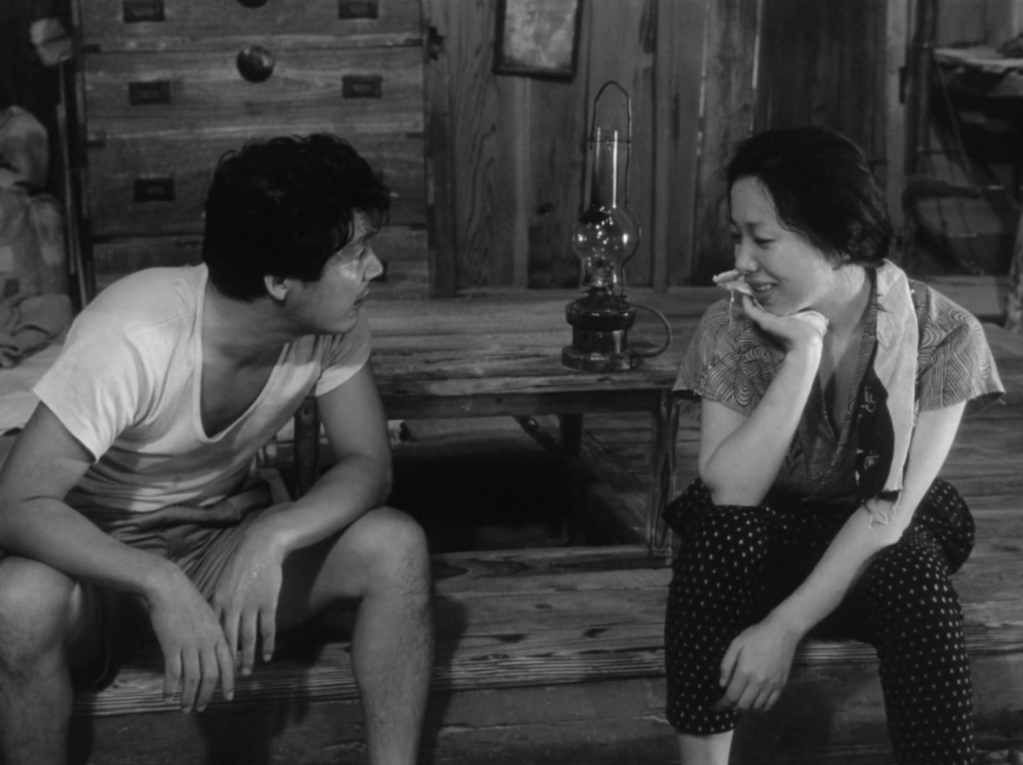
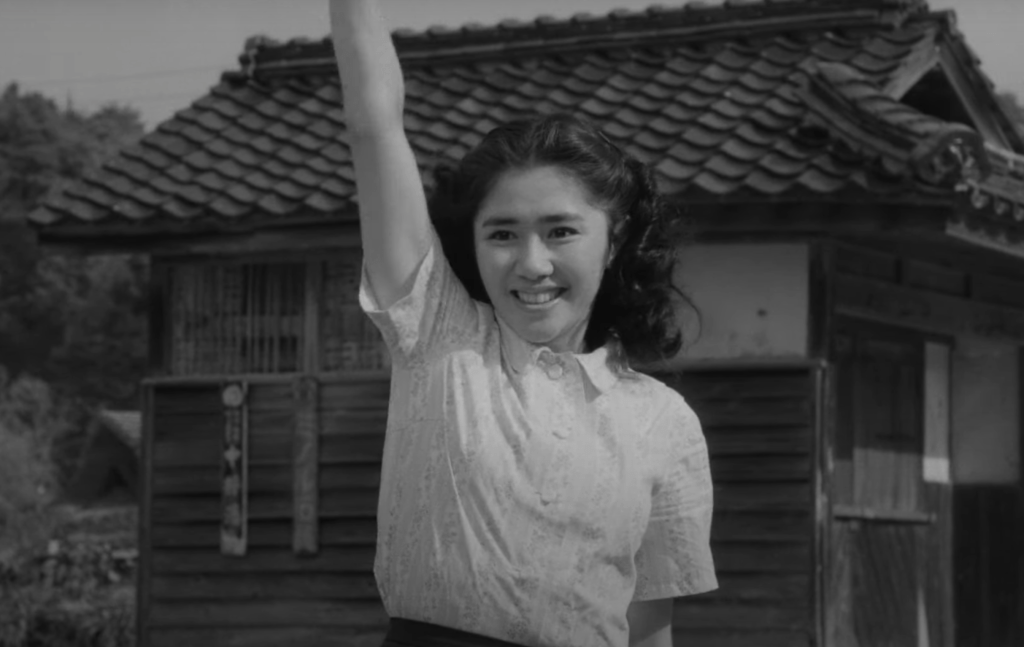
    Those words, uttered in exasperation by one of the characters in one of the film’s closing sequences, sums up the emotional core of this visual and narrative masterpiece by Shohei Imamura. It is another showcase of his directorial prowess, reminiscent of The Ballad of Narayama, his masterpiece from 6 years before.

    Indeed, I can’t help but compare the two in terms of the breadth and scale of the commentary he wanted to make about human life, human relationships, and Japanese society. 

    While I would surely put this film on a must-watch list for those interested in how the Pacific War affected the Japanese people, I would argue that that is not the main topic or theme of this movie. Whereas Narayama used the Japanese legend of ubasute to explore aging, how the elderly is treated, and indeed, the whole circle of human life in pre-modern Japan, Black Rain used the tragic atomic bombing of Hiroshima to provide a profound commentary on the many levels of stigma, humiliation, and humility (some times to a fault) in the immediate post-Pacific War era Japan. 

    Indeed, while the day of the Hiroshima bombing was sufficiently and painstakingly portrayed and explored, I would argue that it served better as a narrative device that contextualized and enriched the texture of the present story, set five years after, than as a “subplot” on its own. I thought that this was a wise choice because through it, along with the use of black and white, this film has become a timeless work that would speak not only to the victims of war, but also to the victims of the anxieties, pains, and yes, death, in peace time.
  • Villain, dir. Sang-il Lee (2010)

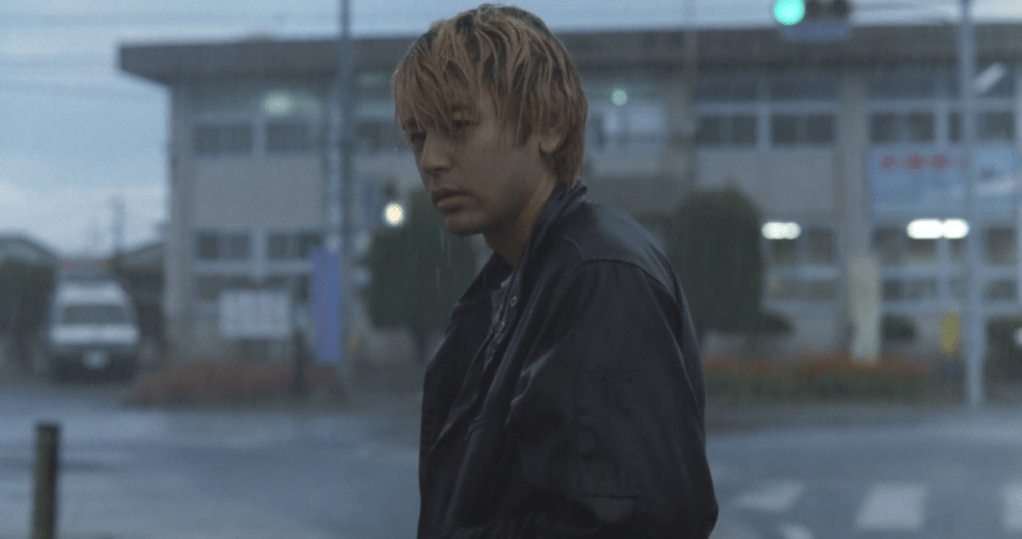
    Villain, dir. Sang-il Lee (2010)

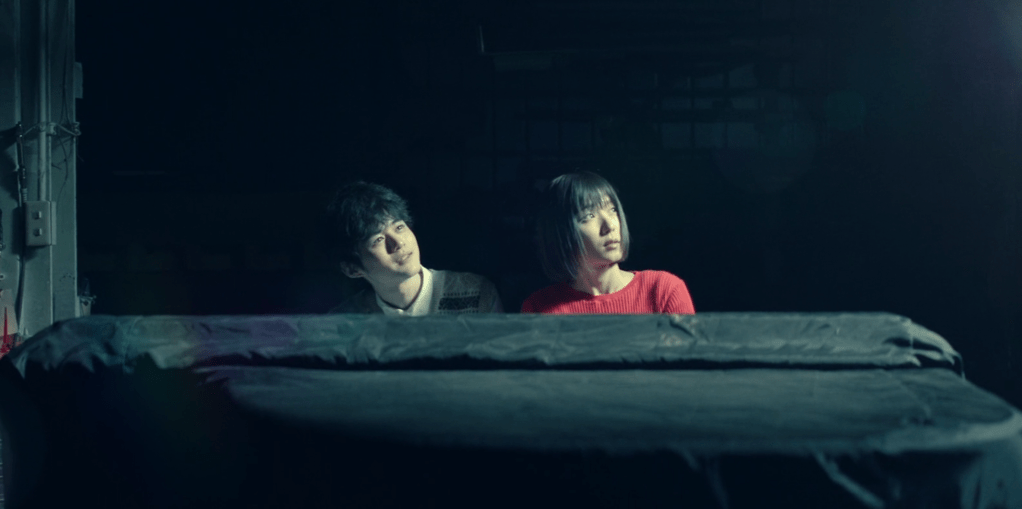
    I want to begin by saying that it will not be difficult to point out who the namesake villain of the movie is if we base it on the efficient cause of what happened to the victim. If that’s the whole story, the film would’ve ended at about the halfway mark. Thankfully, Sang-il Lee’s 2010 Best Film awardee (Mainichi Awards and Kinema Junpo Awards) is not just about a villainy or even villainies, but so much more.

    On the surface, Villain is a very competent and entertaining thriller that will keep the audience glued to the screen despite a slow start. It even makes a more-or-less substantial exploration of what really makes a villain. But it’s different from the usual crime-fugitive fare with how it rises above the conventions of its genre to explore a universal and almost unique human ability: the capacity to cherish another human being.

    While the visual style is not necessarily “meditative” (e.g., lingering shots, long takes, sparse camera movements) this film is indeed a meditation on what the act of cherishing does to the one who cherishes. I am careful to highlight this because narratively, it’s easier to show the things that the one who cherishes does to the cherished (not that that aspect wasn’t also explored by the film).

    For Villain, cherishing reveals our true selves and, in the process, changes us.

    This exposition stands on the heart-rending performances of Satoshi Tsumabaki and Eri Fukatsu, Tsumabaki, in particular, as the uninspired young man Yuichi, delivers an engrossing character study in a role that is at once familiar and strange. Yuichi’s central inner conflict, the unquiet specter of his own depravity as his affection for Fukatsu’s Mitsuya grows, produced some of the most intense scenes in the film, including the most emotionally charged sex scene I’ve seen so far in Japanese cinema.

    Veterans Akira Emoto and Kirin Kiki also delivered in their supporting performances as the father of the victim and Yuichi’s grandmother, respectively. Their stories of cherishing are underscored by loss—unjust loss of a beloved daughter, and the loss of a grandson to waywardness.

    I wouldn’t miss mentioning how surprised I was again that Joe Hisaishi did the score for this film. As with Hana-bi, I was clueless about his involvement here but unlike in that movie, I wouldn’t have guessed that it was Hisaishi who wrote the music for Villain.

    Listening to the score on its own, which also includes the closing credits track Your Story, I wouldn’t have guessed that it was the score for a crime movie (one reviewer even described it as “a soothing treat”). Equal parts contemplative, foreboding, sweet, and wistful, the score underscores what I think is the main point of the movie as I’ve shared above: that cherishing and loving someone reveals your humanity, including your depravity, and changes you along the way.

  • Harmony or distraction? Music in Listen to the Universe (A review)

    Harmony or distraction? Music in Listen to the Universe (A review)

    Here’s a little trivia about the Oscars: Did you know that there is an existing category called Best Original Musical in the Academy Awards? However, since it was established in 2000, no year has seen enough original musical films (read: not an adaptation) for a competition to be considered (there must be at least 10).

    But the thing in the rules for this category that made me remember that trivia in relation to Listen to the Universe is the qualification of narrative relevance. To be considered, the music in the film “must further the storyline of the motion picture.” This is different from the film’s score, or say, a soundtrack that goes with the movie but exists outside of the narrative, both of which usually only serves to heighten the emotional aspect of the work.

    I am bringing this up because in the case of Listen to the Universe, the music and the musicianship of the four competing young concert pianists are too much at the center of the story that it begs the question: Do these musical pieces, especially the classical ones, “further the storyline of the motion picture?”

    There’s no question about whether music belongs in the film; the score is expertly crafted. But how does Clair de Lune or Rachmaninoff’s Piano Concerto no. 3 move the story forward? Why were these pieces chosen and not the others? While undeniably beautiful and significant, they ended up stealing the show without contributing much to the plot or character development. Their complexity, while impressive, can be intimidating to ordinary viewers, narrowing the film’s potential audience.

    This point about “ordinary people’s music” versus the highfalutin fare that the elite usually enjoys has been tackled but quite insufficiently to make a solid emotional impact. Aside from that, the film also attempts to explore a range of other themes: artistic inspiration, the nature of genius, and the purpose of art in the artist’s life.

    But with four distinct performers, it struggles to dive deeply into any one theme. The subplot involving one character’s journey with grief, which seems to be the movie’s emotional core, feels underdeveloped and doesn’t quite land, although the character’s rousing final performance offers a brief emotional payoff.

    That said, Listen to the Universe has its strengths. While none of the actors are actual concert pianists, their performances—directed by Kei Ishikawa—are convincing. Along with nimble editing, the film made virtuosos out of them.

    And where the film falters in using music as diegetic sound, it compensates with a striking score. The score and the visuals work together, contrasting or complimenting each other to heighten the “textures” or the “feel” of various scenes so that in some ways, the harmony between humanity and the universe that the title evokes somehow rings true.

  • Woman in the Dunes, dir. Hiroshi Teshigahara (1964)

    Woman in the Dunes, dir. Hiroshi Teshigahara (1964)

    “Isn’t it exhausting, walking around so aimlessly?”

    Those searing and profound words, uttered by the titular character and what I think is the core of the film’s pathos, would find incredible vindication in the unfolding of this ambitious work of cinema. I usually write these “reviews” as if I’m thinking out loud, but the experience of watching Woman in the Dunes is so astounding I’m still trying to organize my thoughts on the breadth and depth that this film explored regarding the fundamentals of human nature.

    The narrative premise of the film is not unique but as with other great films, the proof is in the showing (and not just the telling). The camera work in this film is one of the most effective I’ve seen in Japanese cinema, making you feel what’s happening more than just making you know. The hyper close-up shots of skins, eyes, hair, and pores, juxtaposed with shots of slow-moving sand dunes buffeted by the wind are not just claustrophobic—they’re carnal. There’s such a sensual quality to the images of the dunes dripping like bodily fluid, but the hydraulic quality also gives off the sense that the dunes are about to fall on you and trap you, in the way they threaten the characters. The claustrophobia gets to your skin then through to chill your bones, as if you’re watching horror fare without the ghosts and the jump scares.

    But just as the oasis have to be dug up so are the more precious gems of film can be found deeper in the story. Aside from being a visual treasure, this film is a commentary on our understanding of the basest drivers of human existence, those that set us apart from animals. It is a debate between tradition and modernity, between self and community, between being firmly rooted and starting anew. Throughout the film, one will be disappointed by how contented people can be in situations that seem to hostage them, until one realizes that they themselves might also be in situations where they are “trapped” yet have no will to get out because that’s what they have been used to. Habit then becomes the enemy of progress and freedom. Or is it? Are progress and freedom even that desirable? Those are some of the big questions that this movie leaves.

    I didn’t mind how the movie is quietly triumphalist in the end. First, because it was not patronizing. Second, and more importantly, the film earned it both narratively and emotionally. By emotionally, I meant that the film retained its pathos while being satisfying in the end. There is resignation, yes, but there is also hope, purpose, and creativity, those qualities that set us apart from other creatures and ensured the survival of our species from the beginning.

  • Tampopo, dir. Juzo Itami (1985)

    Tampopo, dir. Juzo Itami (1985)

    You know that Scorsese meme that says, “Absolute cinema?” This film is one of those that deserves to be called that. If for Scorsese cinema is

    about revelation — aesthetic, emotional and spiritual revelation…about confronting the unexpected on the screen and in the life it dramatized and interpreted, and enlarging the sense of what was possible in the art form

    then this film can be counted among the most “cinematic”. Far and wide surely there are more entertaining films, more popular films, and even greater films (however you measure greatness) than Tampopo. But watching it from the start you know it is a tour de force of the medium.

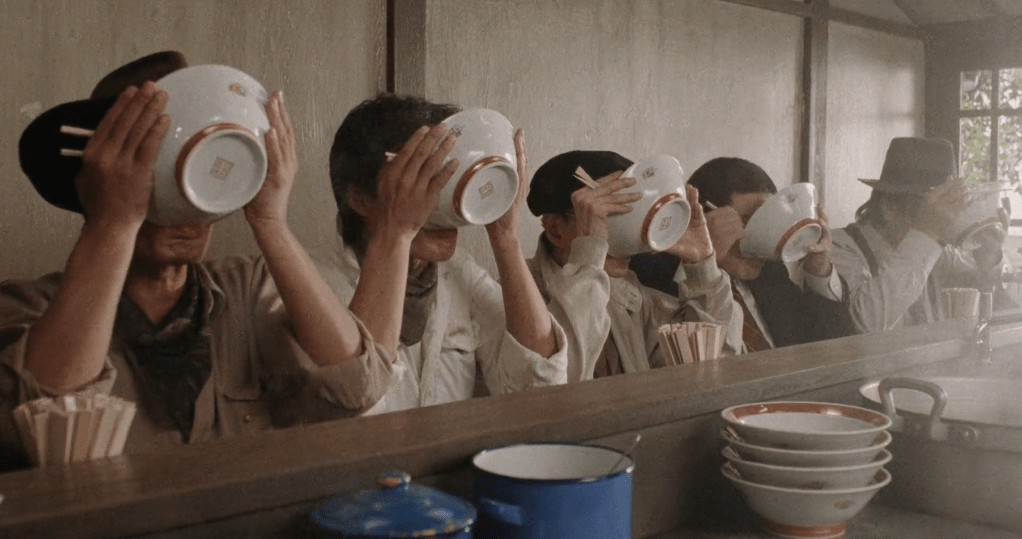
    This film is unmistakably about food (ramen in particular) but it goes as broad and deep as it can to portray an “aesthetic, emotional, and spiritual revelation” about food in a way only cinema can bring. Watching Tampopo, you’ll get to taste and savor through your eyes—the spectacles of food and passion is raw and delicious, even delirious at times. There is a certain spiritual quality in the way food and sex are juxtaposed and not in the sense that these are gods or idols that humans “worship” but that both food and sex (and in one scene, food in sex) bring about such a sensory element to self-actualization.

    It may sound abstract but these are all potently brought to life by the comedy and the teamwork of Juzo Itami’s frequent collaborators, his wife Nobuko Miyamoto and Tsutomu Yamazaki. This is my 3rd Itami-Miyamoto-Yamazaki film (the other two being The Funeral and A Taxing Woman), and I can say that I’ve grown fond of the three, especially the chemistry between Miyamoto and Yamazaki. I’m really glad that I watched A Taxing Woman before this although this one is an earlier work. All I can say that there is magic when the two are together in a scene (the final scenes between the two in both films come to mind), and I’m setting out to watch more of their works together (I think there are three more).