Tag: movies

  • Swimming gracefully: Imamura’s The Eel (A review)

    Swimming gracefully: Imamura’s The Eel (A review)

    In films like this, where a central object of curiosity is highlighted by the title (in this case, the eel), it’s easy to become fixated on it and overlook other important aspects that deserve attention.

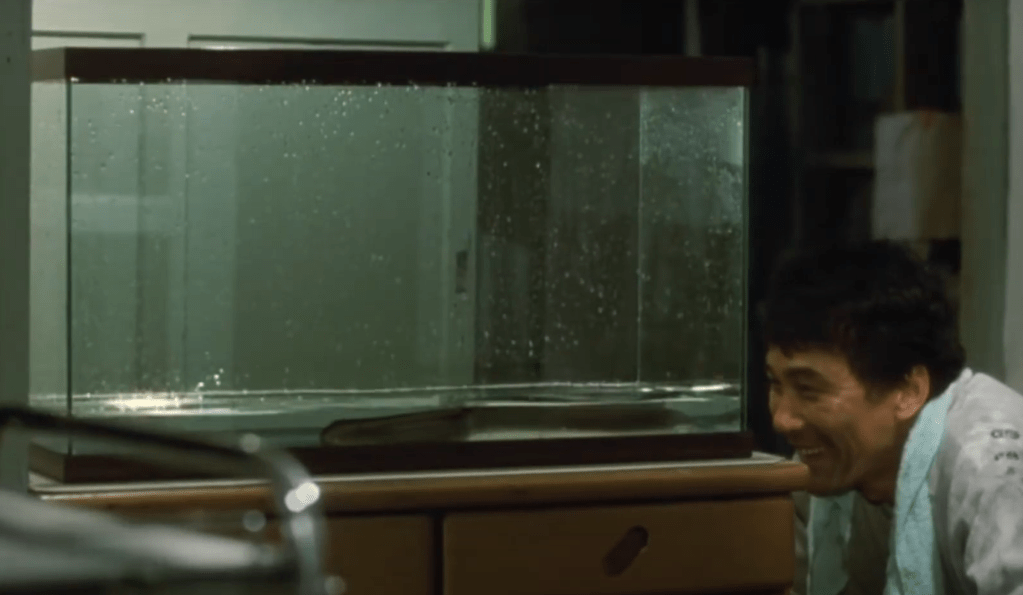
    As I watched the film, I found myself consumed by the question, “What did the eel symbolize?” Was it simply a pet, a representation of the protagonist’s traumas, both external and self-inflicted? A symbol of his growth, with the eel embodying both his “before” and “after”? Was it his conscience or alter ego?

    A deeper analysis could support all these interpretations, and indeed the eel itself warrants close visual and narrative analysis, as it’s crucial to the story. But The Eel deserves appreciation beyond its symbolism, as this Palme d’Or-winning work of Shohei Imamura shines in many other aspects.

    This includes the powerful depiction of both honne (true inner feelings/true self) and tatemae (outward actions) by the lead actor, a young Koji Yakusho, who just recently (2023) won the Best Actor award at the Cannes for another film. Playing a former convict on parole, Yakusho was effective as the measured man who knew he has paid for his crime but is still racked up by the trauma of that past.

    Imamura’s signature visual style also stands out, showcasing “rawness” within graceful compositions and well-blocked mise-en-scène. Much like in The Ballad of Narayama (animalistic passions alongside dignity in death), Vengeance is Mine (serial murder and incest next to gentlemanliness), or Black Rain (the grim effects of atomic bomb radiation alongside quiet rural scenes), The Eel juxtaposes orderly domestic life with bloody violence. Imamura, like the eel, can swim gracefully between these contrasts, making them into works of cohesive wholes that are still appreciated until today.

    This style also allowed him to compellingly create what I think (so far, among the four that I’ve watched) is the film with most diverse set of characters. While depth could reasonably be expected only of a few of the characters given the restrictions of the medium, The Eel is able to provide a realistic response to the question of how a society reacts to ex-convicts in its showcase of a colorful cast of characters, all very human.
  • Show, don’t tell: Sho Miyake’s Small, Slow But Steady (A review)

    Show, don’t tell: Sho Miyake’s Small, Slow But Steady (A review)

    Show, don’t tell. 

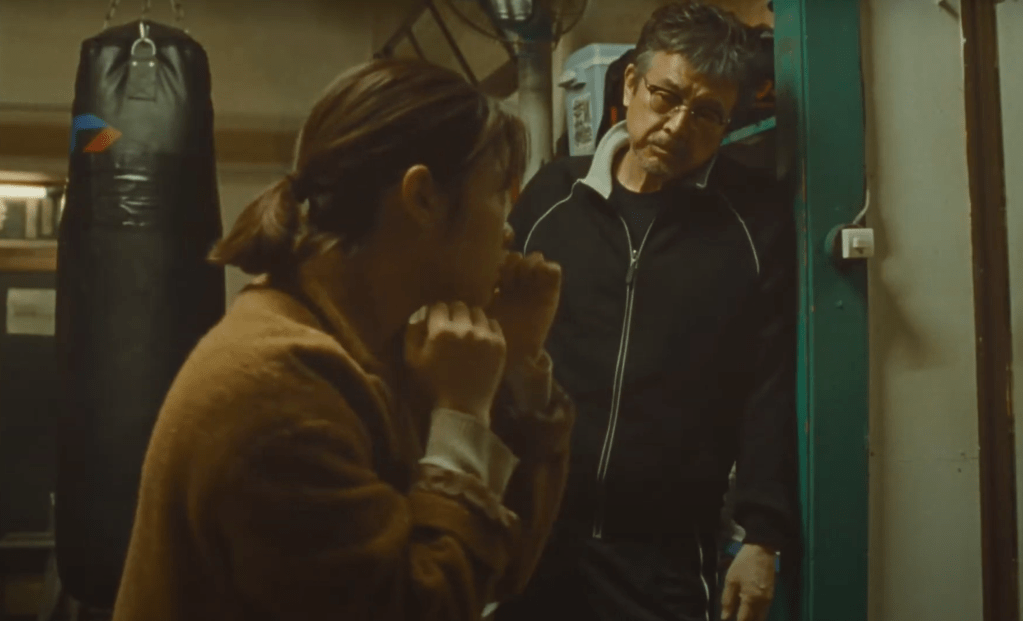
    This film is a triumph of visual storytelling, that, like its protagonist and title, is small, slow, but steady. Without much dialogue (even sign language dialogue at that), the movie excelled in capturing the life of a deaf woman boxer and how the impending closure of her home gym and the deteriorating health of her head coach (the “chairman”) affected her deeply.

    The movie’s visuals are small in the sense that the cinematography is restrained. Camera movements are very limited and takes are long and lingering. The “smallness” goes as far as the very limited, if non-existent use of ultra-wide shots. Even cityscape external shots seem to be no less wider than 20mm and while that is certainly not claustrophobia-inducing in any way, the effect gives the viewers the sense that they live in the protagonist’s personal world and Tokyo and the city at-large is at best background noise (train sounds are a repeating motif in the movie). Even the fact that the setting of the story is during the COVID pandemic is not really that palpable—it’s almost a non-factor in the story that is steadily focused on its protagonist.

    With that said, I thought that the direction held on with steadiness to its vision with no letup in the narrative and visual consistency. By design, nothing significant seems to be happening but like the protagonist herself, the narrative builds to a climax and ending that is emotionally resonant and cohesive. 

    Yes, the build up is slow, and as with other excellent films, the viewer will be rewarded with a gentle but satisfying pay off as the story resolves. This is not just because of the screenplay—Kishii Yukino’s portrayal in the lead is understated yet sufficiently nuanced and clear that you don’t need her to speak (vocally or otherwise) to feel her. And you will feel her.

    PS. That use of grainy film simulation throughout the movie made it feel a bit dated and I guess it adds another layer of “slowness” (throwback to “slower” eras?) to the work in a good way. I also loved that the protagonist being deaf was just a fact of her life and was not melodrama-tized, if that makes sense.

  • Takeshi: Childhood Days, dir. Masahiro Shinoda (1990)

    Takeshi: Childhood Days, dir. Masahiro Shinoda (1990)

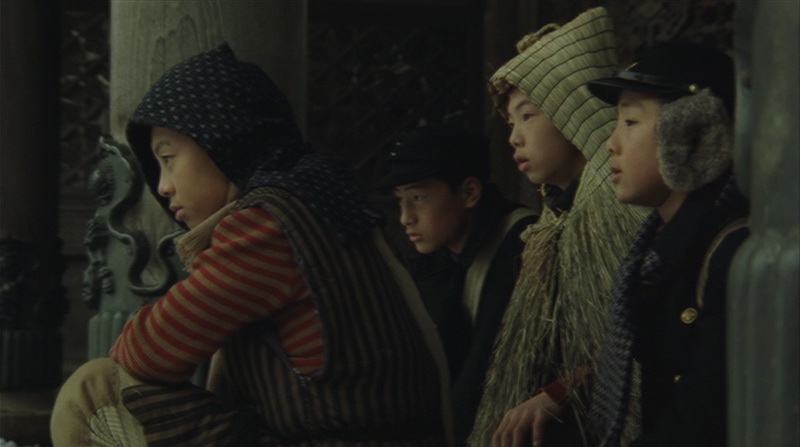
    There is just so much to unpack in Masahiro Shinoda’s Takeshi: Childhood Days (‘Shounen jidai’), an unassuming film from 1990 about Shinji, a Tokyo boy who took refuge in rural Japan at the closing year of the Pacific War. 

    What would’ve been a story about how he faced the usual rigors of pre-teen years—peer pressure, socialization in a juvenile dog-eat-dog mini ecosystem, formation of the self, academics, and bullying—is enriched by the unique context of a nation at the height of war. 

    While Shinji and his adoptive community were spared from the bombs and the bloodshed, the war still reached its long, unrelenting arms through various means. Men, even from that rural village, had to be sent away to fight the war, their loved ones anguished with being left behind. They would be subject to Imperial propaganda (and even a film about the German Fuhrer!), and eventually, the American occupation. There is really so much to mine here that if I were to teach about the Pacific War and its depiction in cinema, I would certainly include this as required viewing.

    Another strength of this film is in its quietness, and by that I don’t mean that there is sparse dialogue. The visuals are measured and the mise-en-scene throughout the film is well-composed and clean. This is perhaps to stand as a contrast to what the characters and the viewers would imagine as the noisy, bloodied, and utterly destroyed cities of Tokyo, Hiroshima, and Nagasaki, among others. Save for a brief scene of people running away from burning houses, the film only talked about Tokyo being bombed but never shown. This is where the film invokes the power of cinema’s unique language—editing. By leaving out certain scenes and showing others, the film invites viewers to imagine for themselves scenes that are not present and proximate but are paramount to the lives and fates of the people in Shinji’s community.

    This wouldn’t be complete without talking about Shinji and Takeshi, the two boys at the center of this film. The film made a deliberate choice of telling the story of Takeshi, the title’s namesake, from the point-of-view of Shinji. 

    Perhaps the reason for this is how Takeshi became central to Shinji’s experience of being a local war refugee, how he mediated, both implicitly and explicitly, the different layers of context that the film tackled, as they played out in the life of Shinji. 

    Or maybe it’s the other way around? Shinji becomes central to Takeshi’s experience and understanding of the World War that Japan is participating in, making him understand that the war is national in both effort and reach, and that his little shounen life will be disrupted by it through the life of another boy. Again, this is left for the viewers to imagine and decide.

    However it is, the film does not depict a simplistic relationship. There lies Shinoda’s filmmaking prowess, elevating what could’ve been a common story between two boys into a rich cinematic gold mine.