Tag: Nobody Knows

  • Grace and belonging: ‘Our Little Sister’ by Hirokazu Kore-eda (A review)

    Grace and belonging: ‘Our Little Sister’ by Hirokazu Kore-eda (A review)

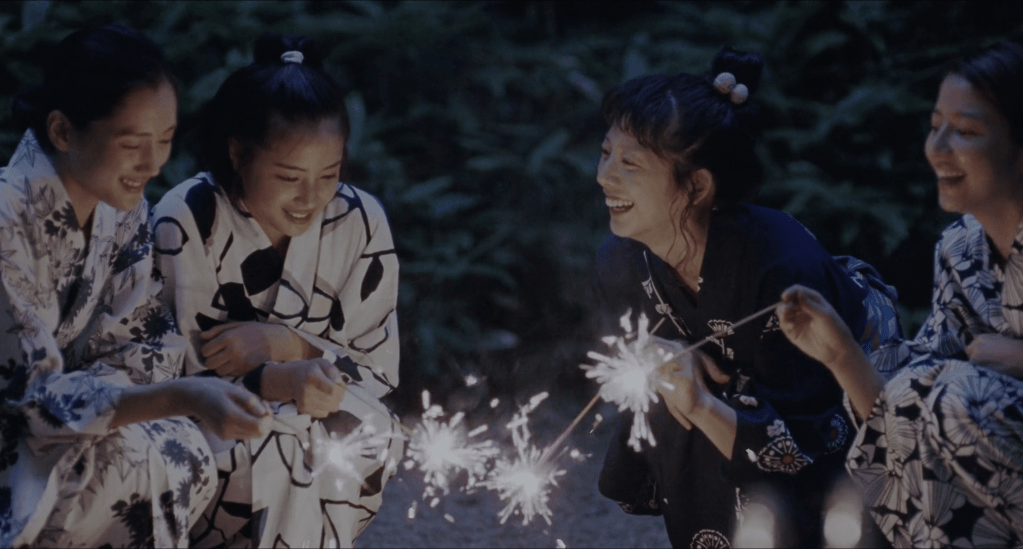
    There is no doubt that Hirokazu Kore-eda has mastered both the form and substance of cinema, developing a distinct visual style that elevates his deeply humanistic storytelling. While films like Maborosi (1995) showcase his technical mastery of the cinematic form, and Nobody Knows (2004) and Monster (2023) reflect the breadth of his narrative and thematic ambition, Our Little Sister (2015) stands out as one of his most intimate, character-driven works, supremely centering on people and relationships more than plot or message.

    As with many Japanese films, the original title—Umimachi Diary—differs from its English counterpart, possibly to appeal more to Western audiences. Regardless of the reason, both titles offer rich lenses through which to understand and appreciate the film.

    With “Umimachi Diary”, (‘seaside town diary’), the film highlights the importance of rootedness not only in personhood but also in relationships. 

    The film probes how the placeness of towns and their spaces such as cafes, houses, and temples have shaped the lives and connections of the people dramatized in the movie across generations. This is exemplified in the way the supporting characters influence the sisters’ lives, especially through gestures and encounters made possible by the unique rhythms and intimacy of a seaside city like Kamakura.

    In contrast, the English title “Our Little Sister” draws attention to Suzu, the titular character who was adopted by her three half-sisters from Kamakura, after the death of their father who she cared for. In the film, Suzu was not just a character—she becomes the lens through which the inner lives of the others are poignantly revealed.

    Like a prism, Suzu reveals the true colors of the nature of the various relationships in the film: among the three sisters Sachi, Yoshino, and Chika; between them and their late, estranged father; and especially between Sachi and their distant mother. And while Suzu was not in any way asked to resolve the issues that arose because of her presence, in many different ways her life, memories, and words affirmed the humanity of those she interacted with no matter what they were facing.

    Our Little Sister has been the most moving Kore-eda film for me, getting the same impact even after many rewatches. It is in fact my most favorite film of all time, a movie I go back to for the comfort it gives me. 

    It’s beautiful in a way that it doesn’t manipulate emotions. Instead, it illuminates them. Our Little Sister shines a light on a rare kind of relationship these days—one ruled first not by love, but by grace. While I always thought Suzu to be the protagonist of this film, I realized that this story is as much as hers as it is the story of the eldest sister Sachi. Suzu is made to feel she belonged and loved not for what she might become, but for who she already is. Behind that welcome is Sachi, who, despite carrying her own burdens, offers Suzu grace. In one quiet scene, as they gaze at the beautiful sea together from a hilltop in Kamakura, this grace was in full display.
  • Contrasts, consequences: Kore-eda’s Nobody Knows (A review)

    Contrasts, consequences: Kore-eda’s Nobody Knows (A review)

    This review contains minor spoilers.

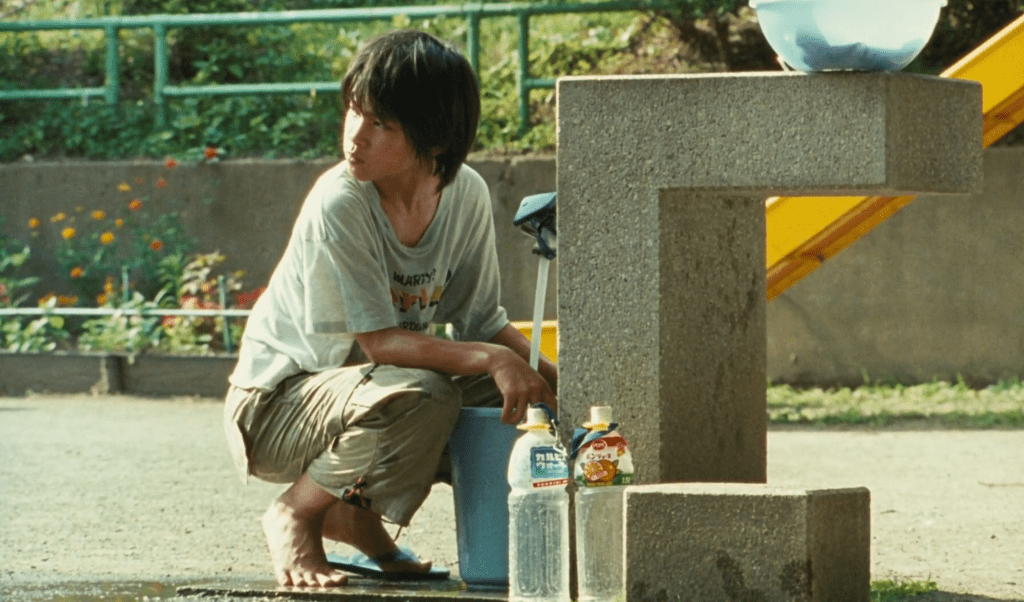
    I’ve never seen a film with an ending as excruciatingly painful as it is quietly tender, as Hirokazu Kore-eda’s 2004 childhood abandonment drama Nobody Knows. Yet even the word “drama” might be overdoing it, for this scandalous film burdens its viewers with the weight of reality in such a dignified and constrained manner.

    “Nobody knows” speaks about the fact that save for a handful of people, nobody really knew nor cared, about a very young brood after their mother went missing-in-action.

    This is in stark contrast to how the audience is burdened with the full knowledge of the brutality of parental indifference to what is supposedly the most crucial phase of human life. The result is a film that implicates the viewer with a sense of responsibility for a reality that they might never encounter in real life, made all the more devastating in its quiet, matter-of-fact portrayal.

    Kore-eda’s signature storytelling techniques work particularly well here to evoke such contrast. Harking back to his days as a documentary filmmaker, he presents the charming but messy domestic life with children using a grounded and unadorned style, almost like reportage.

    And then there’s Kore-eda’s use of mono no aware, a uniquely Japanese sensitivity to the impermanence of things, to evoke in the film a strong sense of vulnerability, frustration, and eventually, resignation. This is mainly showcased through the recurring juxtaposition of extremely tight shots of the children and inanimate objects such as toys and household implements, as if the objects mirror the children’s emotions. Together with his trademark lingering shots, Kore-eda used that visual motif to intimately portray innocence, and then later, innocent pain.

    Another study in contrast can also be found in the protagonist Akira, in an award-winning portrayal by Yuya Yagira. Akira is the classic “child who grew up too soon”, learning to have that perceptive look of a mature adult at a very young age. But the most excruciating aspect of his performance is the painful conflict between irreconcilable desires: on one hand, to be a responsible oniichan to his siblings, and on the other, to live a boyhood so ordinary it’s extraordinarily out-of-reach for someone in his situation.

    There is a minor story in the film where the children get to take care of their own individual plants after a particularly happy event in their confined lives. What would’ve been a teaching moment in responsibility, something that parents would want to give their children early, quietly devolves into a symbol of decay and neglect as the physical effects of parental neglect of them becomes inescapable. 

    With this, my final thoughts go to the contrast between Akira and his mother. Not only was she absent, but in her brief appearances, she is patronizing, evasive, and emotionally manipulative. As it is, the film is already tragic, but what’s more devastating is how her irresponsibility was not just in her neglect, but in her refusal to grow up—even as her son was cruelly forced to.