Tag: review

  • Rebirth, dir. Izuru Narushima (2011)

    Rebirth, dir. Izuru Narushima (2011)

    The English title of Izuru Narushima’s 2011 film, Rebirth, suggests a shedding of the past in pursuit of a new beginning. Its Japanese title, however, hints at a subtle, metaphor-rich expression of what the film is truly about, which I will return to later.

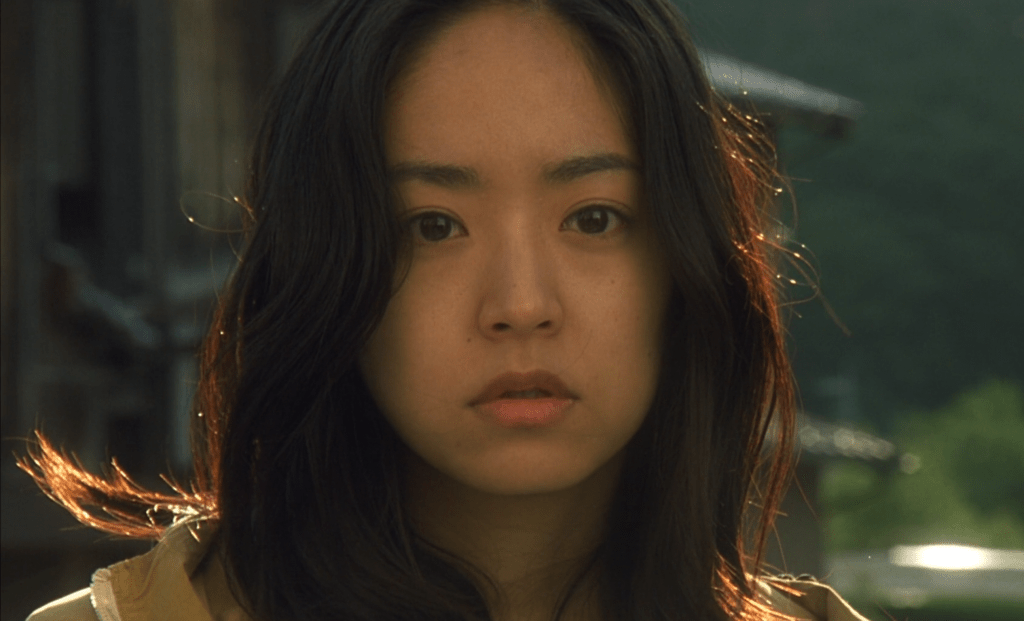
    In this film, we meet Erina Akiyama (played by Mou Inoue), a listless university student who was abducted as an infant by her father’s former mistress. Her four-year abduction made headlines at the time. Now, she seems to be living a quiet, ordinary life—until a journalist eager to revisit that unfortunate episode seeks to resurface her story. Growing curious about that time in the distant past, Erina agrees to the journalist’s invitation to rediscover what happened then.

    From the outset, the theme of motherhood is very prominent in the film, showing its pains and longings. Here, motherhood is denied, borrowed, and—perhaps most powerfully—chosen. Yet motherhood is but a part of a larger, more central theme, one that also captures the emotional–and eventually, the narrative–core of the film—self-discovery. 

    Since Freud, we have tended to think that our adult psychologies are invariably shaped by our childhood experiences and traumas. In Rebirth, we would think that Erina’s actual abduction or even her relationship with her “abductive” mother (played by Hiromi Nagasaku) would’ve made an enormous impact on her life. However, the film resists resting solely on this notion.

    Rebirth emphasizes the outsized importance of the seldom-explored attachment to places and the memories of things that happened in them, whether good or ill. 

    This is where the visual storytelling of the film shines, as it proceeds to reveal Erina’s understanding of and feelings toward specific people, including herself, in its portrayal of places. We see the lonely townhouses in the uptown district where her parents’ house is, the enigmatic “shelter” where she and her abductor hid and stayed, and finally an island community of warmth and fulfilment that would later speak profoundly to Erina’s sense of being and identity. 

    Interspersed with flashbacks of sunlit scenes of a childhood lived in full on that island—joyous, vivid, but now, distant—Erina finds a reckoning in the present. Not against her abductor, nor her parents who resented how she grew up “absent”, but against a self that in every sense except the physical, in the throes of “death” and emptiness.

    The film’s Japanese title, ‘Youkame no semi’, can be translated to “the eighth-day cicada”. It draws from the belief that cicadas live only seven days, after which they die together. While scientifically incorrect, it has been used as a metaphor for the shortness of life, shearing it of meaning. But the film quietly asks: what if one cicada decides not to die, and lives on for an eighth day—or longer? In the film, Erina not only decides to live but also to pay forward a life that has found new meaning and beauty.
  • The Insect Woman, dir. Shohei Imamura (1963)

    The Insect Woman, dir. Shohei Imamura (1963)

    “Ma, what other way is there?”

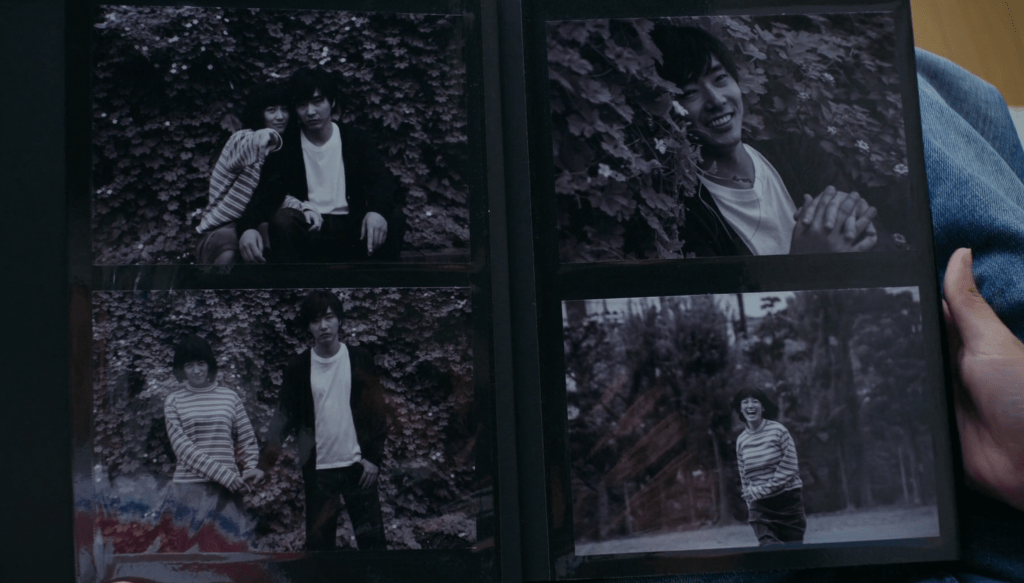
    There is just so much to unpack from that remarkable line from another of Shohei Imamura’s masterpieces, the taboo-revelling The Insect Woman (1964), that I believe it represents both the narrative-thematic and emotional cores of the film. Imamura delivered through this film with his deftness not only with the black-and-white format but also with cinema’s unique language–editing. By combining masterful editing through the effective use of stills and a callback to the Japanese cinematic tradition of benshi, Imamura was able to showcase a masterpiece that not only unfolds in the viewers’ screens, but more importantly, in the fertile imaginations of their minds.

    On the surface, The Insect Woman is a tale of survival and rising through the ranks, only to be met by the harsh realities of life after war and an unequal society. Sachiko Hidari is remarkable as the protagonist Tome, who played with such ease and depth the life of a farm girl-turned-prostitution madam in the fast-changing Tokyo of the 50s and the 60s. Tome’s life, as well as the lives of those around her—her daughter, her friends, even her lover and her family back in rural Tohoku—represent the life of insects, with its endless cycle of birth, growth, transformation, and death.

    But is it just their lives though? We can answer this by looking more closely at the transliteration of the film’s Japanese title, “Entomological Chronicles of Japan.” To Imamura, Tome’s life is but a representation of the Japanese people and indeed, of Japan itself. Or is Japan really the “insect woman”?

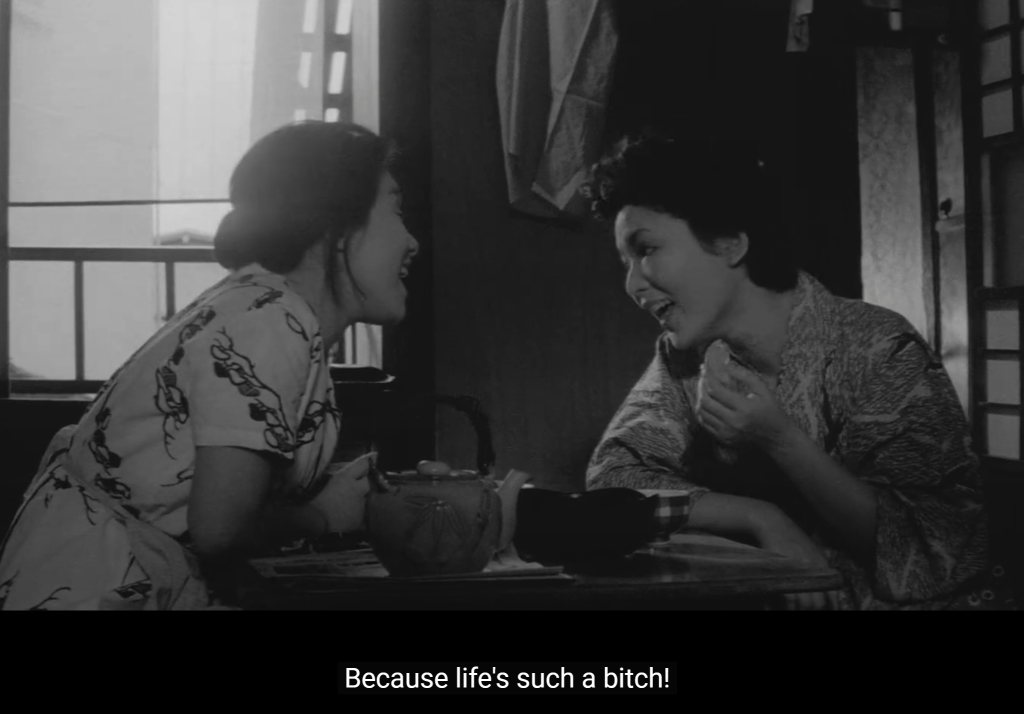
    From the tailend of the Taisho period to the nascent years of the post-war Japanese economic miracle, the movie contends that nothing has really changed; everything but a part of a cycle. The sincerity of the religious is always undermined by the greedy. Women’s achievements are always treated as lesser and more easily dismissible. And sex, for good or for ill, is always a potent tool and path that women can wield to achieve a better life. Life is a bitch, Tome decried in the film, and bitching and being bitched on, whether literally or figuratively, is a constant throughout the film. The external circumstances might be in constant flux, but the substance of the Japanese psyche remains the same, a powerful thesis to make in a country that is proud of its newfound pacifism manufactured less than two decades removed from its imperialistic adventures. 

    That life is just a cycle of predictable phases, like that of an insect, can be downright nihilistic in its reductionism, especially in the face of human striving and objective progress. But therein also lies the power to be able to turn certainty on its head—by knowing how it goes, one can crack the code towards change.

    As it will be revealed in the end, The Insect Woman shows that in a sense, what seems to be the only way can also be the way out.

  • Disappointing consummation: Haruhiko Arai’s ‘It Feels So Good’ (A review)

    Disappointing consummation: Haruhiko Arai’s ‘It Feels So Good’ (A review)

    I don’t often feel so strongly about narrative direction in films going the wrong way, because stories are expressions of creative freedom and I think the respectful way to go about it is a matter of preference (I did like it) and not of correctness. But that’s definitely what I felt after watching It Feels So Good, Haruhiko Arai’s 2019 banger of a film (pun definitely intended) about two former lovers who agreed to temporarily rekindle their passion before one of them set out to get married.

    There’s a lot to like about this film, not the least the depiction of sex, which was deftly acted by Tasuku Emoto and Kumi Takiuchi. I don’t usually go about seeking to watch erotic films, but I can say that the physical realism and believability of the intimacy scenes are some of the best I’ve seen in film. It’s not prestige sex of airbrushed skin and cheesy soft lighting—there’s a lot of humanity portraying the “messiness” of getting to and doing it, which adds to the carnal appeal of the scenes. Even so, nothing was gratuitous.

    And while the sex was very visual, the keyword that governs the viewing experience of intimacy is feeling. There’s the feeling of power that the woman has over the man. There’s the emphasis on rawer physical sensation, with the camera trained on whole bodies doing the act and faces contorted to unabashedly display pleasure.

    And despite the more controversial and taboo aspect of the sex (hint: “blood is thicker than water”), there’s pervading feeling of comfort of being with someone from your past that comes through to the viewer. Indeed, there’s a lot of nostalgia, both happy and wistful, in this movie: from memories of childhood, to memories of young adulthood in the city, to the devastating memory of the 2011 Tohoku earthquake.

    Which is to say: this film is a moving reflection of that great disaster from a very personal and intimate point of view. For the protagonists, their intimate reunion is a powerful affirmation of life, being alive, and perpetuating life after devastation. It initially felt jarring to me, but after watching this film, I now strongly feel that the 2011 Tohoku earthquake and the disaster it wrought is something that is deeply ingrained in the contemporary Japanese psyche in ways that much of the outside world hasn’t fully grasped yet. But this film showed how bodily convulsions and tectonic tremors can be combined in one potent narrative.

    Which leads me now to that unceremonious end to what could’ve been a 5-star film. It might be the obsession with disaster, but it truly seemed overkill that the film doubled down on an already effective message about its personal effects with an amateurish narrative turn.

    I can only liken it to the festival dance featured in the film, depicting the wandering spirits of the dead that cannot enter heaven—full spiritual consummation. The film was almost there towards a sensible resolution, but unlike the two protagonists many times in this film, it just didn’t come.

  • Show, don’t tell: Sho Miyake’s Small, Slow But Steady (A review)

    Show, don’t tell: Sho Miyake’s Small, Slow But Steady (A review)

    Show, don’t tell. 

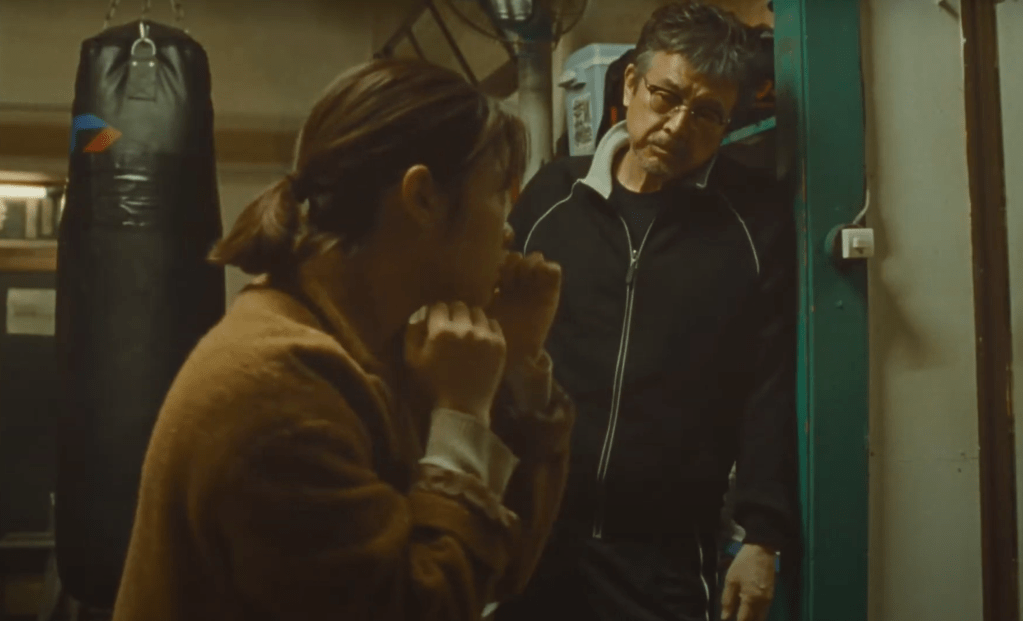
    This film is a triumph of visual storytelling, that, like its protagonist and title, is small, slow, but steady. Without much dialogue (even sign language dialogue at that), the movie excelled in capturing the life of a deaf woman boxer and how the impending closure of her home gym and the deteriorating health of her head coach (the “chairman”) affected her deeply.

    The movie’s visuals are small in the sense that the cinematography is restrained. Camera movements are very limited and takes are long and lingering. The “smallness” goes as far as the very limited, if non-existent use of ultra-wide shots. Even cityscape external shots seem to be no less wider than 20mm and while that is certainly not claustrophobia-inducing in any way, the effect gives the viewers the sense that they live in the protagonist’s personal world and Tokyo and the city at-large is at best background noise (train sounds are a repeating motif in the movie). Even the fact that the setting of the story is during the COVID pandemic is not really that palpable—it’s almost a non-factor in the story that is steadily focused on its protagonist.

    With that said, I thought that the direction held on with steadiness to its vision with no letup in the narrative and visual consistency. By design, nothing significant seems to be happening but like the protagonist herself, the narrative builds to a climax and ending that is emotionally resonant and cohesive. 

    Yes, the build up is slow, and as with other excellent films, the viewer will be rewarded with a gentle but satisfying pay off as the story resolves. This is not just because of the screenplay—Kishii Yukino’s portrayal in the lead is understated yet sufficiently nuanced and clear that you don’t need her to speak (vocally or otherwise) to feel her. And you will feel her.

    PS. That use of grainy film simulation throughout the movie made it feel a bit dated and I guess it adds another layer of “slowness” (throwback to “slower” eras?) to the work in a good way. I also loved that the protagonist being deaf was just a fact of her life and was not melodrama-tized, if that makes sense.