Tag: Reviews

  • Asura and Our Little Sister:  Kore-eda’s natural humanism

    Asura and Our Little Sister: Kore-eda’s natural humanism

    Earlier this year, I binged-watched Asura, Hirokazu Kore-eda’s latest work which is a limited series on Netflix (7 episodes). To me this is a much more impactful work than his other Netflix series, The Makanai, both in terms of the story and the depth by which the story is told and made to affect viewers. I can say that as a director, Kore-eda’s humanistic style and talent really shines in a (TV) series because he is able to flesh out characters and relationships much more fully than in a film.

    Coming at the heels of a rewatch of Our Little Sister, I can’t help but compare the two to each other (because of how the stories have many similarities aside from the fact that they revolve around four sisters) and to Kore-eda’s other works that I have seen so far.

    To those who have watched even a few of his works, it is obvious that Kore-eda is able to portray humanism very naturally in his films, especially in directing characters and the dynamics between them. It strikes me how much drama and clarity of emotion can be had in subtlety–whether because of the reservedness of Japanese culture itself, or Kore-eda’s direction, or both. This is opposed to how humanism is sometimes forced in more plot-driven stories, especially in Filipino films (from where I come from), which always appeal to poverty or political/cultural/structural curses, etc.

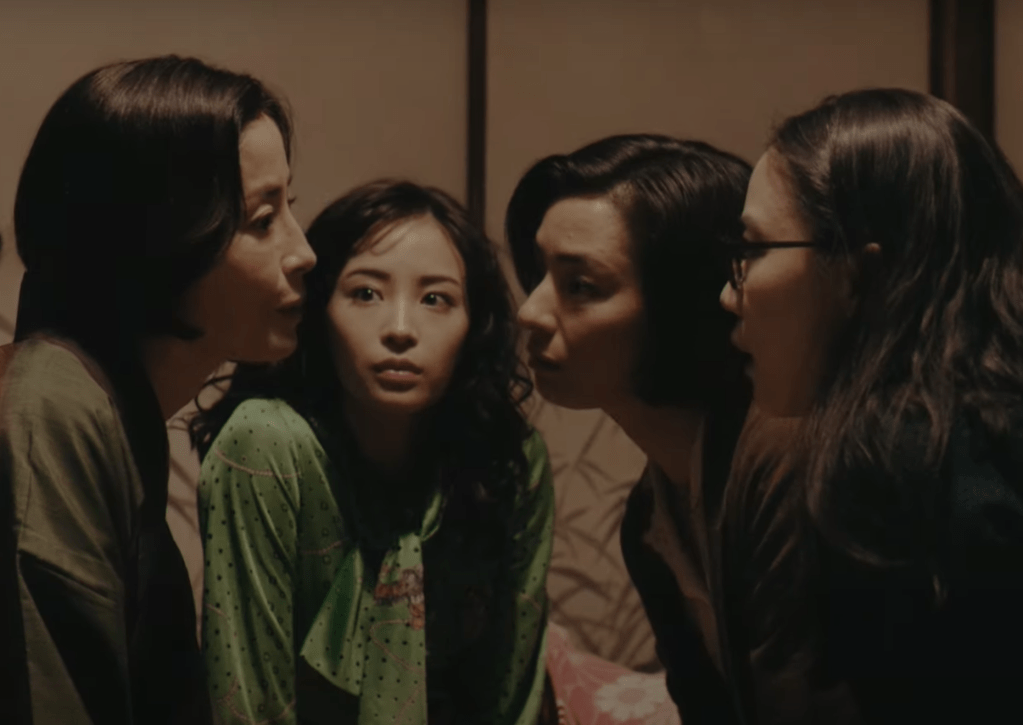
    In both Asura and Our Little Sister, I love how Kore-eda directs the scenes of the four sisters together. Each pair of sisters, particularly the Tsunako-Makiko and Takiko-Sakiko pairings in Asura, have their own dynamics when they are together that are deftly made to come alive on the screen by Kore-eda and the sister ensembles.

    But the magic is when each of the four sisters in both works, even when they’re together in scenes, are still able to shine as their own characters. I have to give props to Suzu Hirose, the only actor appearing in both works, who has shown incredible range particularly in Asura. While it is a bit of a given that she will be a focus as the titular character in Our Little Sister, she held her ground well among the veterans in Asura, showing how much she has developed in her craft in the decade between these two works.

    There’s this one scene in Asura, in the latter half of the series, when the whole family had to come to the ancestral home to sort an incident caused by the father which reminded me of a Hieronymous Bosch painting. When you look closely each object or character in this painting, something distinct is going on with or about it it. But when you look at the painting as a whole, everything comes together beautifully. Kore-eda’s blocking and choice of shots in scenes have the same effect in scenes that involve multiple characters.

    Which lead me to a final point, about how there is not one emotional core in many, if not most, of Kore-eda’s works.

    In both Asura and Our Little Sister, you can say that there are main plots and there are subplots, but nothing grand or forced–above all, it’s the kaleidoscopic complexities of being human that rises to the surface. It’s humanity of the characters driving the stories, not a big plot or other external circumstances driving the characters. There are themes, yes, for example, queerness in youth in Monster, poverty in Shoplifters, truth and law in The Third Murder, wrestling with grief in Maborosi, or finding your calling in The Makanai. These expose messages or morals, but through and through, it’s really the existentialist beauty that stands out.

    No wonder Kore-eda’s movies feel so grounded that some of his works almost feel like documentaries in their groundedness (he did work extensively as a documentarist). The slice-of-life production aesthetic and the almost meditative cinematography that he uses contributes to this existentialism—you almost feel like you live with the characters, if not the characters themselves, by how grounded to reality and the world the characters are. The effect of this is we see ourselves reflected in them in one way or another.
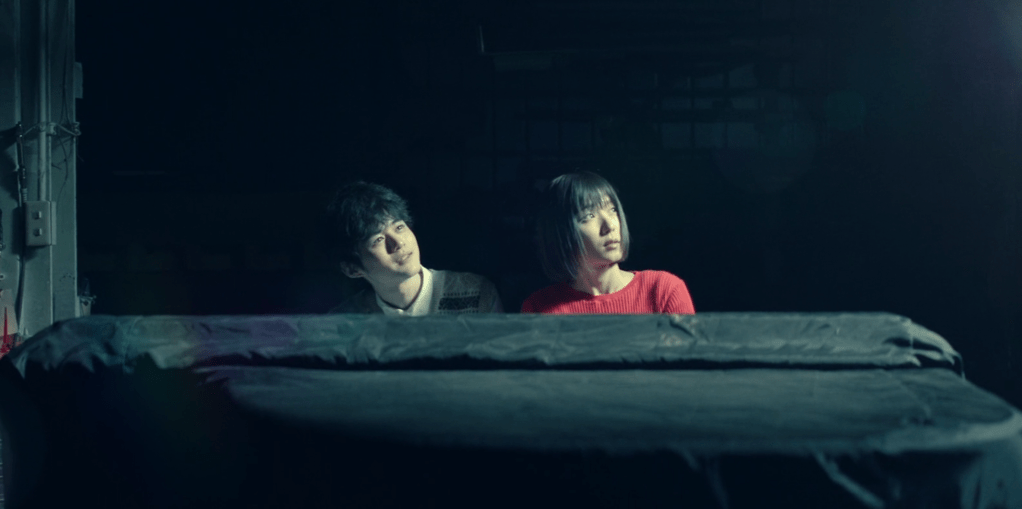
  • Villain, dir. Sang-il Lee (2010)

    Villain, dir. Sang-il Lee (2010)

    I want to begin by saying that it will not be difficult to point out who the namesake villain of the movie is if we base it on the efficient cause of what happened to the victim. If that’s the whole story, the film would’ve ended at about the halfway mark. Thankfully, Sang-il Lee’s 2010 Best Film awardee (Mainichi Awards and Kinema Junpo Awards) is not just about a villainy or even villainies, but so much more.

    On the surface, Villain is a very competent and entertaining thriller that will keep the audience glued to the screen despite a slow start. It even makes a more-or-less substantial exploration of what really makes a villain. But it’s different from the usual crime-fugitive fare with how it rises above the conventions of its genre to explore a universal and almost unique human ability: the capacity to cherish another human being.

    While the visual style is not necessarily “meditative” (e.g., lingering shots, long takes, sparse camera movements) this film is indeed a meditation on what the act of cherishing does to the one who cherishes. I am careful to highlight this because narratively, it’s easier to show the things that the one who cherishes does to the cherished (not that that aspect wasn’t also explored by the film).

    For Villain, cherishing reveals our true selves and, in the process, changes us.

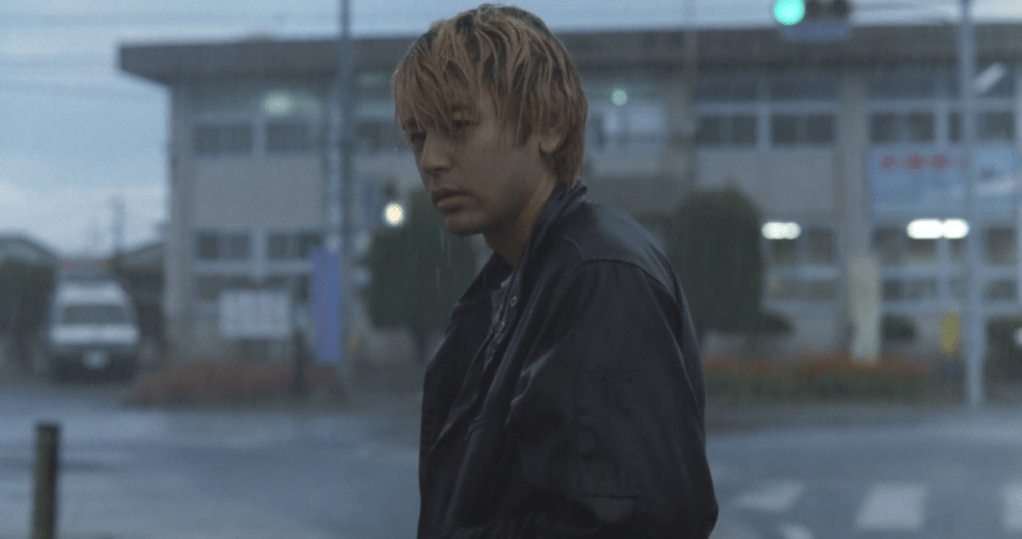
    This exposition stands on the heart-rending performances of Satoshi Tsumabaki and Eri Fukatsu, Tsumabaki, in particular, as the uninspired young man Yuichi, delivers an engrossing character study in a role that is at once familiar and strange. Yuichi’s central inner conflict, the unquiet specter of his own depravity as his affection for Fukatsu’s Mitsuya grows, produced some of the most intense scenes in the film, including the most emotionally charged sex scene I’ve seen so far in Japanese cinema.

    Veterans Akira Emoto and Kirin Kiki also delivered in their supporting performances as the father of the victim and Yuichi’s grandmother, respectively. Their stories of cherishing are underscored by loss—unjust loss of a beloved daughter, and the loss of a grandson to waywardness.

    I wouldn’t miss mentioning how surprised I was again that Joe Hisaishi did the score for this film. As with Hana-bi, I was clueless about his involvement here but unlike in that movie, I wouldn’t have guessed that it was Hisaishi who wrote the music for Villain.

    Listening to the score on its own, which also includes the closing credits track Your Story, I wouldn’t have guessed that it was the score for a crime movie (one reviewer even described it as “a soothing treat”). Equal parts contemplative, foreboding, sweet, and wistful, the score underscores what I think is the main point of the movie as I’ve shared above: that cherishing and loving someone reveals your humanity, including your depravity, and changes you along the way.

  • Harmony or distraction? Music in Listen to the Universe (A review)

    Harmony or distraction? Music in Listen to the Universe (A review)

    Here’s a little trivia about the Oscars: Did you know that there is an existing category called Best Original Musical in the Academy Awards? However, since it was established in 2000, no year has seen enough original musical films (read: not an adaptation) for a competition to be considered (there must be at least 10).

    But the thing in the rules for this category that made me remember that trivia in relation to Listen to the Universe is the qualification of narrative relevance. To be considered, the music in the film “must further the storyline of the motion picture.” This is different from the film’s score, or say, a soundtrack that goes with the movie but exists outside of the narrative, both of which usually only serves to heighten the emotional aspect of the work.

    I am bringing this up because in the case of Listen to the Universe, the music and the musicianship of the four competing young concert pianists are too much at the center of the story that it begs the question: Do these musical pieces, especially the classical ones, “further the storyline of the motion picture?”

    There’s no question about whether music belongs in the film; the score is expertly crafted. But how does Clair de Lune or Rachmaninoff’s Piano Concerto no. 3 move the story forward? Why were these pieces chosen and not the others? While undeniably beautiful and significant, they ended up stealing the show without contributing much to the plot or character development. Their complexity, while impressive, can be intimidating to ordinary viewers, narrowing the film’s potential audience.

    This point about “ordinary people’s music” versus the highfalutin fare that the elite usually enjoys has been tackled but quite insufficiently to make a solid emotional impact. Aside from that, the film also attempts to explore a range of other themes: artistic inspiration, the nature of genius, and the purpose of art in the artist’s life.

    But with four distinct performers, it struggles to dive deeply into any one theme. The subplot involving one character’s journey with grief, which seems to be the movie’s emotional core, feels underdeveloped and doesn’t quite land, although the character’s rousing final performance offers a brief emotional payoff.

    That said, Listen to the Universe has its strengths. While none of the actors are actual concert pianists, their performances—directed by Kei Ishikawa—are convincing. Along with nimble editing, the film made virtuosos out of them.

    And where the film falters in using music as diegetic sound, it compensates with a striking score. The score and the visuals work together, contrasting or complimenting each other to heighten the “textures” or the “feel” of various scenes so that in some ways, the harmony between humanity and the universe that the title evokes somehow rings true.

  • Swimming gracefully: Imamura’s The Eel (A review)

    Swimming gracefully: Imamura’s The Eel (A review)

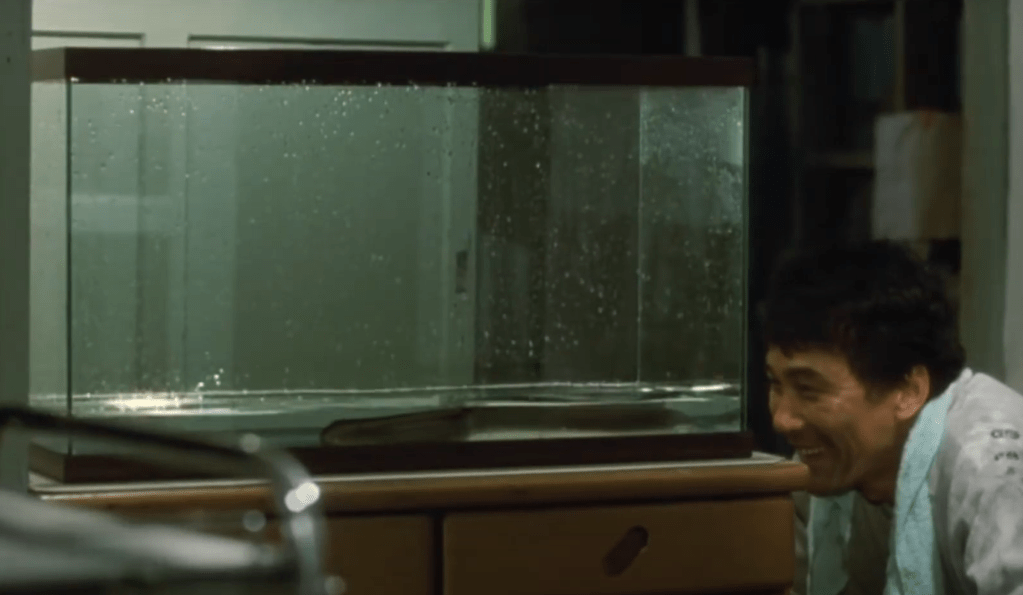
    In films like this, where a central object of curiosity is highlighted by the title (in this case, the eel), it’s easy to become fixated on it and overlook other important aspects that deserve attention.

    As I watched the film, I found myself consumed by the question, “What did the eel symbolize?” Was it simply a pet, a representation of the protagonist’s traumas, both external and self-inflicted? A symbol of his growth, with the eel embodying both his “before” and “after”? Was it his conscience or alter ego?

    A deeper analysis could support all these interpretations, and indeed the eel itself warrants close visual and narrative analysis, as it’s crucial to the story. But The Eel deserves appreciation beyond its symbolism, as this Palme d’Or-winning work of Shohei Imamura shines in many other aspects.

    This includes the powerful depiction of both honne (true inner feelings/true self) and tatemae (outward actions) by the lead actor, a young Koji Yakusho, who just recently (2023) won the Best Actor award at the Cannes for another film. Playing a former convict on parole, Yakusho was effective as the measured man who knew he has paid for his crime but is still racked up by the trauma of that past.

    Imamura’s signature visual style also stands out, showcasing “rawness” within graceful compositions and well-blocked mise-en-scène. Much like in The Ballad of Narayama (animalistic passions alongside dignity in death), Vengeance is Mine (serial murder and incest next to gentlemanliness), or Black Rain (the grim effects of atomic bomb radiation alongside quiet rural scenes), The Eel juxtaposes orderly domestic life with bloody violence. Imamura, like the eel, can swim gracefully between these contrasts, making them into works of cohesive wholes that are still appreciated until today.

    This style also allowed him to compellingly create what I think (so far, among the four that I’ve watched) is the film with most diverse set of characters. While depth could reasonably be expected only of a few of the characters given the restrictions of the medium, The Eel is able to provide a realistic response to the question of how a society reacts to ex-convicts in its showcase of a colorful cast of characters, all very human.

  • Show, don’t tell: Sho Miyake’s Small, Slow But Steady (A review)

    Show, don’t tell: Sho Miyake’s Small, Slow But Steady (A review)

    Show, don’t tell. 

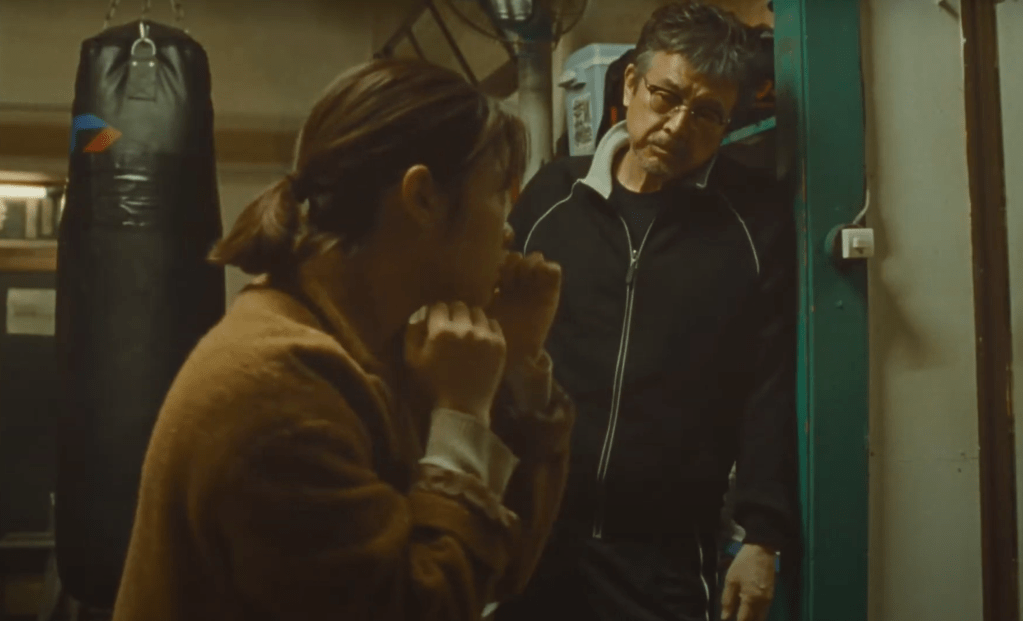
    This film is a triumph of visual storytelling, that, like its protagonist and title, is small, slow, but steady. Without much dialogue (even sign language dialogue at that), the movie excelled in capturing the life of a deaf woman boxer and how the impending closure of her home gym and the deteriorating health of her head coach (the “chairman”) affected her deeply.

    The movie’s visuals are small in the sense that the cinematography is restrained. Camera movements are very limited and takes are long and lingering. The “smallness” goes as far as the very limited, if non-existent use of ultra-wide shots. Even cityscape external shots seem to be no less wider than 20mm and while that is certainly not claustrophobia-inducing in any way, the effect gives the viewers the sense that they live in the protagonist’s personal world and Tokyo and the city at-large is at best background noise (train sounds are a repeating motif in the movie). Even the fact that the setting of the story is during the COVID pandemic is not really that palpable—it’s almost a non-factor in the story that is steadily focused on its protagonist.

    With that said, I thought that the direction held on with steadiness to its vision with no letup in the narrative and visual consistency. By design, nothing significant seems to be happening but like the protagonist herself, the narrative builds to a climax and ending that is emotionally resonant and cohesive. 

    Yes, the build up is slow, and as with other excellent films, the viewer will be rewarded with a gentle but satisfying pay off as the story resolves. This is not just because of the screenplay—Kishii Yukino’s portrayal in the lead is understated yet sufficiently nuanced and clear that you don’t need her to speak (vocally or otherwise) to feel her. And you will feel her.

    PS. That use of grainy film simulation throughout the movie made it feel a bit dated and I guess it adds another layer of “slowness” (throwback to “slower” eras?) to the work in a good way. I also loved that the protagonist being deaf was just a fact of her life and was not melodrama-tized, if that makes sense.