Tag: Shohei Imamura

  • The Insect Woman, dir. Shohei Imamura (1963)

    The Insect Woman, dir. Shohei Imamura (1963)

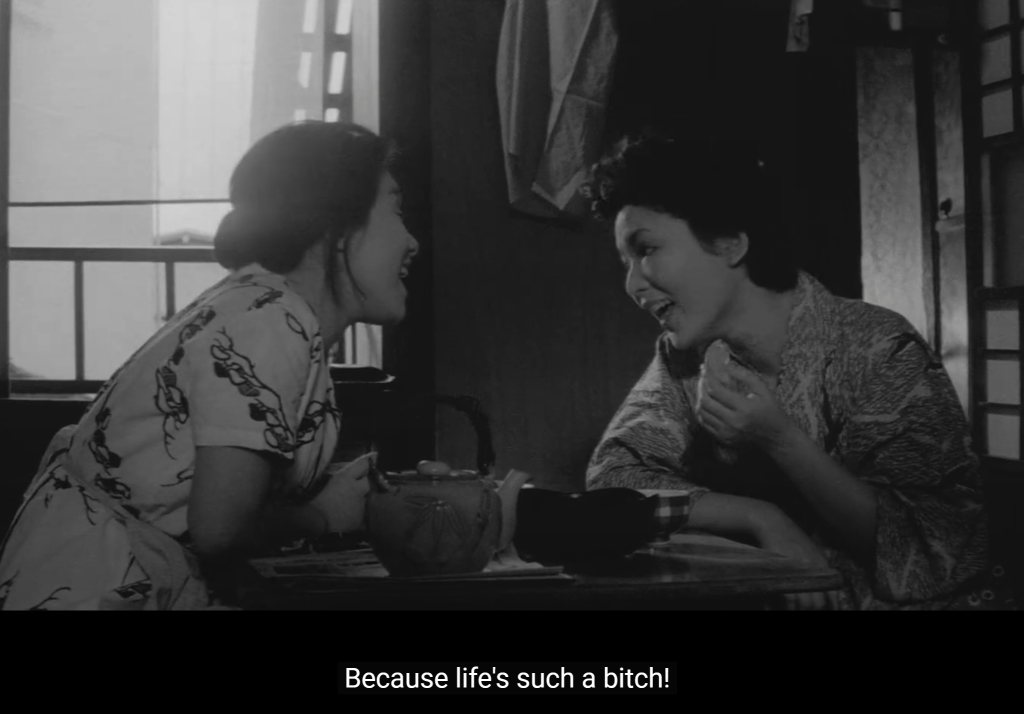
    “Ma, what other way is there?”

    There is just so much to unpack from that remarkable line from another of Shohei Imamura’s masterpieces, the taboo-revelling The Insect Woman (1964), that I believe it represents both the narrative-thematic and emotional cores of the film. Imamura delivered through this film with his deftness not only with the black-and-white format but also with cinema’s unique language–editing. By combining masterful editing through the effective use of stills and a callback to the Japanese cinematic tradition of benshi, Imamura was able to showcase a masterpiece that not only unfolds in the viewers’ screens, but more importantly, in the fertile imaginations of their minds.

    On the surface, The Insect Woman is a tale of survival and rising through the ranks, only to be met by the harsh realities of life after war and an unequal society. Sachiko Hidari is remarkable as the protagonist Tome, who played with such ease and depth the life of a farm girl-turned-prostitution madam in the fast-changing Tokyo of the 50s and the 60s. Tome’s life, as well as the lives of those around her—her daughter, her friends, even her lover and her family back in rural Tohoku—represent the life of insects, with its endless cycle of birth, growth, transformation, and death.

    But is it just their lives though? We can answer this by looking more closely at the transliteration of the film’s Japanese title, “Entomological Chronicles of Japan.” To Imamura, Tome’s life is but a representation of the Japanese people and indeed, of Japan itself. Or is Japan really the “insect woman”?

    From the tailend of the Taisho period to the nascent years of the post-war Japanese economic miracle, the movie contends that nothing has really changed; everything but a part of a cycle. The sincerity of the religious is always undermined by the greedy. Women’s achievements are always treated as lesser and more easily dismissible. And sex, for good or for ill, is always a potent tool and path that women can wield to achieve a better life. Life is a bitch, Tome decried in the film, and bitching and being bitched on, whether literally or figuratively, is a constant throughout the film. The external circumstances might be in constant flux, but the substance of the Japanese psyche remains the same, a powerful thesis to make in a country that is proud of its newfound pacifism manufactured less than two decades removed from its imperialistic adventures. 

    That life is just a cycle of predictable phases, like that of an insect, can be downright nihilistic in its reductionism, especially in the face of human striving and objective progress. But therein also lies the power to be able to turn certainty on its head—by knowing how it goes, one can crack the code towards change.

    As it will be revealed in the end, The Insect Woman shows that in a sense, what seems to be the only way can also be the way out.
  • Black Rain, dir. Shohei Imamura (1989)

    Black Rain, dir. Shohei Imamura (1989)

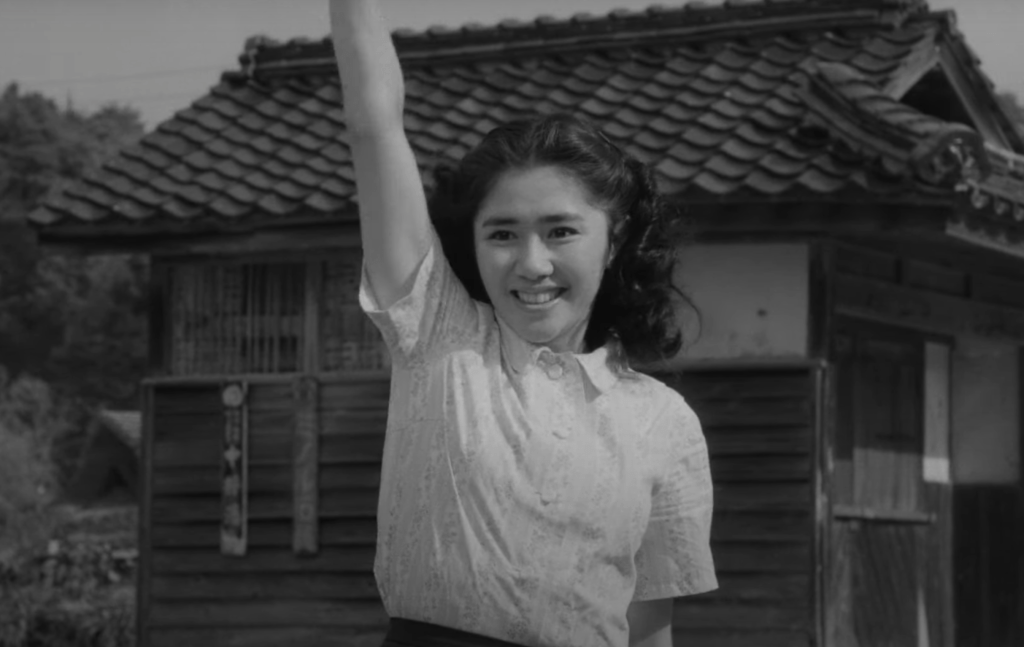
    An unjust peace is better than a just war.

    Those words, uttered in exasperation by one of the characters in one of the film’s closing sequences, sums up the emotional core of this visual and narrative masterpiece by Shohei Imamura. It is another showcase of his directorial prowess, reminiscent of The Ballad of Narayama, his masterpiece from 6 years before.

    Indeed, I can’t help but compare the two in terms of the breadth and scale of the commentary he wanted to make about human life, human relationships, and Japanese society. 

    While I would surely put this film on a must-watch list for those interested in how the Pacific War affected the Japanese people, I would argue that that is not the main topic or theme of this movie. Whereas Narayama used the Japanese legend of ubasute to explore aging, how the elderly is treated, and indeed, the whole circle of human life in pre-modern Japan, Black Rain used the tragic atomic bombing of Hiroshima to provide a profound commentary on the many levels of stigma, humiliation, and humility (some times to a fault) in the immediate post-Pacific War era Japan. 

    Indeed, while the day of the Hiroshima bombing was sufficiently and painstakingly portrayed and explored, I would argue that it served better as a narrative device that contextualized and enriched the texture of the present story, set five years after, than as a “subplot” on its own. I thought that this was a wise choice because through it, along with the use of black and white, this film has become a timeless work that would speak not only to the victims of war, but also to the victims of the anxieties, pains, and yes, death, in peace time.

  • Swimming gracefully: Imamura’s The Eel (A review)

    Swimming gracefully: Imamura’s The Eel (A review)

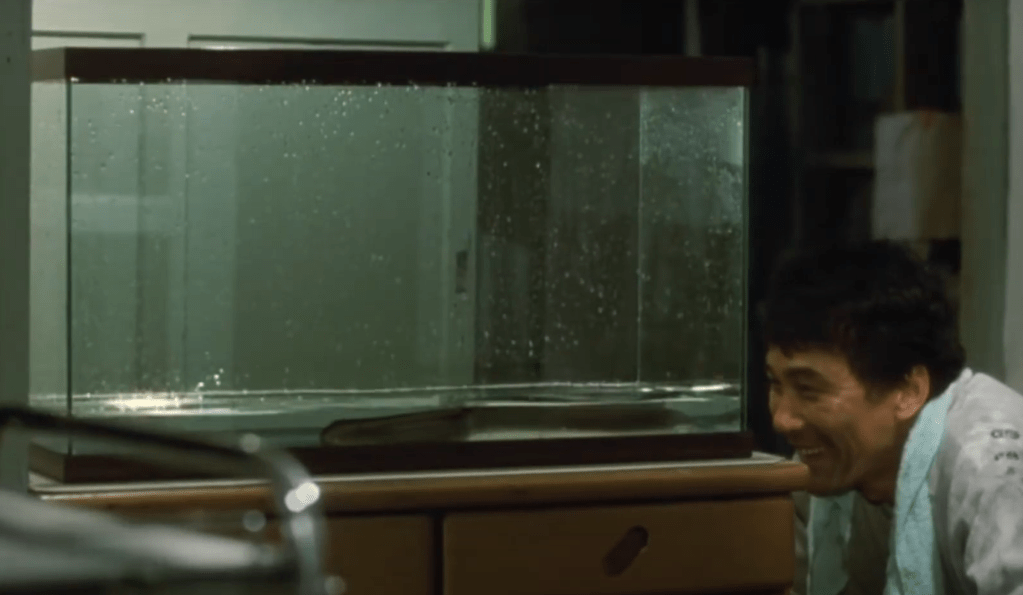
    In films like this, where a central object of curiosity is highlighted by the title (in this case, the eel), it’s easy to become fixated on it and overlook other important aspects that deserve attention.

    As I watched the film, I found myself consumed by the question, “What did the eel symbolize?” Was it simply a pet, a representation of the protagonist’s traumas, both external and self-inflicted? A symbol of his growth, with the eel embodying both his “before” and “after”? Was it his conscience or alter ego?

    A deeper analysis could support all these interpretations, and indeed the eel itself warrants close visual and narrative analysis, as it’s crucial to the story. But The Eel deserves appreciation beyond its symbolism, as this Palme d’Or-winning work of Shohei Imamura shines in many other aspects.

    This includes the powerful depiction of both honne (true inner feelings/true self) and tatemae (outward actions) by the lead actor, a young Koji Yakusho, who just recently (2023) won the Best Actor award at the Cannes for another film. Playing a former convict on parole, Yakusho was effective as the measured man who knew he has paid for his crime but is still racked up by the trauma of that past.

    Imamura’s signature visual style also stands out, showcasing “rawness” within graceful compositions and well-blocked mise-en-scène. Much like in The Ballad of Narayama (animalistic passions alongside dignity in death), Vengeance is Mine (serial murder and incest next to gentlemanliness), or Black Rain (the grim effects of atomic bomb radiation alongside quiet rural scenes), The Eel juxtaposes orderly domestic life with bloody violence. Imamura, like the eel, can swim gracefully between these contrasts, making them into works of cohesive wholes that are still appreciated until today.

    This style also allowed him to compellingly create what I think (so far, among the four that I’ve watched) is the film with most diverse set of characters. While depth could reasonably be expected only of a few of the characters given the restrictions of the medium, The Eel is able to provide a realistic response to the question of how a society reacts to ex-convicts in its showcase of a colorful cast of characters, all very human.